Grab and Go High Protein Breakfast Ideas for Work
Here are four meal prep methods that I rotate through, each one covering a full work week in under an hour of weekend effort.
They all hit real protein numbers and they all taste good on day four, which is where most meal prep falls apart.
Method 1: Sheet Pan Eggs
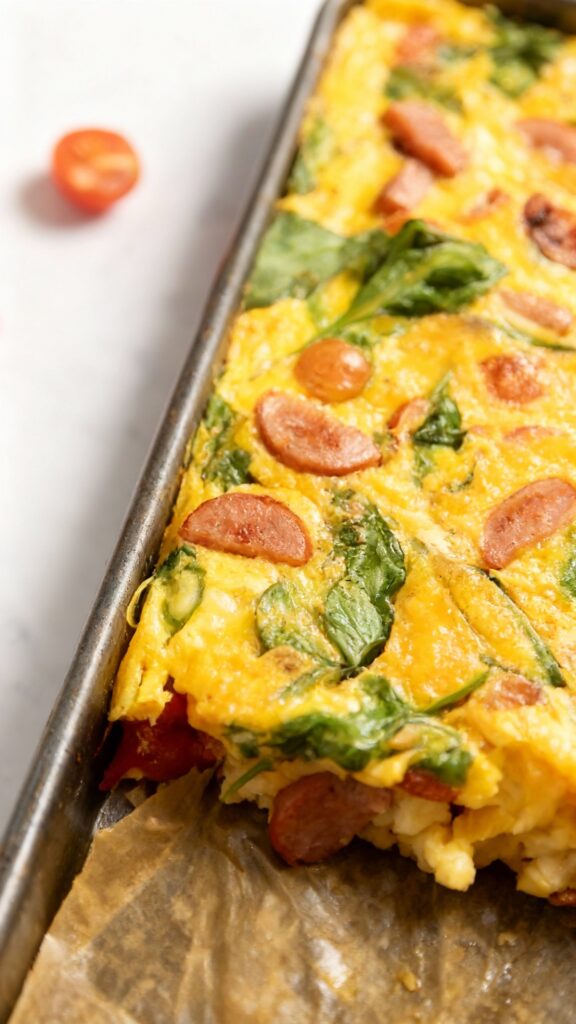
If you haven’t made sheet pan eggs yet, the concept is simple: whisk a bunch of eggs, pour them onto a lined sheet pan, bake until set, cut into rectangles. Each rectangle is exactly the size of an English muffin or a bagel. You get 8 perfectly uniform egg portions from one batch, and the whole thing takes about 25 minutes including preheating.
What makes this actually interesting is what you put in the eggs. Plain sheet pan eggs are fine but boring, and boring is what makes you stop eating your meal prep by Tuesday.
The cottage cheese version is the one I’d start with if you’ve never tried this. You blend cottage cheese until smooth and whisk it into the eggs instead of milk. It sounds weird. It works. The eggs come out noticeably fluffier, and more importantly, they reheat without turning rubbery — which is the whole reason regular scrambled eggs fail as meal prep. 14 grams of protein per serving just from the egg mixture.
Full cottage cheese sheet pan eggs recipe →
The feta version is for when you want more flavor without more effort. You add crumbled feta in two stages — half mixed into the raw eggs, half scattered on top partway through baking. The mixed-in feta melts into creamy pockets. The top layer softens without browning. Every bite has something going on. These are great stuffed into pita with spinach, which is a nice change from the usual English muffin routine.
Full feta sheet pan eggs recipe →
The sausage version is the highest protein of the three at 21 grams per serving. You par-bake crumbled breakfast sausage directly in the sheet pan, drain the grease, reduce the oven temp, and pour the egg mixture right on top. One pan, no skillet to wash, and the sausage distributes through the whole slab as it bakes. Add a slice of cheddar and an English muffin and you’re at 31 grams of protein for a sandwich that reheats from frozen in about two and a half minutes.
Full sausage sheet pan eggs recipe →
The play here is variety. Make the cottage cheese version one week, feta the next, sausage after that. Same method, same effort, completely different breakfast. That rotation is what keeps meal prep sustainable instead of something you abandon by February.
Method 2: Freezer Breakfast Burritos
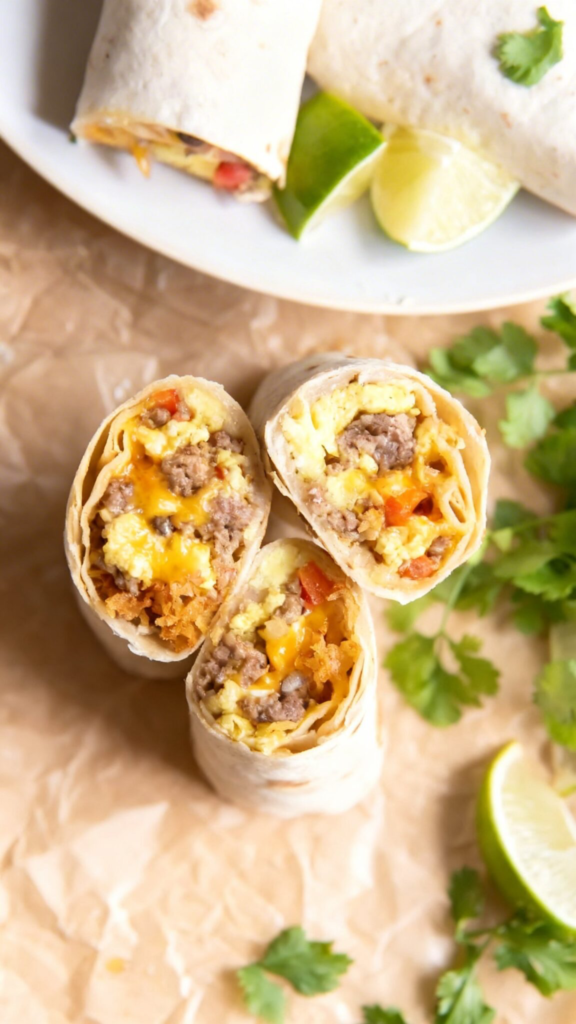
This is the most complete meal on the list. Scrambled eggs, breakfast sausage, peppers, onions, hash browns, and cheese — all rolled into a flour tortilla and frozen. Everything a breakfast should be, already assembled and waiting in your freezer for up to three months.
The recipe makes 8 burritos in about 50 minutes of total work. That sounds like a lot until you realize you just made over two weeks of breakfasts if you’re eating them a few days a week. Most people double the batch the second time they make it.
Each burrito hits around 15 to 17 grams of protein from the egg and sausage filling alone. Use chorizo or double up on eggs and you’re pushing past 20. They reheat from frozen in under two minutes in the microwave — or wrap them in foil and toss them in a toaster oven for something with more texture.
The one thing that separates a good freezer burrito from a soggy disappointing one: let everything cool completely before you assemble. Hot filling steams the tortilla from the inside, and that’s where the sogginess comes from. Give the cooked filling 20 minutes on the counter before it touches a tortilla.
Full freezer breakfast burritos recipe →
Method 3: Egg Muffins

Sheet pan eggs give you sandwich-sized rectangles. Burritos give you a full wrapped meal. Egg muffins give you individual portions that don’t need bread at all — just grab one or two from the fridge and eat them with your hands. They’re the most portable option on this list.
The base is the same every time: whisked eggs poured into a greased muffin tin and baked at 375°F for about 20 minutes. What changes is what you put in the cups before the eggs go in. This is where your leftover vegetables go to become useful.
Spinach and feta. Broccoli and cheddar. Mushroom and swiss. Ham and cheese. Whatever combination sounds good and whatever you have in the fridge. The recipe is really a formula more than a fixed set of ingredients.
They keep in the fridge for four days and freeze for up to two months. From frozen, they reheat in under a minute in the microwave. Two muffins with some cheese and diced ham in the filling gets you to a solid protein count without any mental math.
Full frittata muffins recipe →
Method 4: Overnight Oats with Greek Yogurt
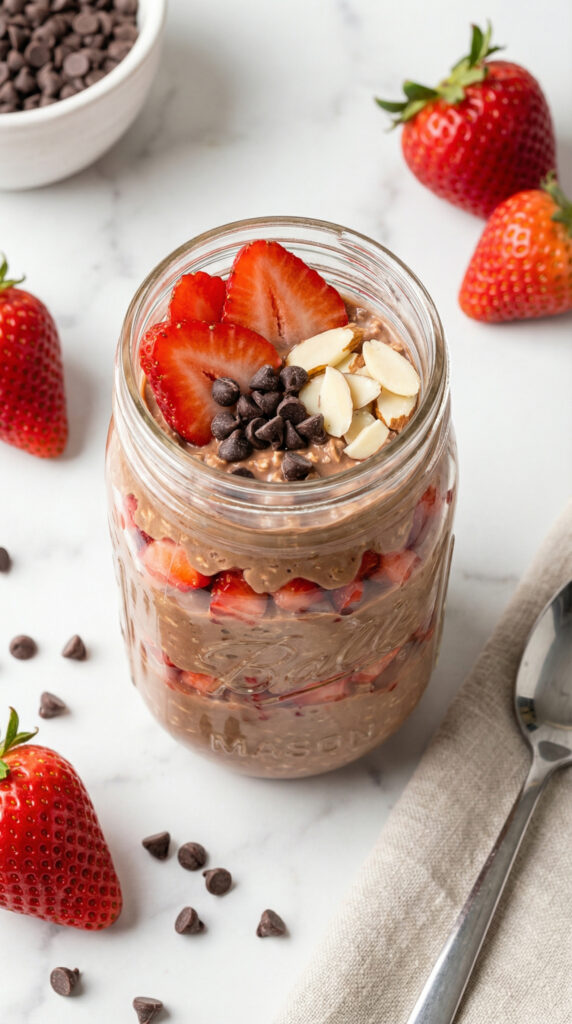
This is the no-cook option. If your weekend is already full and the idea of turning on the oven sounds like too much, overnight oats are the move. Five minutes of assembly, no heat involved, and the fridge does all the work overnight.
The key to making these actually high protein (instead of just oats sitting in milk) is using Greek yogurt as part of the liquid base. It adds protein, makes the texture thick and creamy instead of watery, and keeps you full longer than oats made with just milk.
Strawberry overnight oats are the straightforward version — rolled oats, Greek yogurt, milk, a little maple syrup, and fresh strawberries all stirred together in a mason jar. By morning it’s thick, creamy, and tastes like strawberry cheesecake. Not in a “if you close your eyes and pretend” way. It actually does.
Full strawberry overnight oats recipe →
Strawberry chocolate overnight oats are the same concept but with cocoa powder whisked into the base and a layer of diced strawberries in the middle. It’s a chocolate-covered-strawberry situation in oat form. Slightly more indulgent, still has the Greek yogurt protein base, still takes five minutes to put together.
Full strawberry chocolate overnight oats recipe →
Both versions keep for four to five days in the fridge. Make a batch of jars on Sunday, grab one each morning, eat it cold at your desk. That’s it.
How I Actually Use These
I don’t make all four methods every week. That would defeat the purpose. Usually it’s one batch of sheet pan eggs or a round of burritos (8 portions either way) plus a few jars of overnight oats. The eggs or burritos cover the mornings when I want something warm and savory, the oats cover the mornings when I want to grab something cold and not think about it.
When I’m tired of eggs entirely, a full batch of frittata muffins plus overnight oats covers the week with no overlap.
The burritos are the best option if you want to build a deep freezer stash. Make a double batch one weekend, freeze 16 of them, and you’ve got a backup breakfast supply for weeks. They’re the only thing on this list that genuinely improves your life on the mornings when you forgot to prep anything else.
The protein math on a typical day: sheet pan egg sandwich (25-31g depending on the version), breakfast burrito (15-20g), frittata muffins (12-20g depending on the filling), overnight oats with Greek yogurt (roughly 15-18g depending on the yogurt). None of these are meal replacement shake territory, but they’re all enough to get you to lunch without your stomach becoming a distraction in a meeting.
WANT TO SAVE THIS FOR LATER?
We'll email it to you!
We won't send you spam. Unsubscribe at any time.