High Protein Cottage Cheese Sheet Pan Scrambled Eggs (14g Protein)
Blending cottage cheese into sheet pan eggs replaces milk while adding 28 grams of protein to the entire batch — that is 14 grams per serving from the eggs alone, with a noticeably creamier texture.
This is the viral cottage cheese egg hack adapted for sheet pan cooking, and yes, it actually works — the eggs come out fluffier and hold moisture better when reheated.
WANT TO SAVE THIS FOR LATER?
We'll email it to you!
We won't send you spam. Unsubscribe at any time.
Why You’ll Love It
- 14g protein per serving from eggs alone (add cheese and meat for 25g+)
- Cottage cheese makes eggs creamier without adding fat
- No cottage cheese texture or taste in the final product
- Eggs reheat better than standard sheet pan eggs
- Completely hands-off oven cooking
- Feeds 8 people at once
Protein Breakdown Per Serving (8 servings)
- Eggs and egg whites: 10.75g
- Cottage cheese (1 cup divided by 8): 3.5g
- Total from egg mixture: approximately 14g protein per serving
Add Canadian bacon (+9g), a slice of cheese (+5g), and an English muffin (+5g) for a 33g protein sandwich.
The real benefit of cottage cheese is not massive protein gains — it is the improved texture and moisture retention.
Ingredients
For the High Protein Eggs
- 12 large eggs
- 4 egg whites (or 1/2 cup liquid egg whites from a carton)
- 1 cup cottage cheese (4% milkfat works best — see notes below)
- 1/2 teaspoon salt
- 1/4 teaspoon black pepper
- 2 tablespoons butter, melted
Note: You are replacing the milk entirely with blended cottage cheese, not adding cottage cheese in addition to milk.
For Assembly
- 8 English muffins, bagels, or croissants
- 8 slices cheese (Swiss, cheddar, or provolone)
- 8 slices Canadian bacon, turkey bacon, or ham (highly recommended for protein)
Optional Add-Ins
- 2 tablespoons fresh chives, chopped
- Everything bagel seasoning for topping
- Fresh dill
- 1/4 cup shredded parmesan (adds 5g protein to whole batch)
Steps
- Preheat your oven to 350°F (175°C).
- Add the cottage cheese to a blender or food processor.
- Blend on high for 45-60 seconds until completely smooth — run it longer than you think necessary.
- Stop and scrape down the sides, then blend for another 15 seconds.
- Check the texture: there should be zero visible curds. If you see any lumps, keep blending.
- Line a half sheet pan (18×13 inches) with parchment paper, making sure the paper comes up all four sides.
- Brush the parchment generously with melted butter — do not skip the corners.
- Crack the eggs into a large mixing bowl and add the egg whites.
- Pour in the blended cottage cheese.
- Add the salt and pepper.
- Whisk vigorously for 45-60 seconds until the mixture is completely uniform and slightly frothy.
- If adding chives or parmesan, fold them in now.
- Pour the egg mixture onto the prepared sheet pan.
- Tilt the pan gently to spread the eggs evenly to all corners — the mixture is thicker than regular eggs and needs encouragement.
- Bake for 18-22 minutes until the eggs are set and slightly puffed.
- The cottage cheese mixture takes 3-5 minutes longer than regular sheet pan eggs — do not underbake.
- The center should be completely firm with no jiggle.
- Remove from the oven and let cool for 3-4 minutes — the eggs will deflate slightly, which is normal.
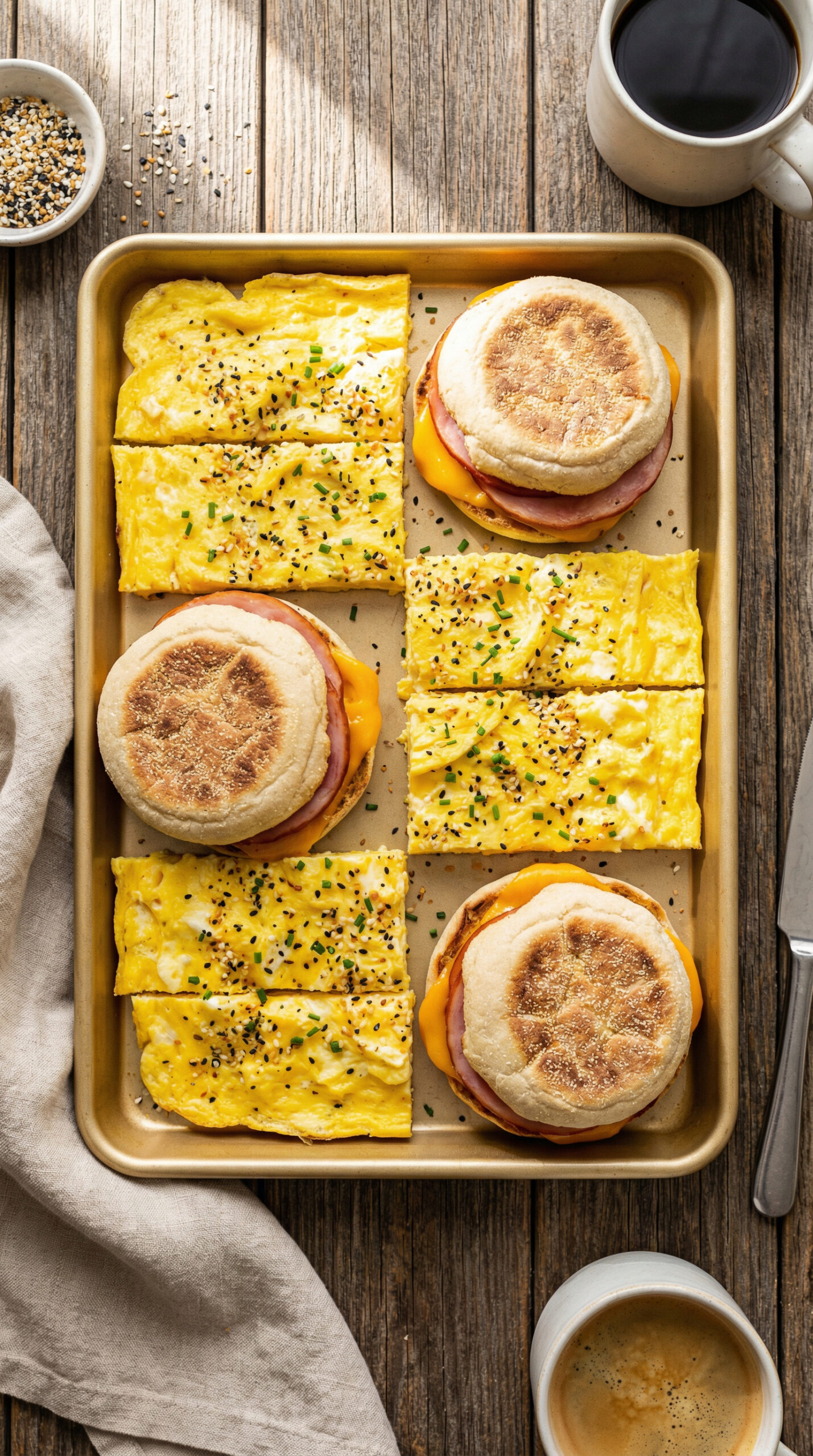
- Use a pizza cutter to cut into 8 rectangles.
- Toast your bread while the eggs rest.
- Assemble sandwiches with an egg portion, cheese, and meat if using.
The Science Behind Cottage Cheese Eggs
Cottage cheese is roughly 80% water and 11% protein, with the protein coming from casein.
When blended and heated, the casein proteins create a more stable structure than eggs alone, which is why cottage cheese eggs:
- Hold moisture better during cooking
- Reheat without becoming rubbery or dry
- Have a creamier, more custard-like texture
The extra liquid from cottage cheese (compared to milk) is why these eggs take longer to bake — you need that extra time to set the additional moisture.
Cottage Cheese Selection Guide
4% milkfat (full-fat): Best flavor and creamiest texture. Recommended for this recipe.
2% milkfat (reduced-fat): Works well, slightly less creamy. Good middle ground.
1% or fat-free: Higher protein per calorie but produces slightly drier, less flavorful eggs. Add an extra tablespoon of butter to compensate.
Small curd vs. large curd: Does not matter since you are blending it smooth.
Avoid: Cottage cheese with added fruit or flavoring.
No Blender? Here Are Your Options
An immersion blender works well — blend directly in a tall container for 60-90 seconds.
A food processor works but requires more scraping down the sides.
In a pinch, you can mash cottage cheese through a fine mesh strainer using the back of a spoon, but this takes 5+ minutes and may leave some texture.
Do not skip blending. Unblended cottage cheese creates unpleasant chewy curds in the finished eggs.
Helpful Tips and Substitutions
The batter will be thicker than regular eggs. This is normal. Use a spatula to spread it to the corners if tilting the pan is not enough.
These eggs puff up more during baking and deflate as they cool. Do not panic — the texture remains creamy.
Bake time is longer than standard sheet pan eggs. The extra moisture from cottage cheese needs more time to set. Start checking at 18 minutes.
Greek yogurt is not a good substitute. It is too thick and tangy. The eggs will taste sour.
Ricotta works but produces denser eggs with a slightly grainier texture.
For higher protein, increase to 6 egg whites and use 1.5 cups cottage cheese. This adds about 18g protein to the whole batch.
Common Problems and Fixes
Eggs have lumpy texture: Cottage cheese was not blended long enough. Next time, blend for a full 60 seconds and check for curds before mixing with eggs.
Eggs are wet or underdone in the center: Cottage cheese eggs need 3-5 more minutes than regular sheet pan eggs. Bake until there is absolutely no jiggle.
Eggs taste bland: Cottage cheese dilutes the egg flavor slightly. Season more aggressively — try 3/4 teaspoon salt instead of 1/2.
Eggs deflated a lot: This is normal. They will still taste great. If you want more volume, add 1/4 teaspoon baking powder to the egg mixture.
Serving Ideas
Serve on everything bagels with cream cheese and smoked salmon for a loaded breakfast.
Top with everything bagel seasoning for extra flavor without extra calories.
Pair with fresh berries and a side of Greek yogurt for a complete high protein breakfast.
Wrap in a low carb tortilla with avocado and turkey bacon.
Serve plain alongside chicken sausage links for a simple high protein plate.
Make-Ahead and Storage
Bake the egg sheet the night before and refrigerate covered with plastic wrap pressed directly onto the surface.
Cottage cheese eggs reheat better than regular eggs. The casein proteins help them retain moisture, so they do not dry out in the microwave.
Microwave individual portions for 30-40 seconds until warmed through.
Assembled sandwiches keep refrigerated for up to 4 days wrapped tightly in foil — one day longer than regular sheet pan eggs.
Freeze assembled sandwiches wrapped in plastic wrap then foil for up to 6 weeks.
Store in a reusable freezer bag labeled with the date.
Reheat frozen sandwiches in the microwave for 90 seconds, flip, then microwave 60 more seconds. Finish in a toaster oven for 2-3 minutes if you want a crispier exterior.
Worth the Extra Step
Blending cottage cheese takes 60 seconds and a blender to wash — that is the only extra effort compared to regular sheet pan eggs.
In exchange, you get eggs that are creamier, higher in protein, and reheat noticeably better for meal prep.
The protein boost is modest (about 3.5g extra per serving), but the texture improvement is the real reason to try this method.

WANT TO SAVE THIS FOR LATER?
We'll email it to you!
We won't send you spam. Unsubscribe at any time.