10 of America’s Strangest Roadside Attractions Worth Pulling Over For
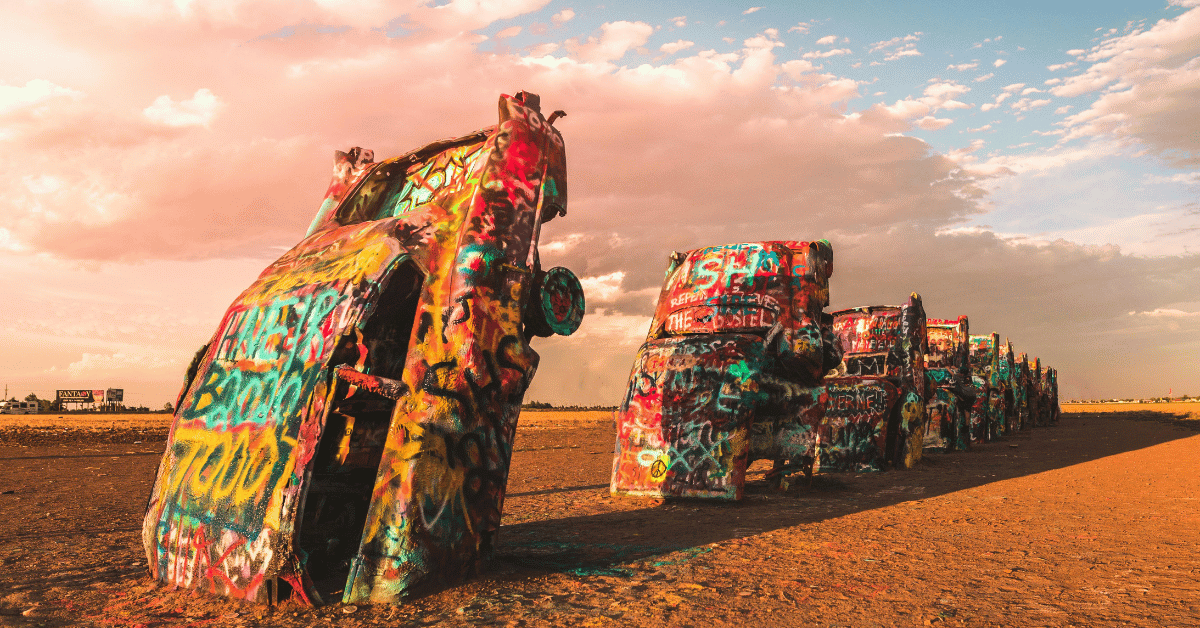
America’s highways are lined with monuments to obsession, eccentricity, and the simple human desire to make passing motorists slam on their brakes.
These aren’t national parks or world heritage sites, but they represent something perhaps more fundamentally American: the urge to build something so wonderfully weird that strangers will drive hundreds of miles just to see it.
From elephant-shaped buildings to cars buried nose-first in the ground, these roadside oddities have been drawing curious travelers since before interstate highways existed.
Pack your camera, embrace your inner tourist, and prepare for the kind of stops your GPS will never suggest.
1. Lucy the Elephant, Margate City, New Jersey
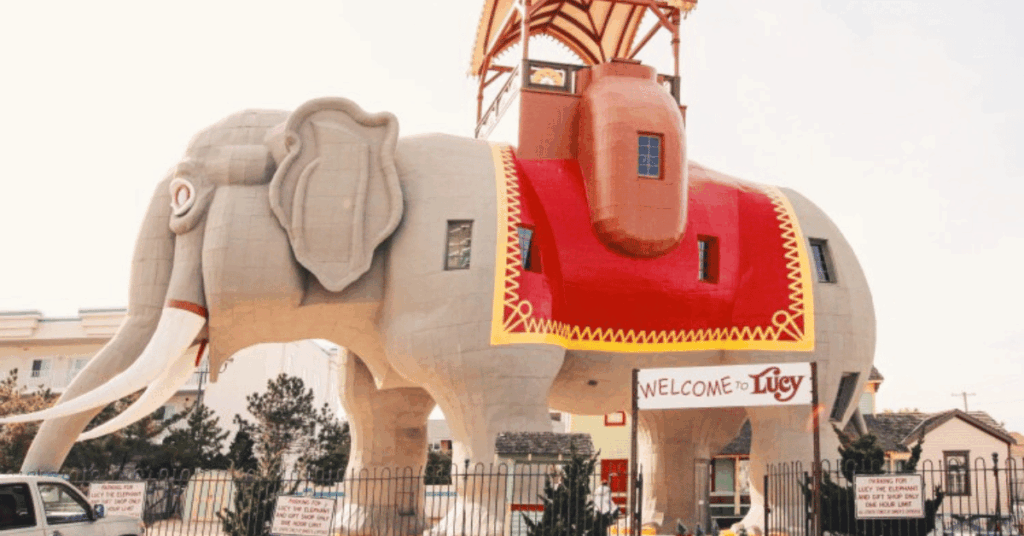
Standing six stories tall on the Jersey Shore since 1881, Lucy is the oldest surviving roadside attraction in America and the only elephant-shaped building in the country designated as a National Historic Landmark.
Real estate developer James V. Lafferty built her from a million pieces of wood and 22 tons of tin sheeting at a cost of $38,000, hoping to lure potential land buyers by giving them panoramic views from her howdah on top.
Over the decades Lucy served as a restaurant, tavern, summer home, and business office before falling into disrepair so severe that she was nearly demolished in the 1960s.
Volunteers saved her by raising funds to move the 90-ton structure 100 yards to her current beachfront location, and today more than 42,000 visitors climb her spiral staircase annually.
2. Carhenge, Alliance, Nebraska
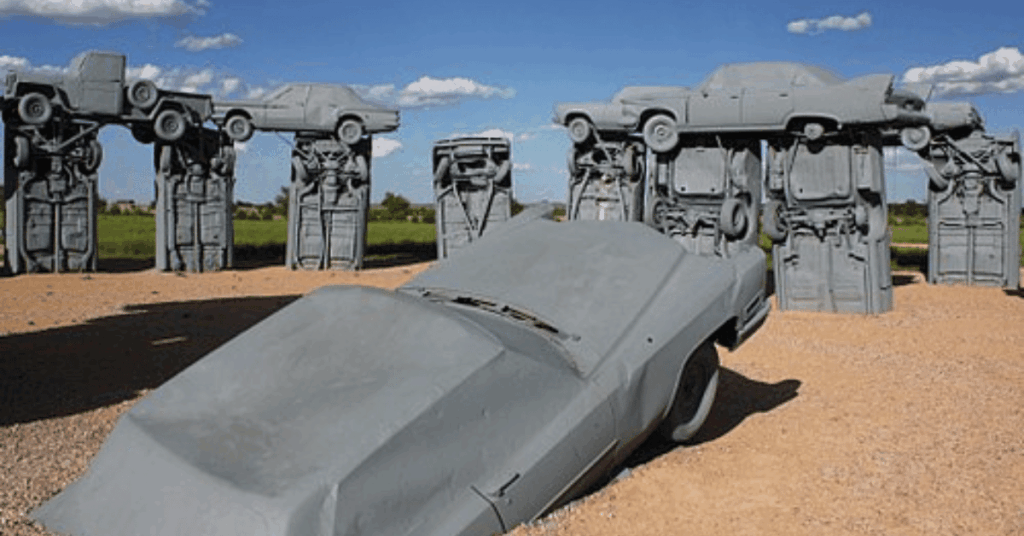
In 1987, engineer Jim Reinders and 35 family members built a full-scale replica of Stonehenge using 39 vintage American automobiles buried trunk-end down in a Nebraska wheat field as a memorial to his father.
The monument matches the original’s proportions exactly, measuring 96 feet in diameter, with a 1962 Cadillac serving as the heel stone and arches formed by welding cars atop the upright models.
Local officials initially wanted to tear it down and label it a junkyard, but public support proved overwhelming and Carhenge eventually became a beloved landmark that draws more than 80,000 visitors annually.
The site has since expanded into the Car Art Reserve, featuring additional sculptures including “Fourd Seasons,” a wheat-inspired installation built entirely from Fords.
3. Cadillac Ranch, Amarillo, Texas
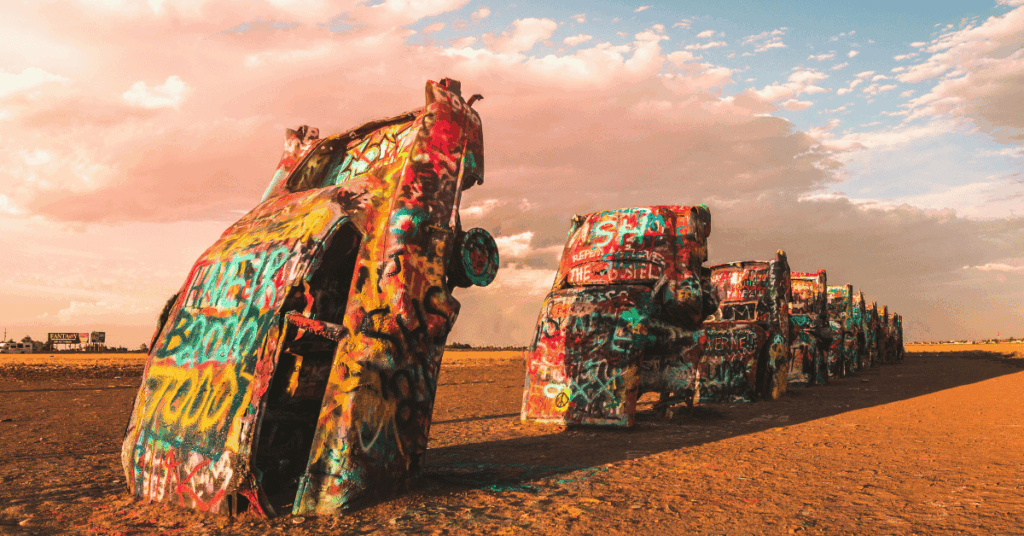
Ten vintage Cadillacs stand nose-down in a dusty field outside Amarillo, planted at the same angle as the Great Pyramid of Giza by eccentric millionaire Stanley Marsh 3 in 1974.
The cars span the years 1949 to 1963, a period Marsh considered the golden age of American automobile design, and represent his tribute to Route 66 and the culture of the open road.
Unlike most roadside attractions, visitors are actively encouraged to leave their mark by spray-painting the vehicles, which means the artwork changes constantly and the cars are now buried under thousands of layers of paint.
Marsh moved the installation further from town in 1997 to escape urban encroachment, and it remains free and open to anyone willing to trudge through the field with a can of spray paint.
4. The Corn Palace, Mitchell, South Dakota

Since 1892, the people of Mitchell have covered their multi-purpose arena with murals made from over 275,000 ears of corn in different colors, creating what may be the world’s largest bird feeder.
The decorative panels are redesigned annually around changing themes celebrating everything from local history to nature, with artists spending months attaching thousands of ears of corn, grain sorghum, oats, rye, and wheat.
The current building, constructed in 1921, features Moorish-style minarets and onion domes that make it look like something between a medieval castle and an agricultural fever dream.
Each year the old corn is stripped away and local birds feast on the leftovers before the new murals go up, a cycle that has continued for over 130 years.
5. The Enchanted Highway, Regent, North Dakota
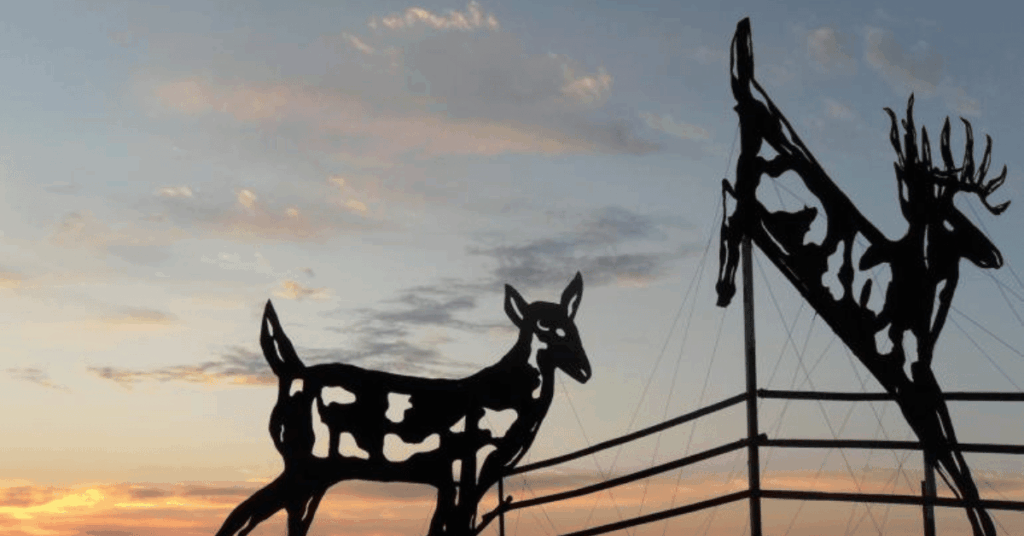
For 32 miles through rural North Dakota, massive metal sculptures rise from the prairie like apparitions, created by one man who refused to let his hometown disappear.
Former teacher Gary Greff began building the sculptures in 1989 to draw tourists to Regent, a farming community whose population had dwindled to fewer than 200 people.
The seven completed works include a 110-foot-long grasshopper constructed from old oil tanks, a flock of geese in flight, and “Geese in Flight,” which at one point held the Guinness World Record for largest scrap metal sculpture.
Greff has worked on the project for over 35 years, financing much of it himself and doing the welding personally, transforming an anonymous stretch of highway into one of North Dakota’s most photographed attractions.
6. Salvation Mountain, Niland, California
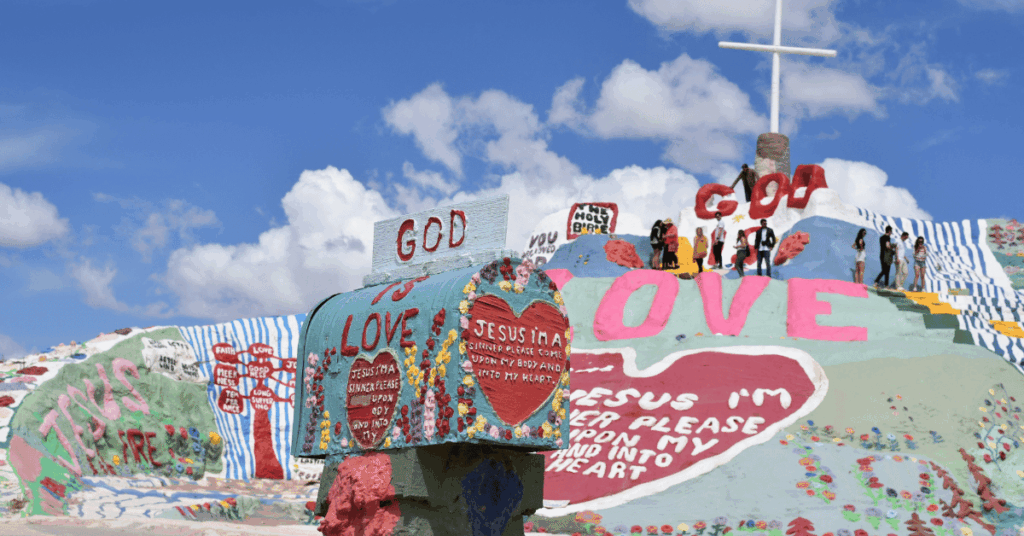
Rising from the California desert near the Salton Sea, this three-story mountain of adobe, straw, and thousands of gallons of donated paint was the life’s work of one man with a religious message.
Leonard Knight spent the last 28 years of his life covering the artificial hill with biblical verses and colorful murals after his original plan, a hot air balloon proclaiming “God Is Love,” failed to get off the ground.
The Folk Art Society of America declared Salvation Mountain a “national treasure” worthy of preservation, and the site has appeared in numerous films including “Into the Wild.”
Knight passed away in 2014, but volunteers continue maintaining his creation, which sits at the entrance to Slab City, a community of off-grid dwellers living in the ruins of a former military base.
7. The International UFO Museum, Roswell, New Mexico
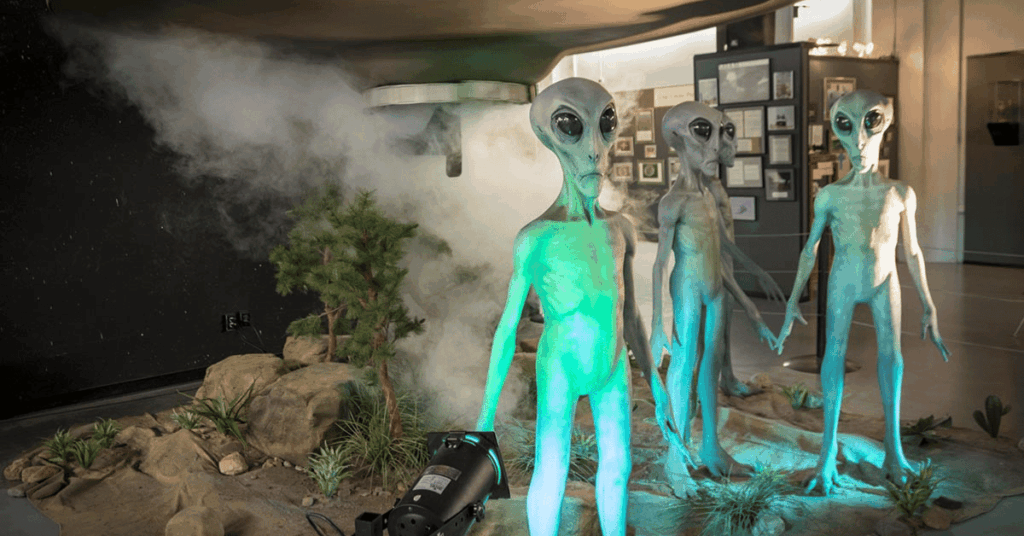
In 1947, something crashed on a ranch near this New Mexico town, the military announced it was a flying disc, then quickly changed the story to a weather balloon, and Roswell has been cashing in ever since.
The museum opened in 1991 and presents witness testimonies, government documents, and artifacts related to the incident that spawned countless conspiracy theories and made Roswell synonymous with alien encounters.
The town has embraced its extraterrestrial reputation so thoroughly that even the McDonald’s is shaped like a flying saucer and streetlights downtown feature alien eyes.
Whether you’re a true believer or a skeptic looking for kitsch, the museum offers a fascinating window into one of America’s most enduring mysteries and the industry it created.
8. Wall Drug, Wall, South Dakota
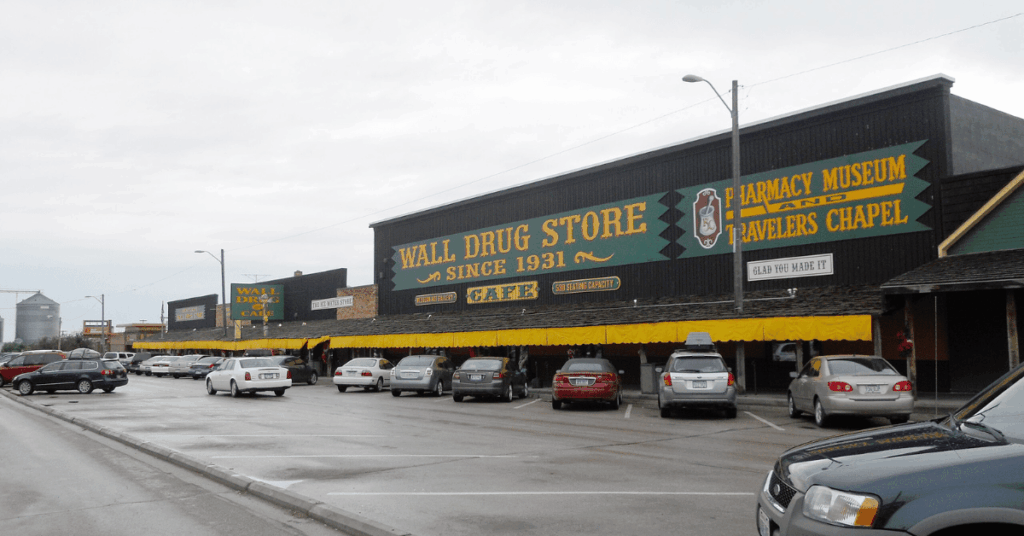
What began in 1931 as a struggling pharmacy in a town of 326 people became one of America’s most famous roadside attractions after owner Dorothy Hustead put up signs advertising free ice water to parched travelers.
Today the sprawling complex covers 76,000 square feet and includes a chapel, an 80-foot dinosaur, a Western art gallery, and enough kitsch to make your head spin, all still offering that free ice water and five-cent coffee.
The store’s advertising strategy, which started with those simple roadside signs, has grown into thousands of billboards in all 50 states and reportedly as far away as Antarctica and the moon’s surface.
More than two million visitors stop annually, making Wall Drug arguably the most successful example of roadside advertising in American history.
9. Coral Castle, Homestead, Florida
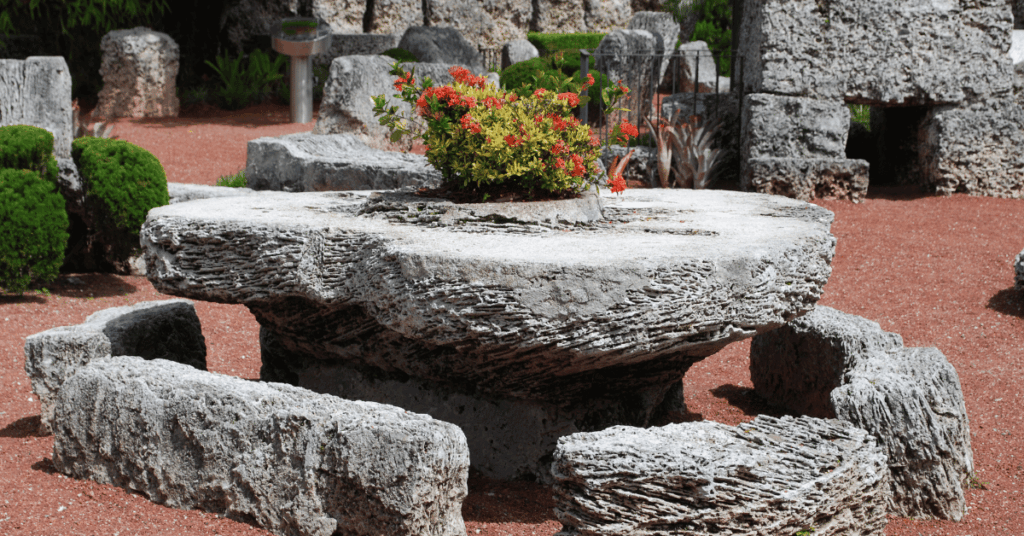
Between 1923 and 1951, a Latvian immigrant named Edward Leedskalnin single-handedly carved and moved over 1,100 tons of coral rock to build this mysterious structure, working only at night and refusing to let anyone watch.
The heartbroken Leedskalnin built the castle as a tribute to the fiancée who had left him at the altar, creating precisely balanced doors, walls, and sculptures using methods that remain debated to this day.
Some of the coral blocks weigh as much as 30 tons, yet Leedskalnin, who stood only five feet tall and weighed about 100 pounds, moved them without heavy machinery or assistance.
He took his construction secrets to the grave in 1951, leaving behind a monument that has inspired theories ranging from magnetic levitation to ancient Egyptian techniques.
10. South of the Border, Dillon, South Carolina
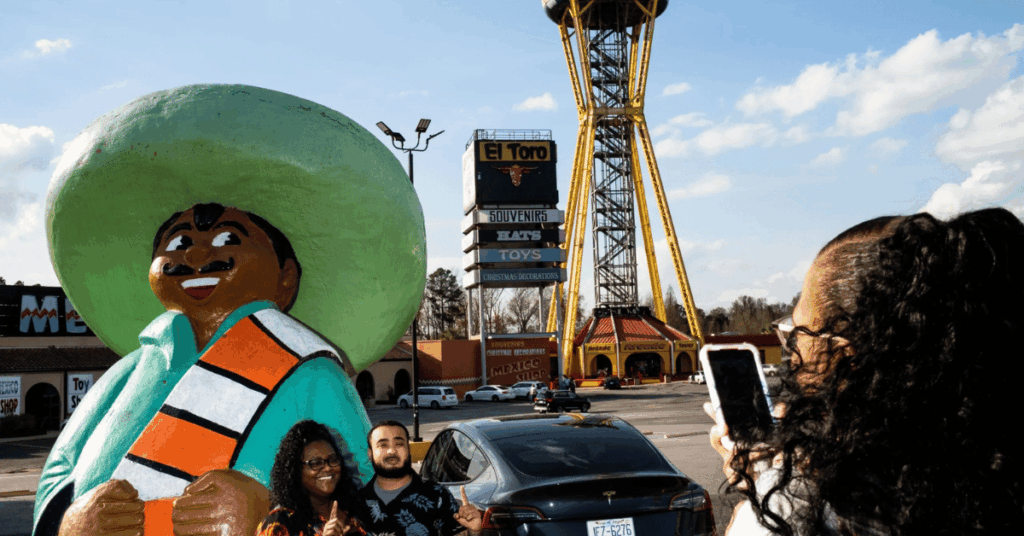
Starting 175 miles away, billboards featuring a cartoon Mexican named Pedro begin counting down the distance to this sprawling rest stop that has been luring Interstate 95 travelers since 1950.
What began as a simple beer stand has exploded into a 350-acre complex featuring a 200-foot-tall sombrero observation tower, neon-lit restaurants, a reptile lagoon, mini-golf, and enough souvenir shops to lose an afternoon.
At its peak, the attraction deployed more than 250 billboards along the East Coast, creating perhaps the most aggressive roadside advertising campaign in American history.
Love it or hate it, South of the Border has become such a fixture of East Coast road trips that the experience of driving past without stopping feels somehow incomplete.
The American Roadside Spirit
These attractions exist because someone looked at an empty field or abandoned building and saw an opportunity to create something that would make strangers smile.
They remind us that America’s highways were once lined with wonder, before GPS plotted the fastest route between two points and convinced us that efficiency matters more than discovery.
The next time you’re tempted to stay on the interstate, remember that the world’s largest ball of twine isn’t going to visit itself.