12 Beautiful Viewpoints To Fall in Love With at Grand Canyon National Park
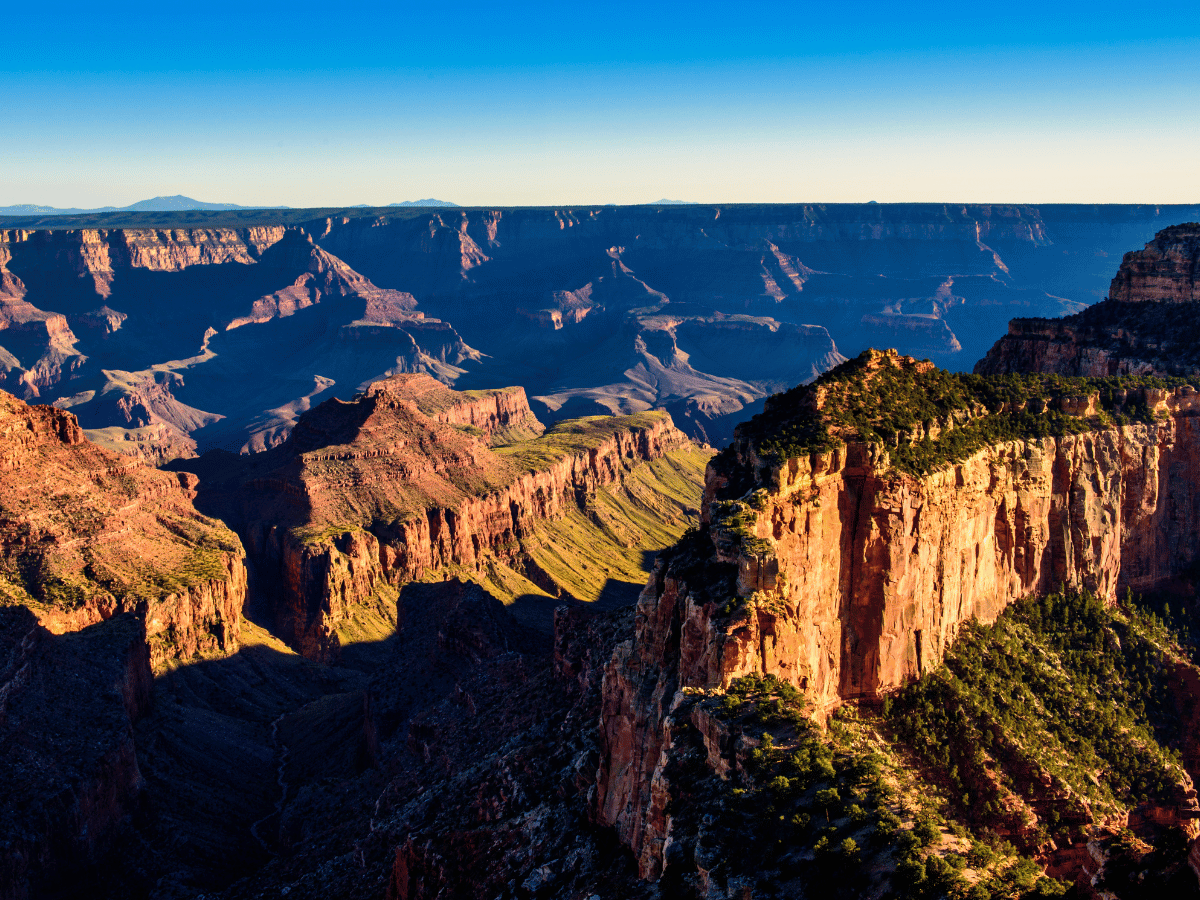
Your first glimpse of the Grand Canyon hits different than any other view in America.
You’ve seen the photos. You’ve heard it’s big.
But nothing prepares you for actually standing on the rim and realizing that big doesn’t even begin to describe it.
With dozens of overlooks spread across the South and North Rims, it’s hard to know where to start.
These 12 viewpoints are the ones that make people fall in love with this place.
1. Mather Point
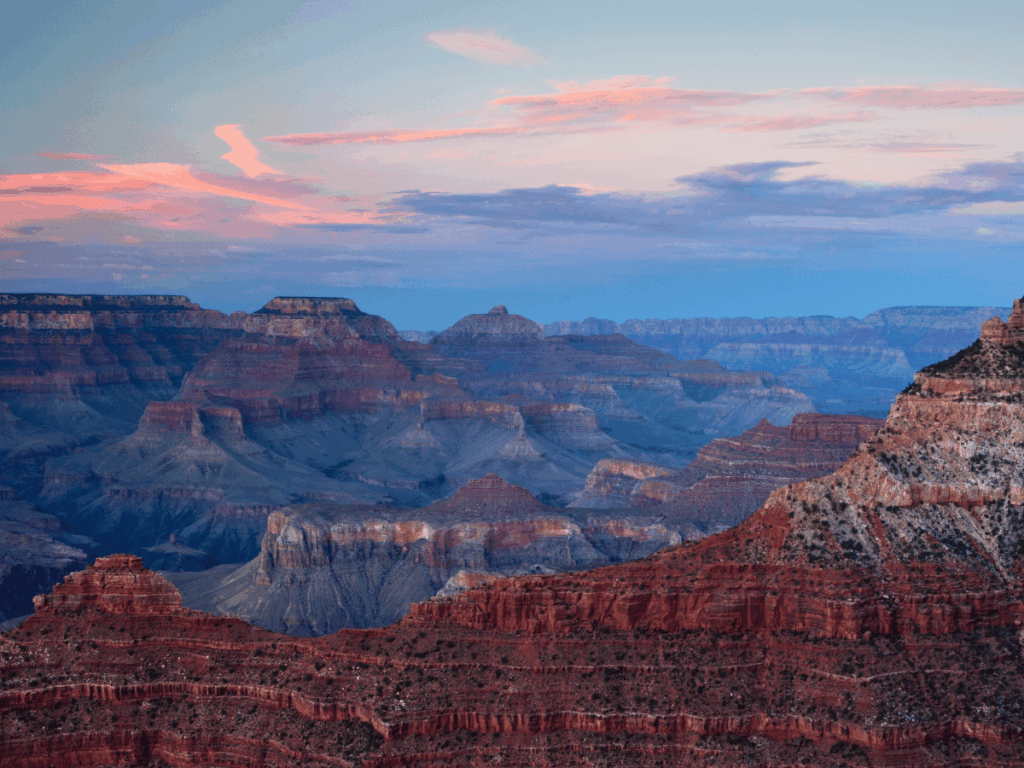
This is where most people get their first look at the canyon, and there’s a reason for that.
Just a short walk from the South Rim Visitor Center, Mather Point delivers one of the most iconic views in the entire park.
At 7,000 feet, you can see up to 60 miles on a clear day.
It’s crowded. It’s famous. And it’s still absolutely worth it.
2. Yavapai Point
Right next door to Mather Point, Yavapai offers a similar view with a bonus: the Geology Museum perched on the rim.
Inside, displays explain how the canyon formed over millions of years, which makes the view outside hit even harder.
The overlook looks out at some of the most rugged formations in the park, with layers of rock in reds, oranges, and purples stacking into the distance.
Great for sunrise.
3. Hopi Point
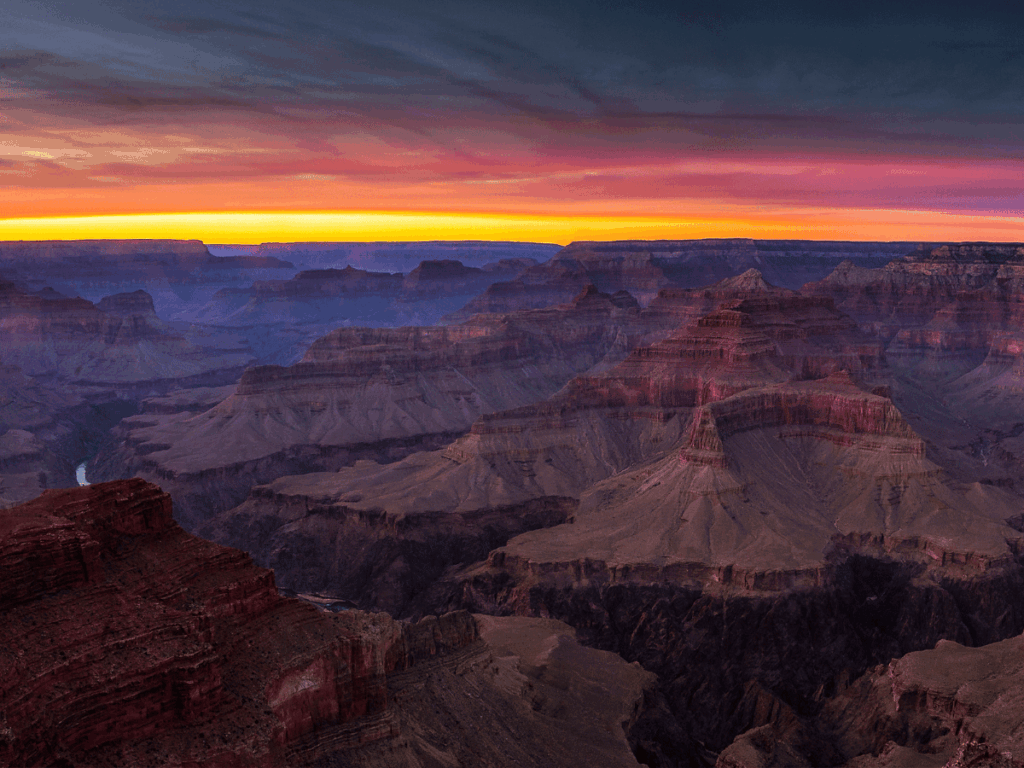
If you only catch one sunset at the Grand Canyon, make it here.
Hopi Point juts out farther into the canyon than any other overlook on the South Rim, giving you views to both the east and west.
On clear days, you can even spot the Colorado River glinting thousands of feet below.
Get there early. Everyone knows this is the sunset spot.
4. Lipan Point
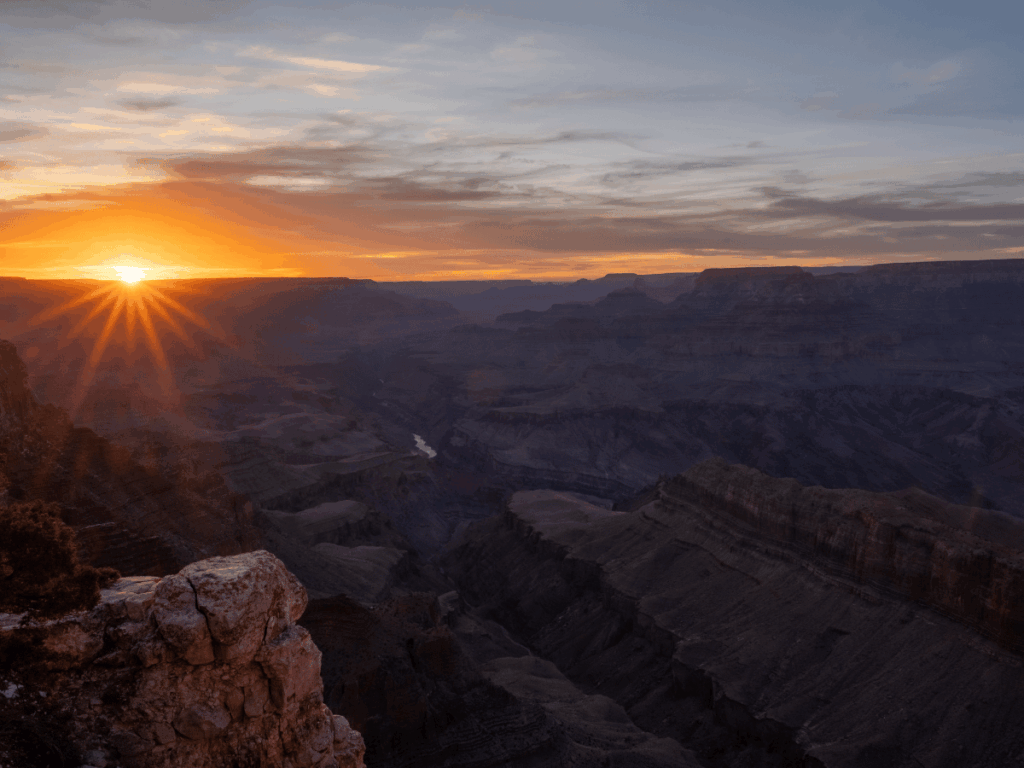
One of the best viewpoints on Desert View Drive, and somehow one of the least crowded.
The view here stretches nearly 360 degrees, with the Colorado River visible below and the inner canyon formations rising in layers.
It’s a short detour from the main scenic drive, and the wide-open feeling makes it worth every extra minute.
5. Desert View Watchtower
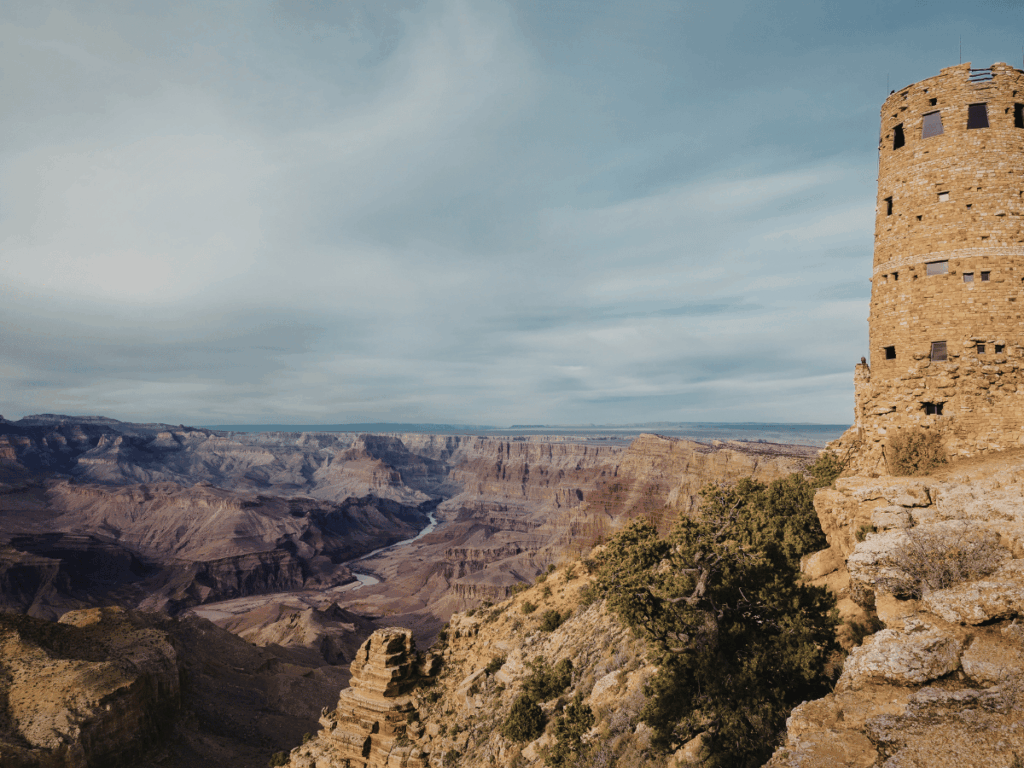
At the eastern edge of the South Rim, a 70-foot stone tower stands on the canyon’s edge.
Built in 1932 by architect Mary Colter to resemble ancestral Puebloan towers, it’s both a viewpoint and a piece of history.
Climb to the top for panoramas of the Grand Canyon, the Painted Desert, and the San Francisco Peaks in the distance.
The murals inside by Hopi artist Fred Kabotie are worth the visit alone.
6. Yaki Point
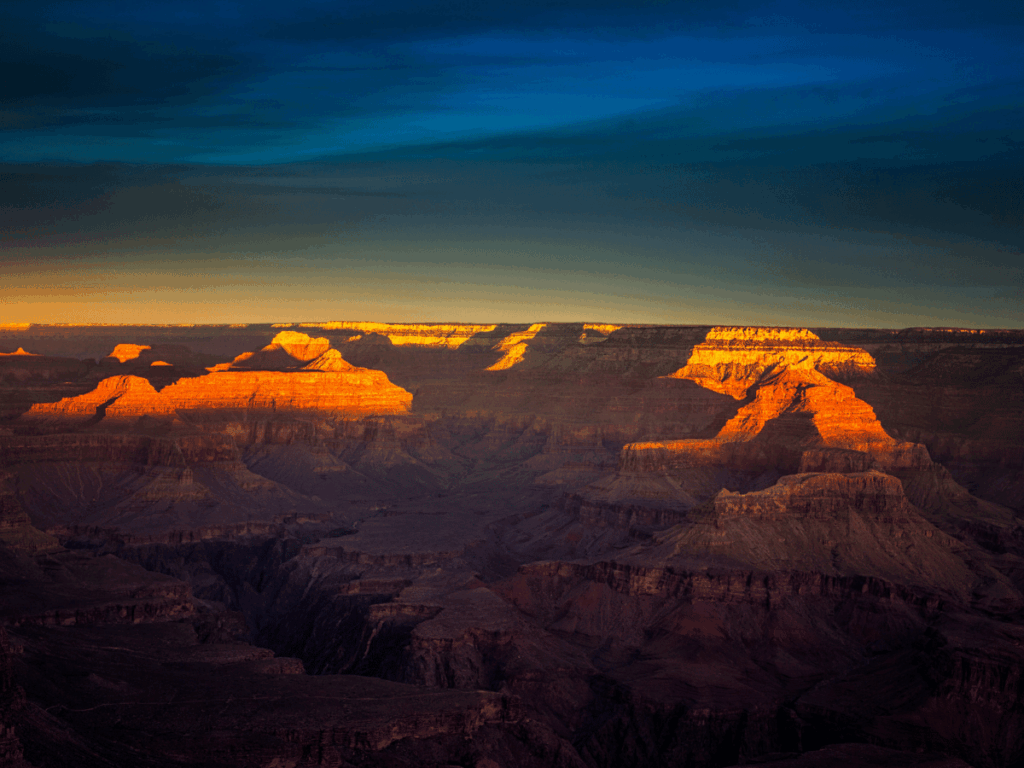
You can’t drive here during peak season, which is exactly why it’s worth the shuttle ride.
Fewer crowds mean more space to take in the view, especially during sunrise when the light paints the canyon walls gold and orange.
From here, you can also see the South Kaibab Trail switchbacking down into the canyon, giving you a sense of the scale that’s hard to grasp from other viewpoints.
7. Grandview Point
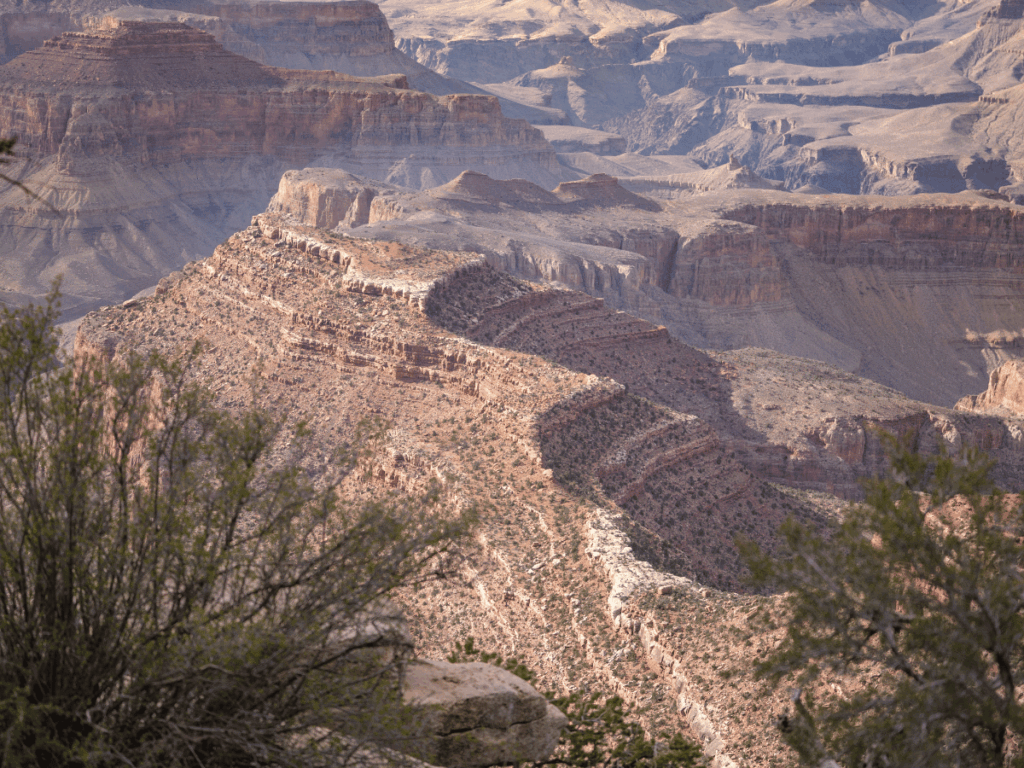
The name says it all.
At just under 7,500 feet, this is arguably the most dramatic view on the entire South Rim.
You’ll see prominent buttes with names like Vishnu Temple and Shiva Temple, plus a tiny sliver of the Colorado River far below.
It’s also the trailhead for the Grandview Trail, one of the steepest and most challenging routes into the canyon.
8. The Abyss
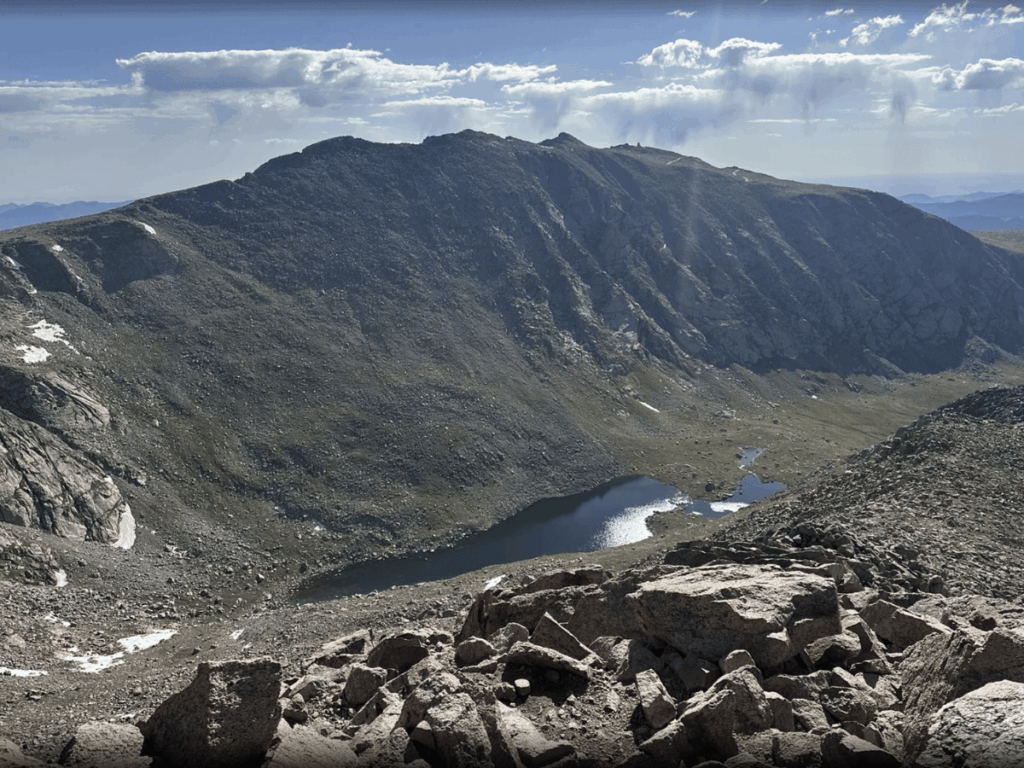
Named for the 3,000-foot vertical drop directly below the overlook, The Abyss lives up to its name.
This is the largest sheer drop on the South Rim, plunging straight down to the Tonto Plateau and the Colorado River.
Standing at the edge here gives you a visceral sense of the canyon’s depth that the other viewpoints don’t quite capture.
9. Pima Point
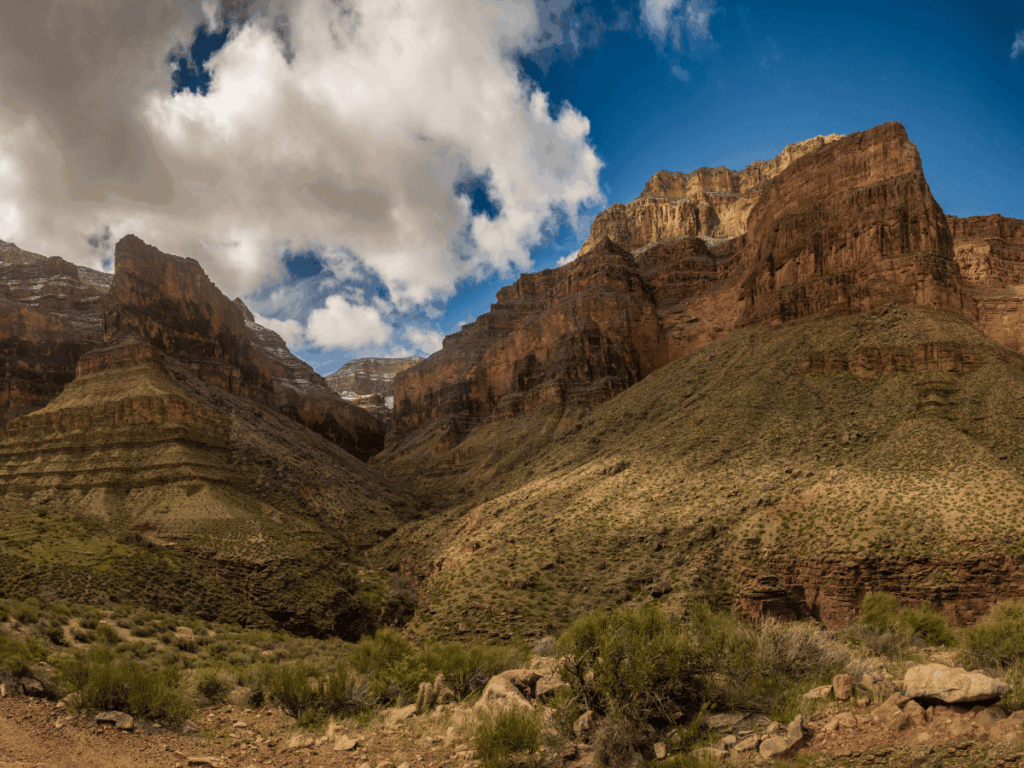
On quiet days, you can actually hear the Colorado River from here.
Pima Point offers one of the best views of the river on the South Rim, with Granite Rapids visible in the gorge below.
It’s one of the final stops on Hermit Road, and by the time you get here, you’ll have seen so many incredible views that this one might still surprise you.
10. Cape Royal, North Rim
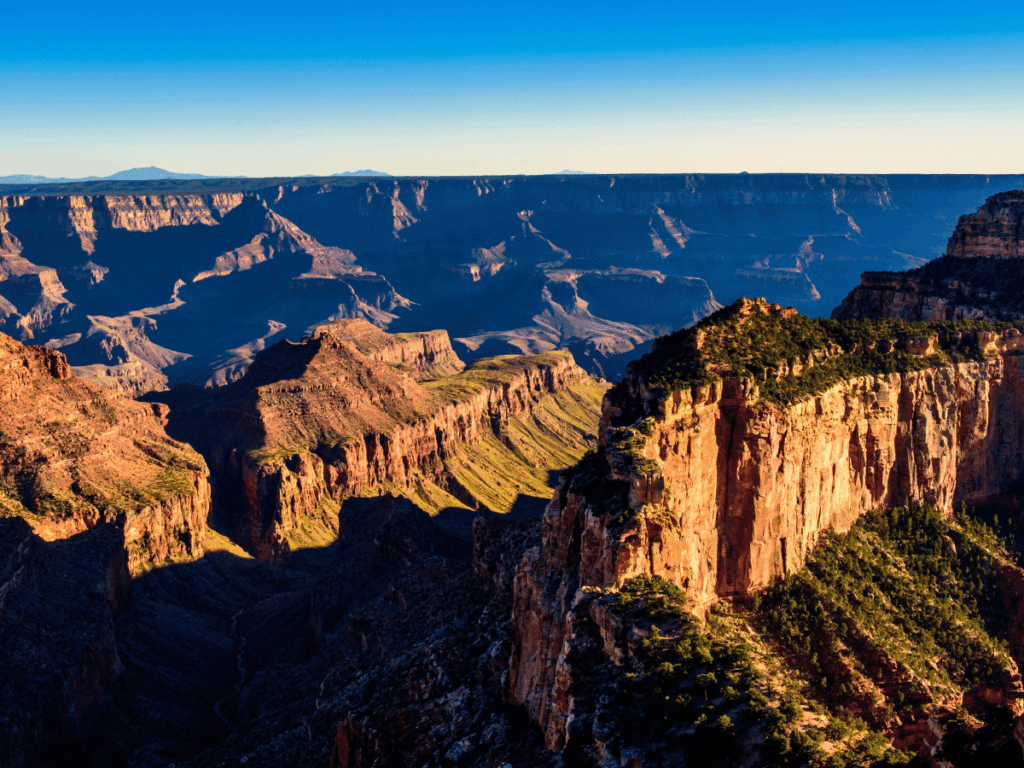
The North Rim is higher, cooler, and far less crowded than the South Rim.
Cape Royal is its crown jewel.
A 23-mile drive from the Grand Canyon Lodge brings you to the southernmost viewpoint on the North Rim, with panoramas that seem to stretch forever.
The short walk to Angels Window, a natural arch with the canyon visible through its opening, is not to be missed.
Best at sunset.
11. Point Imperial, North Rim
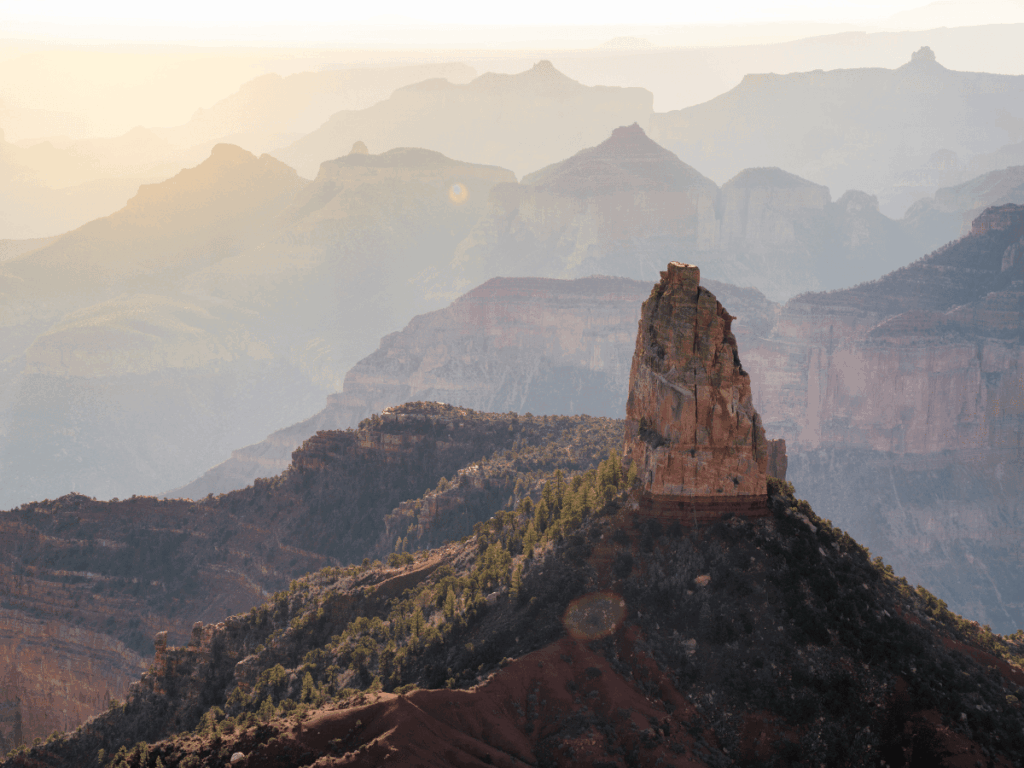
At 8,803 feet, this is the highest viewpoint in the entire park.
It’s also the best place on the North Rim to watch the sunrise.
The prominent spire of Mount Hayden rises in the foreground, with Marble Canyon and the Painted Desert stretching beyond.
Fewer than 10 percent of Grand Canyon visitors make it to the North Rim. This view is their reward.
12. Ooh Aah Point, South Kaibab Trail
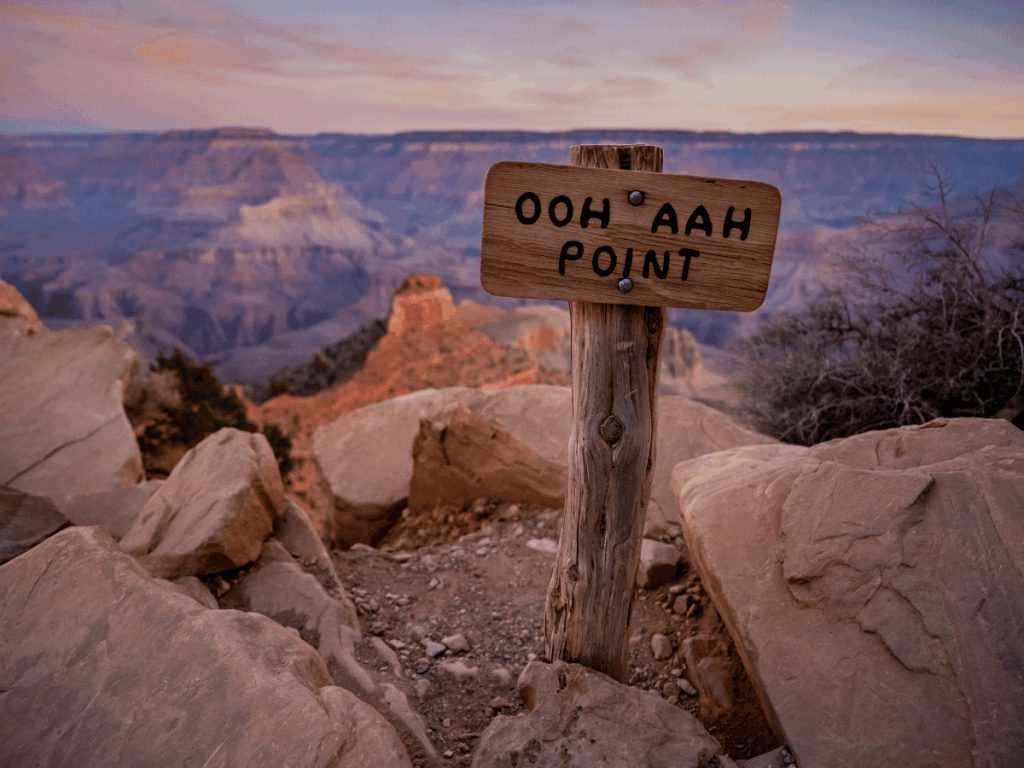
The only way to really understand the Grand Canyon is to get inside it.
Ooh Aah Point sits less than a mile down the South Kaibab Trail, an easy-to-moderate hike that drops you below the rim and into the canyon itself.
From here, the rock layers surround you instead of just stretching below you, and the view opens up in a way that rim viewpoints can’t match.
The name comes from what everyone says when they see it.
Every View Tells the Same Story
The Grand Canyon is old. Really old.
The rocks at the bottom are nearly two billion years old. The canyon itself has been carved over millions of years by the Colorado River and the slow, patient work of erosion.
Every viewpoint shows you a different angle on the same impossible story.
A story written in rock, in color, in depth.
You don’t just see the Grand Canyon.
You feel it.