Austria’s Hidden Hiking Gems: 5 National Parks
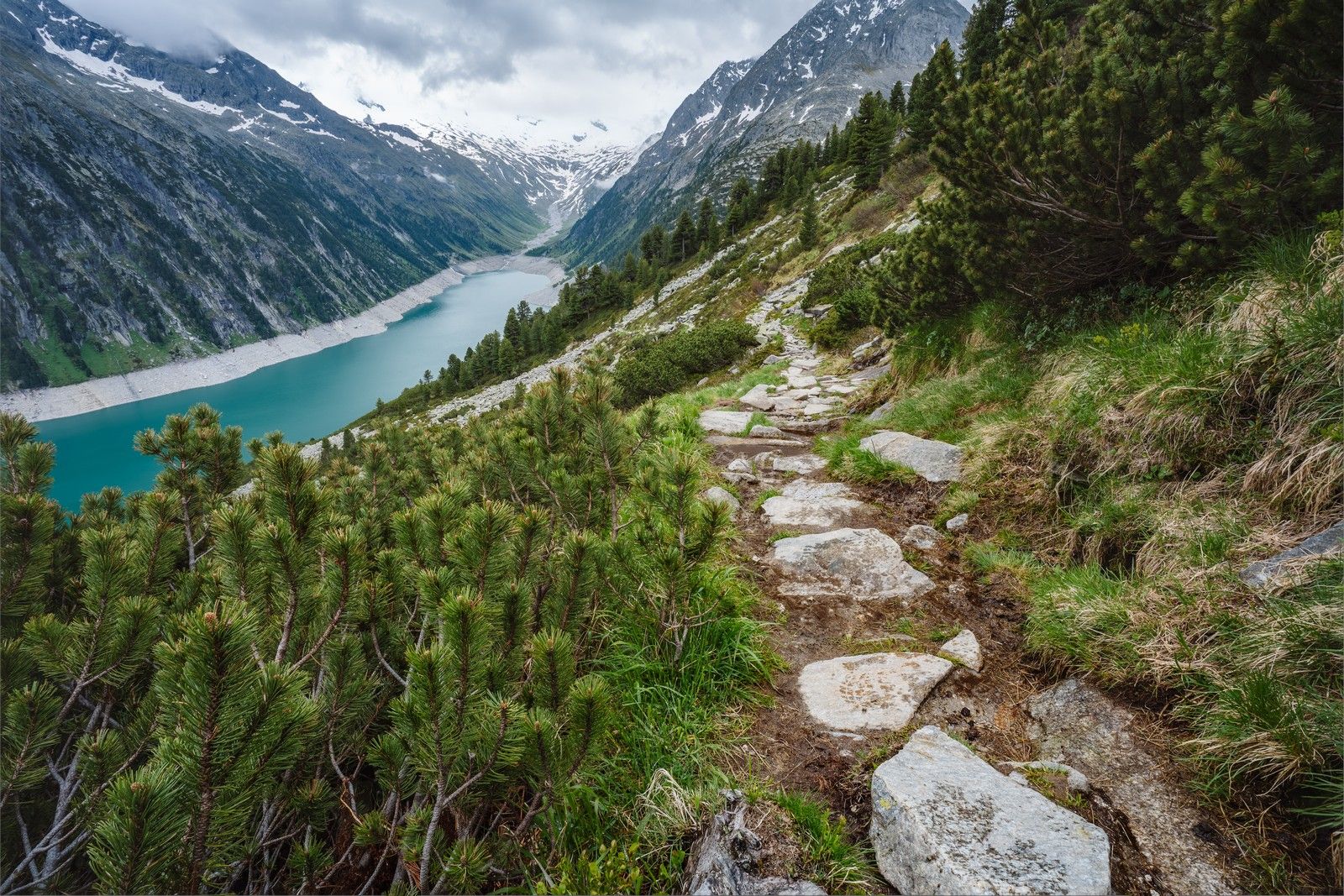
Austria’s national parks present some of Europe’s most breathtaking hiking opportunities, ranging from glacier-crowned peaks to pristine wetlands. Each park has a unique character, catering to a variety of hikers—whether you crave dramatic alpine challenges or gentle family strolls through ancient forests.
Hohe Tauern National Park: Austria’s Alpine Crown Jewel
At 1,856 km², Hohe Tauern is Austria’s largest national park and the crown jewel of the Alps. It is home to the country’s highest peak, Grossglockner (3,798m), and offers a sanctuary of towering glaciers, thundering waterfalls, and classic alpine scenery that epitomizes the Austrian mountain experience.
Top Hiking Routes
Glacier Trail Innergschlöß is one of summer’s most picturesque glacier hikes. This 12km, 5-6 hour trek takes you through a landscape that feels almost otherworldly, with ancient ice formations creating a natural amphitheater of pristine wilderness. Begin your journey at Parkplatz Matreier Tauernhaus (Tauernhausstraße 3, 9971 Matrei in Osttirol), which is accessible by bus from Matrei in Osttirol or Lienz. The highlight of this trail is the stunning Schlatenkees glacier, offering views of peaks that soar above 3,000 meters.
Krimml Waterfalls Trail provides a family-friendly introduction to the park. This gentle 7km, 3-4 hour route features multiple viewpoints where you can feel the spray from Europe’s highest waterfalls, which cascade a total of 380 meters. Start at Parkplatz WasserWelten Krimml (Wasserfallstraße 47, 5743 Krimml), reachable by ÖBB train to Zell am See, followed by bus 670 to Krimml Wasserfälle. The well-maintained paths make this trail accessible for hikers of varying fitness levels.
Grossglockner High Alpine Trail presents a challenge for experienced hikers, offering a demanding 12-15km, 7-8 hour circuit around Austria’s tallest peak. Begin at Parkplatz Kaiser-Franz-Josefs-Höhe (9844 Heiligenblut am Großglockner), accessible via summer bus from Heiligenblut. This route rewards your effort with panoramic views of Grossglockner and its surrounding glaciers.
Pro Tips for Hohe Tauern
- Summer crowds can be overwhelming; start early in the morning for better parking and quieter trails.
- Weather can change rapidly at high altitudes; be sure to pack layers even on sunny days.
- The Grossglockner High Alpine Road charges a €45 entrance fee for cars but grants access to multiple trailheads.
- Mountain huts provide hearty meals, but prices reflect their remote locations (expect to pay €15-20 for main dishes).
Gesäuse National Park: The Wild Heart of Styria
Located in Styria, Gesäuse offers Austria most unrefined alpine experience. Deep gorges carved by the rushing Enns River create dramatic limestone walls that rise almost vertically from the valley floor. This park appeals to serious hikers seeking solitude and challenges far from tourist crowds.
Epic Multi-Day Adventures
Luchs Trail (Lynx Trail) spans 200 kilometers through Gesäuse and neighboring parks, providing Austria’s ultimate multi-day hiking experience. Beginning in Admont (Hauptstraße, 8911 Admont), which is accessible by train via Selzthal and has parking available near the monastery, the trail connects remote mountain huts and pristine valleys, guiding dedicated hikers through landscapes that have remained unchanged for centuries.
Johnsbach Valley Trail offers a more manageable 8-10 km day hike through alpine meadows teeming with wildflowers in the summer. This 3-4 hour route starts at Parkplatz Kölblwirt (Johnsbach 65, 8912 Admont) and can be reached by bus from Admont to Johnsbach. The trail features stunning panoramic views of the Gesäuse mountains without requiring technical climbing skills.
Ennstaler Alps Ridge Hike is designed for experienced mountaineers, featuring steep ascents and exposed ridge walking on this challenging 12-14 km, 6-8 hour route. Beginning at Parkplatz Gesäuseeingang (Gesäusestraße, 8911 Admont), which can be accessed by train to Gstatterboden followed by a hike, this trail is not intended for beginners but rewards skilled hikers with some of Austria’s most dramatic mountain vistas.
Insider Knowledge
- Parking costs only €6 per day—a bargain compared to other Austrian parks.
- Many trails require sure footing and are not suitable for inexperienced hikers.
- Infrastructure is minimal by design; be sure to bring all necessary supplies.
- Local guesthouses serve authentic Austrian mountain cuisine at reasonable prices.
- The park’s “wild” reputation means you may hike for hours without encountering another person.
Kalkalpen National Park: Europe’s Forest Cathedral
Kalkalpen protects Austria’s largest continuous forest area, featuring UNESCO World Heritage beech forests that form natural cathedrals of green. Unlike the dramatic peaks found in other parks, Kalkalpen presents gentler mountains and rolling hills, where the soothing sounds of the forest replace the Alpine wind.
Forest Immersion Routes
Hengstpass – Brunnbach Loop is a perfect mid-difficulty circular route that spans 14 km and takes 5-6 hours to complete. Starting from Parkplatz Hengstpass (Hengstpass Landesstraße, 4591 Molln) on the Hengstpass mountain pass, this trail offers a combination of peaceful woodland walking and occasional mountain vistas, providing a welcome respite from Austria’s more challenging alpine terrain.
Großer Pyhrgas Ascent presents the park’s most demanding challenge—a 15 km climb to an elevation of 2,244 meters, taking 7-8 hours. Beginning at Parkplatz Bosruckhütte (Pyhrnpassstraße, 4582 Spital am Pyhrn), which is accessible by train to Spital am Pyhrn followed by taxi or bus, this route tests your endurance while rewarding climbers with panoramic Alpine views across the forested landscape.
Buchenwald Trails offer easy 2-6 km walks that take 1.5-3 hours through the famous UNESCO World Heritage beech forests. These gentle paths start from Besucherzentrum Ennstal (Kniewas 1, 4591 Molln) and are perfect for families or anyone seeking a peaceful forest bathing experience among Austria’s oldest beech woodlands.
Forest Hiking Advantages
- Shaded trails provide relief during hot summer days.
- Well-maintained paths with excellent signage throughout.
- Significantly fewer crowds than in alpine parks.
- Mountain huts serve traditional Austrian forest cuisine.
- Opportunities for wildlife viewing, especially in the early morning.
Donau-Auen National Park: Vienna’s Wetland Wonder
Stretching between Vienna and Bratislava along the Danube River, this unique park protects one of Europe’s last major river ecosystems. Floodplain forests, marshlands, and meandering waterways provide hiking experiences that are entirely different from Austria’s mountain parks.
Wetland Wandering
Orth Castle Circular Trail offers an easy 4 km family walk that takes 1.5-2 hours through floodplain meadows. Starting from Schloss Orth (2304 Orth an der Donau, Schlossplatz 1), with free parking available, this route is accessible by train to Vienna followed by a bus to Orth an der Donau. The gentle terrain and educational signage make it ideal for introducing children to Austrian nature, while the castle itself houses an informative museum.
Lobau Hiking Paths offer a variety of routes ranging from 2 to 15 km, taking 1 to 4 hours to traverse the Danube floodplain forests. Starting at Parkplatz Dechantweg (1220 Wien), accessible via the U2 metro and then bus 92B to Lobgrundstraße, these trails highlight the park’s remarkable biodiversity, providing numerous opportunities for birdwatching along the network of paths adjacent to the Danube.
The Stopfenreuth Riverside Trail extends for 6 km and can be completed in 2 to 3 hours, featuring prime birdwatching spots and tranquil views of the river. The trail begins at Parkplatz Stopfenreuth (2405 Stopfenreuth), which offers free parking at the entrance. Early morning hikes often reward visitors with sightings of deer and a variety of waterfowl along the riverbank.
Practical Advantages
- Easy access from Vienna via public transportation.
- Flat terrain suitable for all fitness levels.
- No entrance fees or parking charges.
- Ideal for combining with visits to Vienna city.
- Excellent cycling paths parallel most hiking routes.
Thayatal National Park: Border Country Tranquility
This small border park preserves the scenic Thaya River valley, merging pristine nature with historical intrigue. Medieval Hardegg Castle overlooks the winding rivers that flow through dense forests, creating hiking experiences that blend natural beauty with cultural heritage.
Cross-Border Adventures
The Thaya Valley Trail (Thayatalweg) follows the river for 12 km and takes 4 to 5 hours through some of the most picturesque sections of the valley. Starting from Parkplatz Nationalparkhaus Hardegg (Merkersdorf 90, 2082 Hardegg), which is accessible by bus from Retz to Hardegg, this route crosses between Austria and the Czech Republic, offering unique international hiking experiences with views of historic Hardegg Castle and the meandering Thaya River.
The Wildcat Trail provides a family-friendly hiking experience combined with educational opportunities through a 3 km, 2-hour themed walk. Beginning at the same Parkplatz Nationalparkhaus Hardegg location, informational boards explain local ecology while offering excellent views of medieval Hardegg Castle, making this route ideal for families seeking both nature and cultural experiences.
The Hardegg Castle Loop forms a gentle 6 km circuit that takes 2 to 3 hours, leading around the medieval castle and through the surrounding valley. Starting directly from Parkplatz Burg Hardegg (Burg Hardegg, 2082 Hardegg) near the castle, this route skillfully balances natural beauty with a historical ambiance as you explore both the castle grounds and the untouched Thaya Valley.
Border Park Benefits
- Peaceful atmosphere with minimal crowds.
- Well-maintained trails featuring excellent signage.
- International hiking experience that crosses the Czech border.
- A historic castle that adds a cultural dimension.
- Free parking available at the visitor center.
- A small café offering refreshments and local specialties.