Steamed King Crab Legs with Drawn Butter
King crab legs are sold pre-cooked and frozen, which means your only job is to heat them through without overcooking. Steaming takes just 5-7 minutes and keeps the meat succulent. Pair with drawn butter—clarified butter that stays liquid for dipping—and plenty of lemon. This is the simplest luxury meal you can make. It is also a spectacular Valentine’s Day recipe for a romantic dinner or Galentine’s feast that feels indulgent with almost no effort.
WANT TO SAVE THIS FOR LATER?
We'll email it to you!
We won't send you spam. Unsubscribe at any time.
Why You’ll Love It
- Total active time under 10 minutes
- No special equipment beyond a large pot
- The crab is already cooked—you just heat it through
- Drawn butter stays liquid throughout the meal
- An interactive, hands-on eating experience
Ingredients
For the Crab Legs:
- 2 pounds king crab legs (about 2 clusters), thawed
- Water for steaming
- 1 bay leaf (optional)
- 1 teaspoon Old Bay seasoning (optional)
For the Drawn Butter:
- 1 cup (2 sticks) unsalted butter
For Serving:
- 2 lemons, cut into wedges
- Fresh parsley for garnish (optional)
Steps
- Thaw the crab if frozen. Thaw crab legs in the refrigerator for 8-12 hours or overnight. For faster thawing, place them in a sealed plastic bag and submerge in cold water for 30-60 minutes, changing the water every 15 minutes. Never thaw at room temperature or in warm water.
- Prepare the steaming setup. Fill a large pot with 2-3 inches of water. The water should not touch the bottom of the steamer basket. Add the bay leaf and Old Bay seasoning to the water if using. Bring to a boil over high heat.
- Make the drawn butter. While waiting for the water to boil, clarify the butter. Place butter in a small saucepan over medium-low heat. Let it melt completely without stirring. As it heats, the butter will separate into three layers: white foam on top, clear golden liquid in the middle, and milk solids at the bottom. This takes about 10 minutes.
- Skim the foam. Use a spoon to carefully remove the white foam from the surface of the butter. Discard the foam.
- Separate the clarified butter. Slowly pour the clear golden butter into a small serving bowl, stopping when you reach the milky solids at the bottom. Discard the solids or save them for another use. What remains is drawn butter—pure butterfat that stays liquid at room temperature instead of solidifying like regular melted butter.
- Steam the crab. Once the water is at a rolling boil, place crab legs in a steamer basket or on a steamer rack inside the pot. If the legs are too long, bend them at the joints or cut them to fit using kitchen shears. Cover the pot.
- Time carefully. Steam for 5-7 minutes for thawed crab legs. They are done when heated through and steaming. The shells will turn bright red-orange. Do not overcook. The crab is already cooked—you are only reheating it. Oversteaming makes the meat rubbery and stringy.
- Test for doneness. The internal temperature should reach 145°F if checking with a thermometer, though this is rarely necessary. The meat should be hot throughout and easily pull away from the shell.
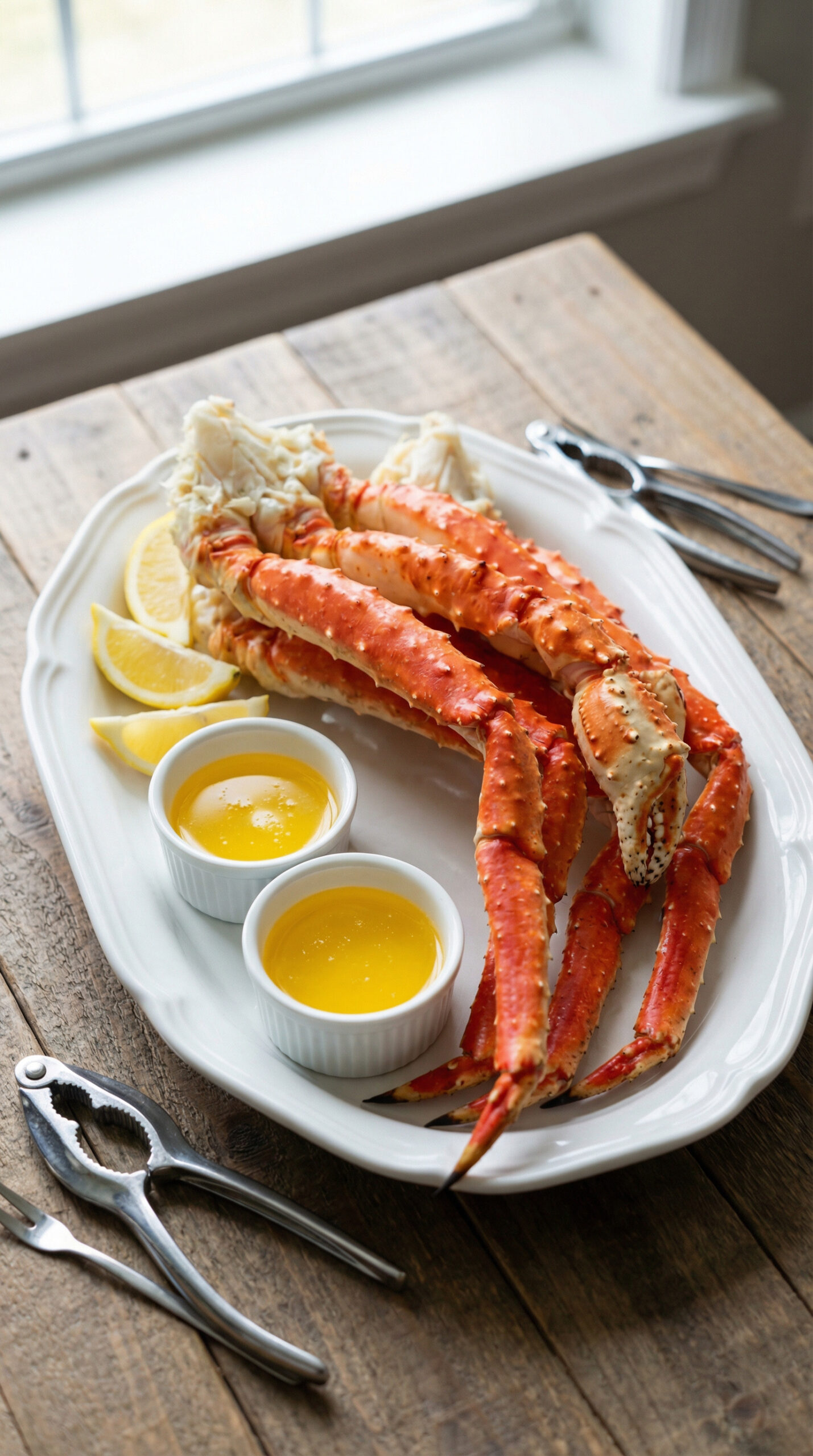
- Serve immediately. Transfer crab legs to a large platter or individual plates. Serve with warm drawn butter in small butter warmers or ramekins and lemon wedges on the side. Provide seafood crackers and small forks for extracting the meat.
Helpful Tips and Substitutions
Why drawn butter instead of melted butter? Regular melted butter resolidifies as it cools, leaving you with congealed butter halfway through the meal. Drawn butter is pure fat with the milk solids removed, so it stays liquid at room temperature. It also has a richer, more concentrated flavor.
Keep the butter warm: Place ramekins of drawn butter over a tea light candle or use a small fondue warmer. Alternatively, reheat in the microwave in 15-second bursts as needed.
Buying king crab: King crab legs are sold by weight. Expect about 60% shell weight, meaning 2 pounds yields roughly 12 ounces of meat. Plan 1/2 to 1 pound of whole legs per person depending on appetite and accompanying sides.
Frozen vs. thawed: Most king crab is flash-frozen at sea. “Fresh” crab at the fish counter was almost certainly previously frozen. Ask your fishmonger when it was thawed to ensure freshness.
Alternative cooking methods: Steaming is gentlest, but you can also bake crab legs at 375°F for 6-8 minutes wrapped in foil with a tablespoon of water inside the packet. Grilling for 3-4 minutes per side works for a smoky flavor.
Cracking tips: The leg shells crack easily with seafood crackers or the back of a heavy knife. The knuckle joints are the trickiest—twist them apart at the natural joint.
Serving Ideas
Keep accompaniments simple. Crab is the star.
Serve with corn on the cob, roasted potatoes, or a simple green salad.
Crusty bread is essential for mopping up extra butter.
Coleslaw provides a cool, crunchy contrast.
Pour a crisp white wine like Sauvignon Blanc, Albariño, or a dry sparkling wine. The acidity balances the richness of the butter.
Set out plenty of napkins, wet towels, or finger bowls. Eating crab is messy by nature.
Make-Ahead and Storage
Thaw ahead: Move frozen crab legs from freezer to refrigerator the night before you plan to serve them.
Drawn butter ahead: Clarified butter keeps refrigerated for up to 3 weeks. Reheat gently before serving.
Do not pre-steam: Crab legs should be steamed immediately before serving. There is no way to hold them or reheat them without compromising texture.
Leftover crab meat: Pick any leftover meat from the shells and refrigerate in an airtight container for up to 2 days. Use in crab cakes, crab salad, crab pasta, or crab rolls. Do not attempt to reheat the legs themselves.
Effortless Elegance
King crab legs are one of the few dishes where less effort truly equals better results. The crab arrives pre-cooked with exceptional flavor already locked in. Your only task is gentle reheating and not getting in the way. Drawn butter, a squeeze of lemon, and a stack of napkins complete the experience. This is celebratory eating at its finest—interactive, indulgent, and almost impossible to overcomplicate.
WANT TO SAVE THIS FOR LATER?
We'll email it to you!
We won't send you spam. Unsubscribe at any time.