Greek Ground Beef Quinoa Bowl with Feta & Tzatziki
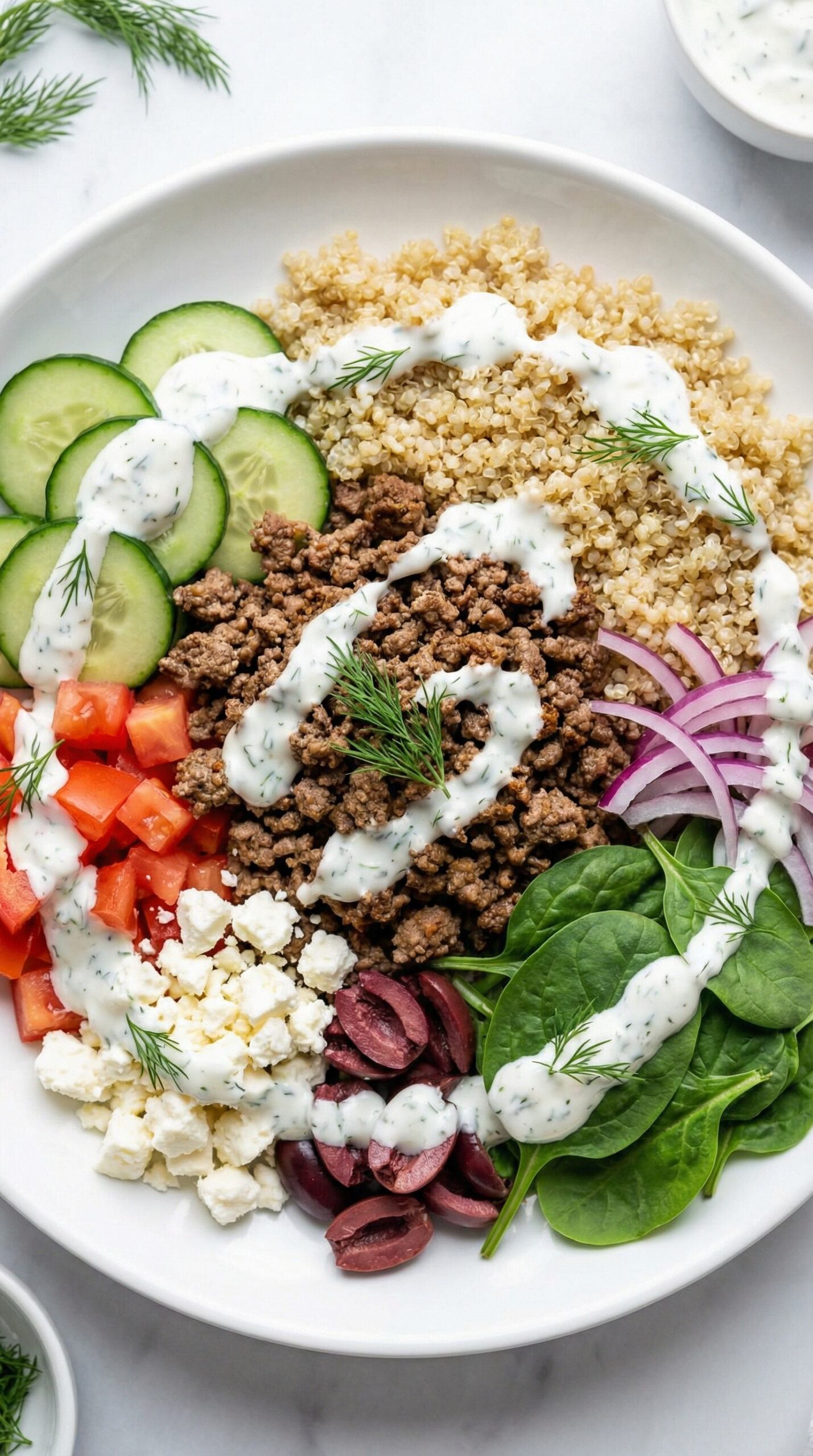
This bowl brings real Mediterranean flavor without being precious about it—seasoned beef, crisp cucumber, warm quinoa, cold feta, and tangy tzatziki made from Greek yogurt and fresh dill.
The tzatziki is the difference between a generic “Mediterranean” bowl and one that actually tastes like something.
It’s cold against warm components, garlicky without being raw-garlic aggressive, and ready in the time it takes to cook the beef.
WANT TO SAVE THIS FOR LATER?
We'll email it to you!
We won't send you spam. Unsubscribe at any time.
Why You’ll Love It
- Tzatziki comes together in five minutes; no blender required.
- Warm and cold elements complement each other; nothing sits in sauce getting soggy.
- 32 grams of protein per bowl from beef and full-fat Greek yogurt.
- Tastes better the next day as flavors meld; holds for three days refrigerated.
- Olives and feta add salt, so you skip extra seasoning in the tzatziki.
- Naturally accommodates pescatarian swaps (canned chickpeas, white beans).
Ingredients
Beef & Aromatics
1.5 pounds ground beef, 90/10 lean-to-fat ratio.
1 medium yellow onion, finely diced.
4 cloves garlic, minced.
2 teaspoons dried oregano.
1 teaspoon dried thyme.
1/2 teaspoon black pepper.
1/4 teaspoon red pepper flakes.
2 tablespoons olive oil.
2 tablespoons red wine vinegar.
Quinoa Base
1.5 cups uncooked quinoa (yields approximately 4.5 cups cooked).
3 cups low-sodium vegetable or chicken broth.
1/4 teaspoon salt.
Tzatziki Sauce
1.5 cups full-fat Greek yogurt (20% milk fat minimum).
1/2 medium cucumber, grated and squeezed dry in a clean kitchen towel (removes excess water; non-negotiable).
3 cloves garlic, minced very finely.
2 tablespoons fresh dill, finely chopped.
1 tablespoon lemon juice (about 1/2 lemon).
1/4 teaspoon salt.
1/4 teaspoon black pepper.
Bowl Components
1 English cucumber, sliced into half-moons (about 1/4 inch thick).
2 medium Roma tomatoes, diced.
1 small red onion, thinly sliced.
1 cup kalamata olives, pitted and halved.
1 cup crumbled feta cheese (about 5 ounces).
2 cups baby spinach or arugula.
Fresh dill or parsley for garnish.
Steps
1. Make tzatziki first so flavors develop while you cook the rest.
Grate cucumber directly into a fine-mesh strainer; let sit for 2 minutes.
2. Gather the grated cucumber into a clean kitchen towel (not paper towels; they shred) and squeeze firmly until no liquid drips out.
Watery tzatziki is the second most common mistake here (first is using low-fat yogurt).
3. In a medium bowl, combine squeezed cucumber, 1.5 cups full-fat Greek yogurt, minced garlic, fresh dill, lemon juice, salt, and pepper.
Stir until smooth and even.
Taste; tzatziki should taste tangy and strongly of garlic and dill, not mild or creamy-dominant.
Adjust lemon juice or salt if needed.
Refrigerate while you prepare other components.
4. In a large saucepan, bring 3 cups broth and 1/4 teaspoon salt to a boil.
Add 1.5 cups uncooked quinoa, stir once, and reduce heat to low.
Cover and simmer for 15 minutes.
5. Remove from heat; let sit covered for 5 minutes.
Fluff with a fork and set aside.
6. While quinoa cooks, heat 2 tablespoons olive oil in a large skillet over medium-high heat.
Add diced onion; cook for 3 minutes, stirring occasionally, until softened and starting to brown at the edges.
7. Add minced garlic; cook for 30 seconds until fragrant.
Add ground beef, breaking it into small pieces with a wooden spoon.
8. Cook for 5-7 minutes, stirring occasionally, until beef is browned throughout and no pink remains.
Drain excess fat by tilting the skillet and spooning fat into a separate container.
9. Add oregano, thyme, black pepper, and red pepper flakes to the beef; stir to combine.
Cook for 30 seconds until fragrant.
10. Pour in red wine vinegar; stir and cook for another 30 seconds.
The vinegar should sizzle and reduce slightly.
Taste for seasoning; you likely need nothing else given the olives and feta add salt later.
11. Transfer cooked beef to a serving bowl and let cool slightly.
12. Assemble bowls: Start with a base of warm cooked quinoa (about 1 cup per bowl) in a large bowl or plate.
13. Arrange sliced cucumber, diced tomato, and red onion in distinct clusters around the quinoa.
14. Top quinoa with a portion of the cooked beef (about 5 ounces per bowl).
15. Scatter kalamata olives and crumbled feta over the top.
16. Add a small handful of spinach or arugula to one side.
17. Drizzle tzatziki generously over the entire bowl (about 1/4 cup per bowl).
18. Finish with a small pinch of fresh dill or parsley.
Serve immediately while quinoa is still warm.
Helpful Tips & Substitutions
Full-fat Greek yogurt is essential here; low-fat versions lack the richness that makes tzatziki taste authentic and instead taste sour and thin.
If you have full-fat strained yogurt or Icelandic skyr, both work identically.
Squeeze the grated cucumber until your hand cramps; waterlogged tzatziki separates in the fridge and tastes dilute.
Red wine vinegar is preferred over lemon in the beef because it’s less acidic and mixes better with the meat; if you only have lemon, use 1 tablespoon instead of 2 tablespoons vinegar.
English cucumbers (the long seedless ones) are better than standard slicing cucumbers because they’re less watery and easier to slice thin; if using standard cucumber, seed it first by cutting lengthwise and scraping out the center with a spoon.
Marinated feta (packed in oil and herbs) can replace plain feta; reduce salt in tzatziki to 1/8 teaspoon since marinated feta is saltier.
If kalamata olives taste too briny, soak them in water for 15 minutes before halving; this mellows the flavor without losing the olive character.
Fresh mint can replace or supplement fresh dill in tzatziki for a slightly different flavor; use equal amounts.
Serving Ideas
Serve warm as described above, or assemble the bowl and refrigerate for up to 8 hours, then eat cold—the flavors meld differently and it works as a salad format.
Add a grilled pita or slice of sourdough on the side for dipping in tzatziki; toast it in a dry cast iron skillet for texture.
Double the tzatziki recipe and use the remainder as a dip for sliced vegetables or as a sauce for grilled fish the following day.
Pair with a simple green salad dressed in lemon and olive oil to round out the meal without competing with the bowl.
Make-Ahead & Storage
Make tzatziki up to 2 days ahead; it actually improves as garlic flavor mellows slightly.
Store in an airtight container in the coldest part of your fridge (usually the back of a shelf, not the door).
Cook beef mixture up to 3 days ahead; reheat gently over low heat before serving.
Cook quinoa up to 4 days ahead; it keeps longer than vegetables.
Prepare vegetables (slice cucumber, dice tomato, slice onion) up to 1 day ahead; store in separate airtight containers to prevent flavor transfer and sogginess.
Do not add fresh spinach or arugula more than 4 hours before eating; greens wilt noticeably and turn dark.
Assembled bowls (without tzatziki) keep for 2 days; add tzatziki immediately before eating.
Freeze cooked beef and tzatziki separately for up to 1 month; do not freeze fresh vegetables or assembled bowls.
This bowl reads as “Mediterranean” because every element earns that descriptor—the beef tastes like it could be Greek kofta, the tzatziki is legitimate, the vegetables are seasonal and crisp.
It’s not complicated, but it’s not lazy either.
WANT TO SAVE THIS FOR LATER?
We'll email it to you!
We won't send you spam. Unsubscribe at any time.