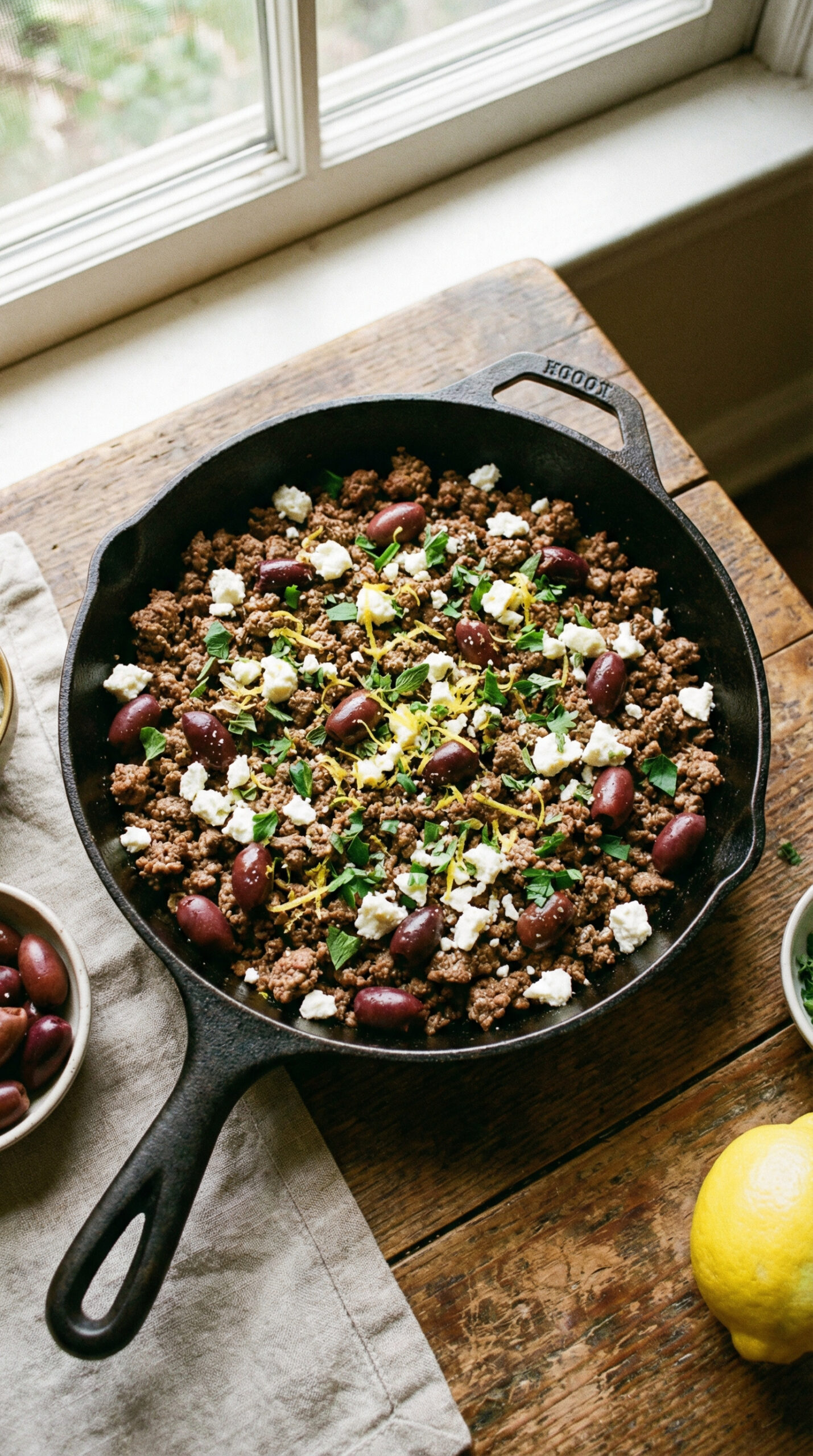
Greek Ground Beef & Feta Skillet
Ground beef with Greek flavors—oregano, lemon, kalamata olives, and a heap of feta—all built in one skillet in 15 minutes.
This leans into Mediterranean seasoning hard, which means the flavors are bold enough to carry the dish without any additional sauce.
Under 400 calories, low carb, and genuinely different from the other ground beef and zucchini version because this one is about the olives and lemon hitting you first.
WANT TO SAVE THIS FOR LATER?
We'll email it to you!
We won't send you spam. Unsubscribe at any time.
Why You’ll Love It
- Greek-specific ingredients (olives, lemon, oregano) make this taste intentional, not generic.
- Comes together in 15 minutes from start to finish.
- One skillet, minimal ingredients, but maximum flavor.
- Under 400 calories and under 10 grams of carbs per serving.
- Works as a standalone meal or over grain, rice, or inside a pita.
- Olives and lemon preserve well, so this actually tastes better the next day after flavors meld.
Ingredients
For the Skillet
1 pound ground beef (80/20 blend)
1 medium red onion, diced
4 cloves garlic, minced
2 teaspoons dried oregano
3/4 teaspoon salt, plus more to taste
1/4 teaspoon black pepper
2 tablespoons olive oil
1 cup kalamata olives, pitted and halved (about 6 ounces)
Zest of 1 lemon plus 2 tablespoons fresh lemon juice
6 ounces feta cheese, crumbled
Optional Additions
1 cup diced zucchini (optional, adds bulk but not carbs)
Fresh dill or mint for garnish
Red pepper flakes to taste
Steps
1. Start with aromatics. Heat a large skillet (12-inch) over medium-high heat, add 1 tablespoon olive oil, then diced red onion.
Cook undisturbed for 2 minutes to get some color, then stir and cook another 2 minutes until softened.
Add minced garlic and oregano, stir constantly for 30 seconds until fragrant.
2. Brown the beef. Add ground beef, breaking it apart as it cooks.
Let it sit for 2-3 minutes between stirs so it browns instead of steams.
Once no pink remains (about 5 minutes total), drain excess fat, leaving a thin coating in the pan.
3. Build the flavors. Add kalamata olives, lemon zest, and lemon juice to the beef.
Stir everything together and let it simmer for 1 minute so the lemon juice melds with the beef and reduces slightly.
Taste and adjust salt—remember that olives and feta are both salty, so don’t over-season at this point.
4. Finish with feta. Remove the skillet from heat and scatter crumbled feta over the top.
Let it sit for 30 seconds so the feta softens slightly in the residual heat, then stir it through gently (some pieces will break apart, some will stay textured—both are good).
5. Serve. Top with fresh dill or mint if desired and serve hot directly from the skillet.
Helpful Tips & Substitutions
Olives are essential, not optional: They’re what separate this from a basic beef skillet.
They add salt, fat, and a briny tang that feta alone can’t provide.
Use fresh lemon juice, not bottled: Bottled lemon juice tastes flat compared to fresh.
One lemon yields about 3 tablespoons juice, so budget accordingly.
Why lemon zest matters: Zest adds bright lemon flavor without extra liquid.
It also looks intentional on the plate—visible specks of zest signal that effort went into seasoning.
80/20 beef keeps it moist: The fat from the beef carries the oregano, olive, and lemon flavors better than leaner meat would.
Add zucchini if serving to people who want more volume: Dice 1 cup zucchini and add it with the olives in step 3.
It cooks down in 3-4 minutes and adds zero carbs but makes the dish feel more substantial.
Swap the olives: Use green Castelvetrano olives (buttery, milder) instead of kalamata (briny, sharp) for a different olive flavor.
Either works; it’s about personal preference.
Add spinach or kale: Toss in a big handful of fresh spinach or chopped kale after the beef browns, stir until wilted (30 seconds), then continue with olives and lemon.
This adds nutrients and doesn’t change the cook time.
Make it truly five-ingredient: Drop the onion and zest, keeping just beef, oregano, olives, lemon juice, and feta.
It becomes more minimalist but still delicious—oregano and lemon do heavy lifting here.
For consistent slicing, use a sharp chef’s knife to halve olives quickly and uniformly.
Serving Ideas
Serve hot from the skillet into bowls as a standalone meal with crusty bread on the side.
Spoon over white rice, brown rice, or couscous to absorb the pan juices.
Warm pita bread, stuff with this mixture, add a dollop of tzatziki, and wrap for a loose sandwich.
Cool and pile into a green salad with cucumber and tomato for a composed bowl.
Stuff into hollowed-out cherry tomatoes or bell pepper halves and serve as part of a Mediterranean appetizer spread.
Make-Ahead & Storage
Cook ahead and store: The finished skillet keeps in the fridge for up to 5 days in an airtight container.
Flavors actually intensify as it sits—the lemon and oregano distribute more evenly, and the feta becomes creamier.
Reheat gently on the stovetop over medium heat, stirring occasionally, until warmed through (about 5 minutes).
Don’t freeze: Feta becomes grainy when frozen and thawed.
If you want to freeze components, cook the beef and olives without feta, freeze that, then crumble fresh feta on top when you reheat and serve.
If prepping for multiple meals: Store the cooked beef and olives in one container and the feta in a small separate container.
Mix them together the day you eat so feta stays textured and doesn’t get weepy sitting in the pan juices.
Lemon juice tames the saltiness: If you’re storing this for several days, the saltiness from olives and feta becomes more pronounced.
A squeeze of fresh lemon juice when reheating brightens it back up.
This is the type of skillet meal that tastes better the next day because flavors have time to merge and settle. The oregano becomes less raw, the lemon and olive brine distribute evenly, and everything tastes like it was intentionally combined rather than just thrown together. Make it once and eat half fresh, store half for lunch the next day to see the difference. One skillet, one knife, 15 minutes, and you have a meal that tastes like you planned it.
WANT TO SAVE THIS FOR LATER?
We'll email it to you!
We won't send you spam. Unsubscribe at any time.