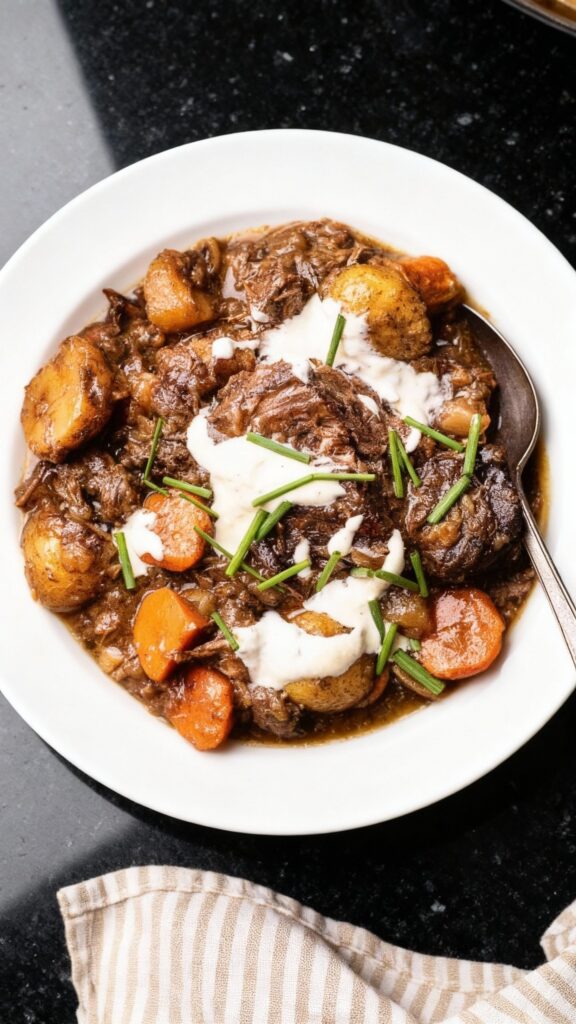
Classic, Hearty Beef Stew
There’s something magical about the way beef stew transforms humble ingredients into pure comfort. I’ve discovered that the difference between good stew and extraordinary stew lies in three critical steps that most home cooks accidentally skip. The aroma alone will have your neighbors mysteriously dropping by around dinnertime, but achieving that restaurant-quality depth of flavor requires understanding exactly when to add each ingredient and why timing matters more than you’d expect.
Essential Ingredients and Preparation
Creating an exceptional beef stew begins with selecting quality ingredients and properly preparing them for maximum flavor development.
I always start with well-marbled chuck roast, cut into generous two-inch cubes that hold their shape during long braising. The secret lies in proper seasoning—I generously coat the beef with salt, pepper, flour, and paprika before searing. This creates that gorgeous golden crust we’re after.
Fresh aromatics like onions, garlic, and herbs make all the difference. Trust me, taking time with prep work pays off when you’re spooning that rich, soul-warming stew into bowls later.
Searing the Beef for Maximum Flavor
Once you’ve got your beef properly seasoned and coated, the real magic happens when that meat hits hot oil.
I heat my Dutch oven over medium-high heat until the oil shimmers—that’s your cue it’s ready.
Working in batches prevents overcrowding, which steams rather than sears the meat. Each batch takes about 10-11 minutes, developing that gorgeous golden-brown crust that locks in flavor.
Don’t rush this step! Those caramelized bits sticking to the bottom aren’t mistakes—they’re liquid gold that’ll transform your broth later.
The sizzling sound and rich aroma tell you everything’s going perfectly.
Building the Aromatic Base
The foundation of extraordinary beef stew begins with transforming leftover drippings into culinary gold. Those beautiful, caramelized bits clinging to your Dutch oven hold incredible flavor potential. I cook the onions slowly in these drippings for about 10 minutes until they’re gloriously caramelized. The garlic follows for just 30 seconds—any longer risks bitterness. Next comes tomato paste, which needs browning to develop deep, concentrated flavor. Finally, I deglaze with red wine, scraping up every precious browned bit.
| Ingredient | Cooking Time |
|---|---|
| Onions | 10 minutes |
| Garlic | 30 seconds |
| Tomato paste | 2-3 minutes |
| Red wine | Until boiling |
Slow Braising Technique
Patience transforms this aromatic foundation into something truly magical through proper braising technique. I cover the pot tightly and slide it into a 350°F oven, where gentle heat works wonders.
The beef needs 90 minutes to become fork-tender, then I add carrots and potatoes for the final 30 minutes. This low-and-slow method prevents tough, chewy meat that stovetop boiling creates.
I check occasionally, adding more broth if needed to maintain moisture. The oven’s consistent temperature breaks down collagen into silky gelatin, creating that spoon-coating richness we crave in perfect stew.
Final Touches and Serving Suggestions
After removing the bubbling pot from the oven, I carefully discard those bay leaves that have worked their aromatic magic throughout the braising process.
Now comes my favorite part – stirring in those bright green peas along with fresh rosemary and thyme. The vibrant colors instantly transform this rustic stew into something restaurant-worthy.
- Garnish with fresh herbs – A sprinkle of chopped parsley or thyme adds visual appeal and bright flavor
- Serve with crusty bread – Perfect for soaking up every last drop of that rich, wine-infused broth
- Add frozen peas instead – They’re convenient and won’t overcook like fresh ones might
- Adjust consistency – Stir in extra broth if too thick, or simmer uncovered to reduce