Hot Cross Buns
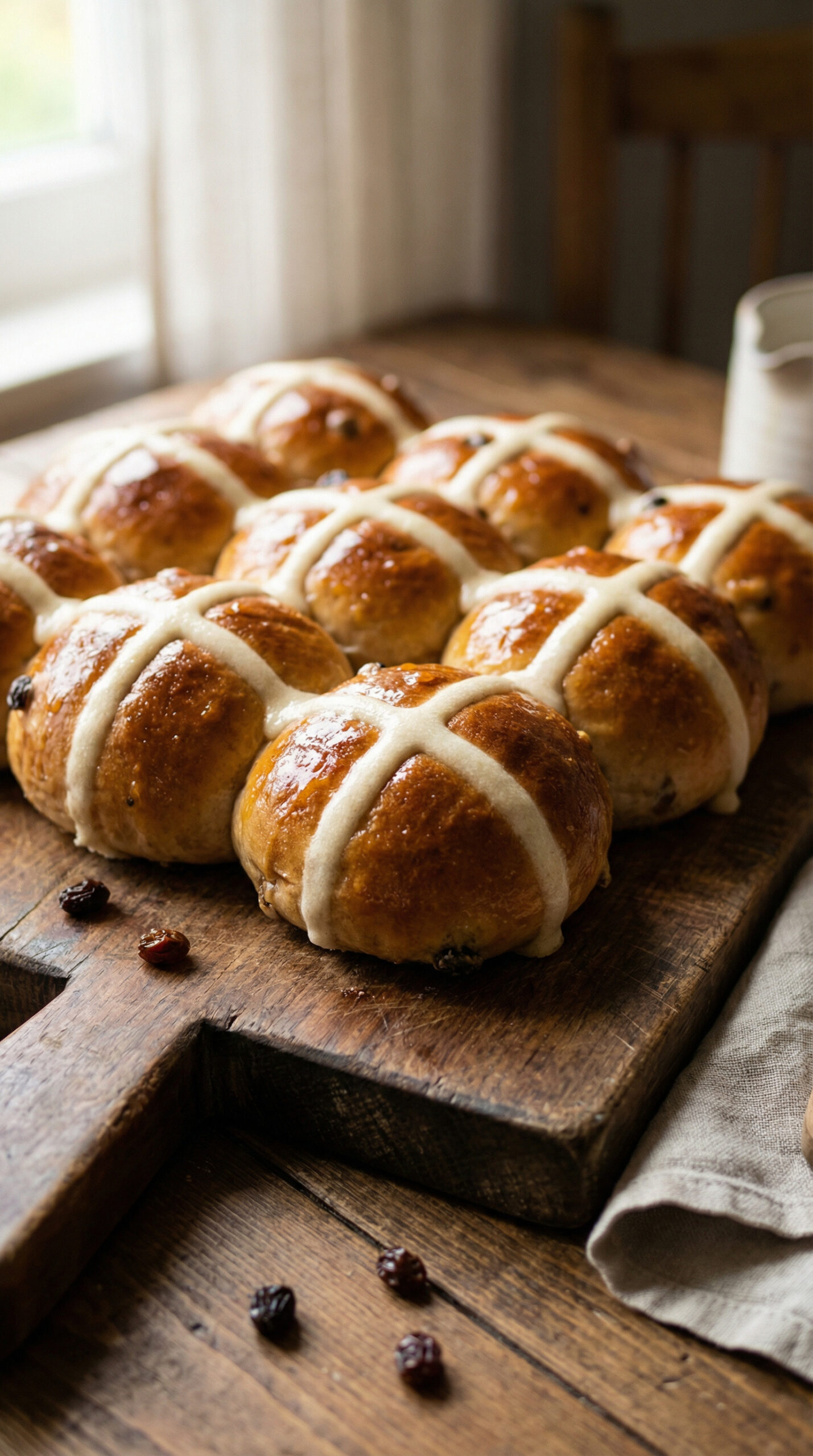
These soft, spiced buns studded with currants are a traditional Easter treat, marked with a cross made from simple flour paste.
The dough requires two rises but is straightforward to make, and the results are far better than anything from a store.
WANT TO SAVE THIS FOR LATER?
We'll email it to you!
We won't send you spam. Unsubscribe at any time.
Why You’ll Love It
- Soft, pillowy texture that stays fresh for days
- Warm spices make the kitchen smell incredible
- Freezes well for make-ahead convenience
- Classic recipe that’s been perfected over centuries
- Impressive homemade Easter tradition
Ingredients
For the Dough (makes 12 buns)
- 1 cup whole milk, warmed to 110°F
- 2 1/4 teaspoons instant yeast (1 packet)
- 1/4 cup granulated sugar, divided
- 4 cups all-purpose flour, plus more for kneading
- 1 1/2 teaspoons ground cinnamon
- 1/2 teaspoon ground nutmeg
- 1/4 teaspoon ground allspice
- 1/4 teaspoon ground cloves
- 1 teaspoon salt
- 1/3 cup unsalted butter, softened
- 2 large eggs, room temperature
- 1 teaspoon vanilla extract
- Zest of 1 orange (about 1 tablespoon)
- 3/4 cup dried currants or raisins
- 1/4 cup mixed candied citrus peel (optional)
For the Crosses
- 1/2 cup all-purpose flour
- 6-7 tablespoons water
For the Glaze
- 3 tablespoons apricot jam
- 1 tablespoon water
Steps
Make the Dough
- Activate the yeast. Combine warm milk, yeast, and 1 tablespoon of the sugar in a small bowl. Let sit for 5-10 minutes until foamy. If it doesn’t foam, your yeast is dead—start over with fresh yeast.
- Mix dry ingredients. In a large bowl or the bowl of a stand mixer, whisk together flour, remaining sugar, cinnamon, nutmeg, allspice, cloves, and salt.
- Combine wet and dry. Add the yeast mixture, softened butter, eggs, vanilla, and orange zest to the flour mixture. Mix with a dough hook on low speed for 2 minutes, then increase to medium and knead for 6-8 minutes until smooth and elastic. The dough should pull away from the sides of the bowl.
- Add the fruit. Add currants and candied peel during the last minute of kneading, just until distributed. Don’t overmix or the fruit will break apart.
- First rise. Place dough in a greased bowl, cover with plastic wrap or a damp towel, and let rise in a warm spot for 1-1.5 hours until doubled in size.
Shape the Buns
- Divide the dough. Punch down the dough and turn out onto a lightly floured surface. Divide into 12 equal pieces. A kitchen scale helps here—each piece should weigh about 85-90 grams.
- Shape into balls. Cup your hand over each piece and roll against the counter in a circular motion to form a smooth, tight ball. Tuck any seams underneath.
- Arrange for second rise. Place buns on a parchment-lined 9×13 baking pan, spacing them about 1/2 inch apart. They should be close enough to touch as they rise, which helps them stay soft. Cover loosely and let rise for 45 minutes until puffy.
Add the Crosses and Bake
- Preheat oven to 375°F (190°C). Position rack in the center of the oven.
- Make the cross paste. Whisk flour and water until smooth. The consistency should be thick but pipeable—like toothpaste. Add more water by the teaspoon if too thick. Transfer to a piping bag fitted with a small round tip, or a zip-top bag with a tiny corner cut off.
- Pipe the crosses. Pipe a straight line down each row of buns, then pipe perpendicular lines to form crosses. Work quickly and confidently—hesitation creates wobbly lines.
- Bake. Bake for 20-25 minutes until golden brown and the internal temperature reaches 190°F. The buns should sound hollow when tapped on the bottom.
Glaze and Serve
- Make the glaze. While buns bake, heat apricot jam and water in a small saucepan until melted and smooth. Strain out any fruit chunks.
- Glaze the buns. Brush warm glaze over hot buns immediately after removing from the oven. This gives them shine and keeps them soft.
- Serve warm. These are best eaten the day they’re made, ideally still slightly warm with butter.
Helpful Tips and Substitutions
Currant substitutes: Raisins, dried cranberries, or chopped dried apricots all work. Keep the total amount at 3/4 cup.
No candied peel: Simply omit it. Many people prefer buns without it anyway.
Dairy-free version: Use oat milk or almond milk in the dough and dairy-free butter. The texture will be slightly different but still good.
Overnight rise: After shaping, cover buns tightly and refrigerate overnight. Let sit at room temperature for 30 minutes before baking.
Cross alternatives: Some bakers use royal icing piped after baking for brighter white crosses. The traditional flour paste is more authentic and less sweet.
Dough too sticky: Add flour 1 tablespoon at a time during kneading. Enriched doughs are naturally tackier than plain bread doughs.
Serving Ideas
Serve warm with salted butter for breakfast or brunch on Easter morning.
Toast day-old buns and spread with cream cheese or orange marmalade.
Split and use as the base for a small ham sandwich.
Slice in half, toast lightly, and serve with a soft cheese like brie.
Make-Ahead and Storage
Same day: Store in a bread box or paper bag at room temperature. Best eaten within 24 hours.
Short-term storage: Store in an airtight container at room temperature for up to 3 days. Reheat in a 300°F oven for 5 minutes to refresh.
Freezing baked buns: Cool completely, wrap individually in plastic wrap, then place in a freezer bag. Freeze for up to 2 months. Thaw at room temperature and warm in the oven before serving.
Freezing unbaked dough: Shape buns, place on a baking sheet, and freeze until solid. Transfer to a freezer bag. To bake, place frozen buns on a parchment-lined pan, cover, and let thaw and rise overnight in the refrigerator. Bake as directed.
A Tradition Worth Making
Hot cross buns have been an Easter staple for centuries, and making them from scratch connects you to that history in a way store-bought versions never can.
The combination of warm spices, soft bread, and sweet glaze is hard to beat, especially straight from the oven.
Once you’ve made them yourself, the packaged ones just won’t compare.


WANT TO SAVE THIS FOR LATER?
We'll email it to you!
We won't send you spam. Unsubscribe at any time.