High Protein Feta Sheet Pan Scrambled Eggs (14g Protein)
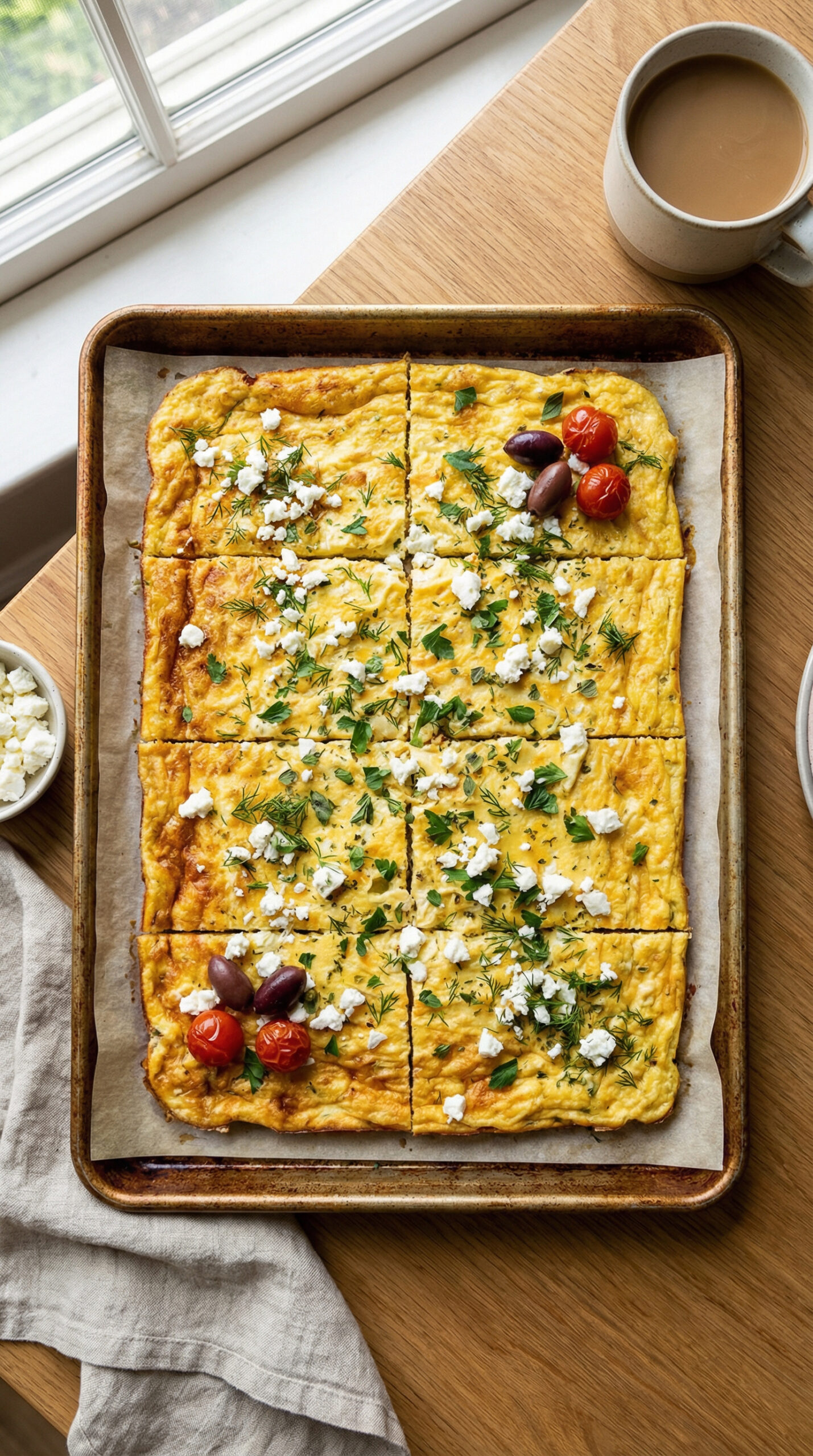
Crumbled feta baked into sheet pan eggs delivers a salty, tangy flavor upgrade while adding 24 grams of protein to the whole batch — that is about 14 grams per serving from the eggs alone.
The feta softens into creamy pockets throughout the eggs rather than melting completely, giving you bursts of flavor in every bite.
WANT TO SAVE THIS FOR LATER?
We'll email it to you!
We won't send you spam. Unsubscribe at any time.
Why You’ll Love It
- 14g protein per serving from eggs alone (add meat for 20g+)
- Bold Mediterranean flavor without extra effort
- Feta creates creamy pockets throughout
- Hands-off oven cooking
- Feeds 8 people at once
- A flavor upgrade from plain sheet pan eggs
Protein Breakdown Per Serving (8 servings)
- Eggs and egg whites: 10.75g
- Feta cheese (6 oz divided by 8): 3g
- Milk: 0.5g
- Total from egg mixture: approximately 14g protein per serving
Add Canadian bacon or turkey sausage (+9g) and serve in a pita (+4g) for a 27g protein sandwich.
Ingredients
For the High Protein Eggs
- 12 large eggs
- 4 egg whites (or 1/2 cup liquid egg whites from a carton)
- 1/2 cup whole milk
- 1/4 teaspoon salt (reduced because feta is salty — see notes)
- 1/4 teaspoon black pepper
- 2 tablespoons butter, melted
- 6 oz feta cheese, crumbled (about 1 1/2 cups) — divided
For Assembly
- 8 pita pockets, English muffins, or ciabatta rolls
- Fresh spinach or arugula
Optional Add-Ins (Choose One Combination)
Classic Mediterranean:
- 1/4 cup kalamata olives, roughly chopped
- 2 tablespoons fresh dill, chopped
Sun-Dried Tomato:
- 1/3 cup sun-dried tomatoes (oil-packed), drained and chopped
- 1/4 teaspoon dried oregano
Spinach and Herb:
- 1 cup fresh spinach, roughly chopped
- 2 tablespoons fresh parsley
Do not add all the optional ingredients at once — the eggs will be overloaded and wet. Pick one combination.
Steps
- Preheat your oven to 350°F (175°C).
- Line a half sheet pan (18×13 inches) with parchment paper, making sure the paper comes up all four sides.
- Brush the parchment paper generously with melted butter.
- Taste your feta before you start. If it is very salty, use only 1/4 teaspoon salt in the eggs. If it is mild (like French feta), use the full 1/2 teaspoon.
- Crack the eggs into a large mixing bowl and add the egg whites.
- Add the milk, salt, and pepper.
- Whisk vigorously for 30-45 seconds until completely uniform with no streaks.
- Measure out 1 cup of the crumbled feta and fold it into the egg mixture.
- Reserve the remaining 1/2 cup feta for topping.
- If using olives or sun-dried tomatoes, fold them into the egg mixture now.
- If using fresh spinach, scatter it on the buttered parchment first — it will wilt under the eggs.
- Pour the egg mixture onto the prepared sheet pan.
- Tilt the pan to spread evenly to all corners.
- Use a fork to redistribute any feta chunks that clumped together.
- Bake for 12 minutes, then remove the pan from the oven.
- Scatter the reserved 1/2 cup feta over the top of the partially set eggs.
- Return to the oven and bake for 5-7 more minutes until the eggs are fully set and the top feta is softened but not browned.
- Remove from the oven and let cool for 3-4 minutes.
- If using fresh dill or parsley, sprinkle it over the top now.
- Use a pizza cutter to cut into 8 rectangles.
- Toast your bread while the eggs cool slightly.
- Assemble sandwiches with an egg portion and fresh greens.
Why Add Feta in Two Stages
In my original version, I had you add all the feta at the start with some reserved for the top. The problem: feta added to raw eggs sinks and gets lost in the bottom.
The two-stage method fixes this:
- Feta mixed into the eggs creates creamy pockets throughout
- Feta added halfway through stays on top and softens without browning
- You get feta in every layer of the finished eggs
If you add the top feta at the start, it will brown and dry out before the eggs are cooked through.
Feta Selection Guide
Block feta (recommended): Crumble it yourself. Creamier, moister, and better texture than pre-crumbled.
Pre-crumbled feta: Convenient but often dry and chalky. If using, add 1 tablespoon of milk to the egg mixture to compensate.
Greek feta: Tangier, saltier, more assertive. Use less salt in the eggs (1/4 teaspoon max).
French feta: Milder, creamier, less salty. You can use the full 1/2 teaspoon salt.
Domestic feta: Varies widely. Taste before using and adjust salt accordingly.
Buy feta packed in brine if possible — it stays moister than vacuum-packed.
Helpful Tips and Substitutions
Salt carefully. Feta is already salty. The most common mistake is oversalting these eggs. Start with 1/4 teaspoon and adjust next time if needed.
Drain sun-dried tomatoes thoroughly and pat them dry with paper towels. The oil will make the eggs greasy if you skip this step.
Fresh spinach will shrink dramatically. One cup of raw spinach becomes almost nothing. This is fine — it adds flavor and nutrients without bulk.
Goat cheese can substitute for feta if you want a milder tangy flavor. It melts more completely, so you will have fewer distinct pockets.
For more protein, increase to 6 egg whites and use 8 oz feta. This adds about 13g protein to the whole batch.
A silicone baking mat works instead of parchment for easier cleanup.
Common Problems and Fixes
Eggs are too salty: Your feta was saltier than expected. Next time, taste the feta first and reduce salt in the eggs to 1/8 teaspoon or omit entirely.
Top feta is browned and dried out: It was added too early. Next time, wait until the eggs are almost set (12 minutes in) before adding the top layer.
Feta all sank to the bottom: You added all the feta at the start. Use the two-stage method next time.
Eggs are watery: Sun-dried tomatoes or olives released moisture. Drain and pat them drier next time, or reduce milk to 1/3 cup.
Eggs taste bland despite feta: The feta flavor gets diluted across 12 eggs. Try increasing to 8 oz feta or adding more herbs.
Serving Ideas
Stuff into warm pita pockets with cucumber slices, tomato, and a drizzle of tzatziki.
Serve open-faced on toasted ciabatta with fresh arugula and a squeeze of lemon.
Wrap in a spinach tortilla with hummus for a Mediterranean breakfast wrap.
Pair with sliced cucumber, cherry tomatoes, and olives for a Greek-inspired breakfast plate.
Top with a dollop of plain Greek yogurt for extra protein and a creamy contrast.
For extra protein, add sliced Canadian bacon or grilled chicken sausage.
Make-Ahead and Storage
Bake the egg sheet the night before and refrigerate whole, tightly covered with plastic wrap.
The feta may firm up in the fridge — it will soften again when reheated.
Cut portions and reheat in the microwave for 30-40 seconds.
For better texture, reheat in a toaster oven at 350°F for 4-5 minutes.
Assembled sandwiches keep refrigerated for up to 3 days wrapped in foil.
Freeze assembled sandwiches wrapped in plastic wrap then foil for up to 1 month.
Store frozen sandwiches in a freezer storage bag to prevent freezer burn.
Thaw overnight in the refrigerator or microwave from frozen for 90 seconds, flip, then 60 more seconds.
Big Flavor Without Extra Work
Feta adds a flavor dimension that plain sheet pan eggs cannot match — salty, tangy, and creamy in every bite.
The two-stage feta method takes an extra 30 seconds of effort but makes a noticeable difference in the final result.

WANT TO SAVE THIS FOR LATER?
We'll email it to you!
We won't send you spam. Unsubscribe at any time.