4 Sheet Pan Scrambled Eggs Recipes for Easy Meal Prep Breakfasts
Sheet pan scrambled eggs changed how I make breakfast for the week — one pan, 15 minutes of baking, and you have enough perfectly portioned eggs for 8 sandwiches without standing over a stove.
Once I nailed the basic method, I started experimenting with variations. This roundup covers four tested recipes: the classic version plus three high protein options for different flavor preferences.
WANT TO SAVE THIS FOR LATER?
We'll email it to you!
We won't send you spam. Unsubscribe at any time.
Why Sheet Pan Eggs Work Better Than Stovetop
Traditional scrambled eggs require constant attention — stirring, adjusting heat, cooking in batches if you are feeding more than two people.
Sheet pan eggs solve all of that:
- Pour the mixture onto a pan and walk away
- Every portion comes out the same size and thickness
- The flat shape fits perfectly on sandwich bread
- Make 8-12 servings in the time it takes to make 2 on the stovetop
- Cleanup is one sheet pan instead of a skillet coated in egg residue
The texture is different from stovetop scrambled eggs — more like a soft, tender egg patty than fluffy curds. If you are making breakfast sandwiches or meal prepping, this texture is actually better because it holds together and reheats well.
Quick Comparison: Which Recipe Should You Make?
| Recipe | Protein Per Serving | Best For | Hands-On Time |
|---|---|---|---|
| Classic Sheet Pan Eggs | 9g (eggs only) | Beginners, picky eaters, customizable base | 5 minutes |
| Sausage Sheet Pan Eggs | 21g | Maximum protein, hearty breakfast | 10 minutes |
| Cottage Cheese Sheet Pan Eggs | 14g | Best reheating texture, creamy eggs | 7 minutes |
| Feta Sheet Pan Eggs | 14g | Bold flavor, Mediterranean twist | 7 minutes |
All four recipes use the same base technique and equipment. Once you make one, the others are easy variations.
What You Need for Any Sheet Pan Egg Recipe
Before diving into the recipes, make sure you have the right equipment. Using the wrong pan size is the most common reason these recipes fail.
Essential:
- Half sheet pan (18×13 inches) — this is the standard size. A smaller pan will make eggs too thick; a larger pan will make them too thin and dry.
- Parchment paper — the eggs will stick without it, even to a well-greased pan
- Large mixing bowl and whisk
- Pizza cutter — makes cutting into portions much easier than a knife
Helpful but not required:
- Silicone baking mat — reusable alternative to parchment
- Liquid egg whites in a carton — easier than separating eggs for the high protein versions
1. Classic Sheet Pan Scrambled Eggs
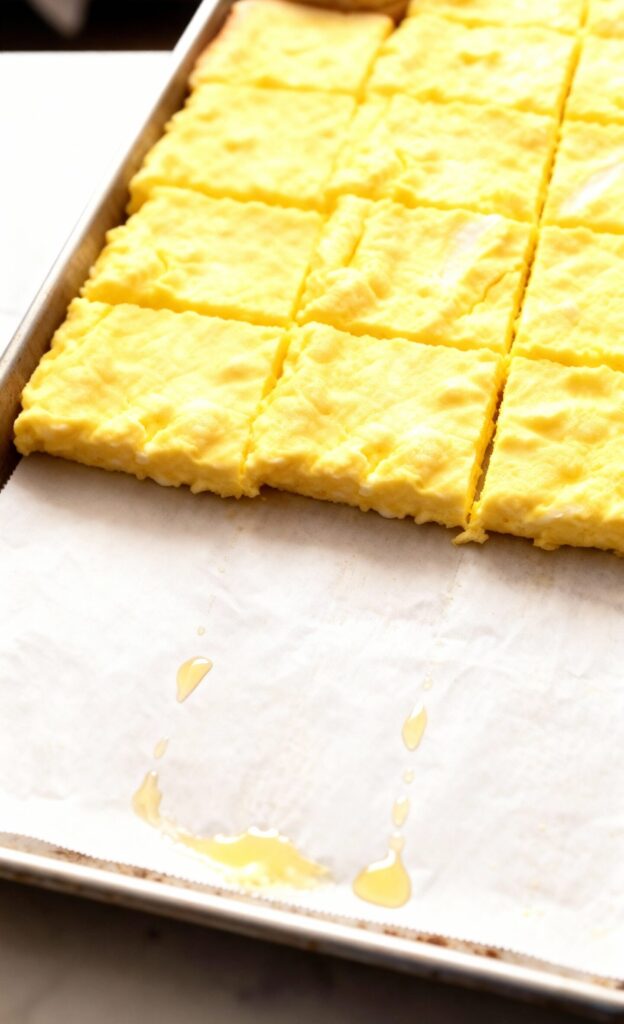
Protein: 9g per serving (eggs only)
Total time: 25 minutes
Best for: Your first attempt, feeding picky eaters, or when you want a blank canvas to customize
This is the foundational recipe. Twelve eggs, milk, salt, pepper, and butter — nothing else required.
The result is tender, lightly set eggs that slice into perfect squares for sandwiches. Add cheese, meat, or toppings when you assemble rather than baking them in.
Key Details
- Bake at 350°F for 12-15 minutes
- Eggs should be just set with no jiggle — they continue cooking from residual heat
- Let cool 2 minutes before cutting or they will tear
- Cut into 12 squares for English muffins or 8 rectangles for larger buns
Why Start Here
If you have never made sheet pan eggs, this recipe teaches you the technique without extra variables. You will learn how your oven behaves, what “just set” looks like, and how to cut clean portions.
Once you nail this version, the protein-boosted variations are simple tweaks.
Get the full Classic Sheet Pan Scrambled Eggs recipe
2. High Protein Sausage Sheet Pan Scrambled Eggs
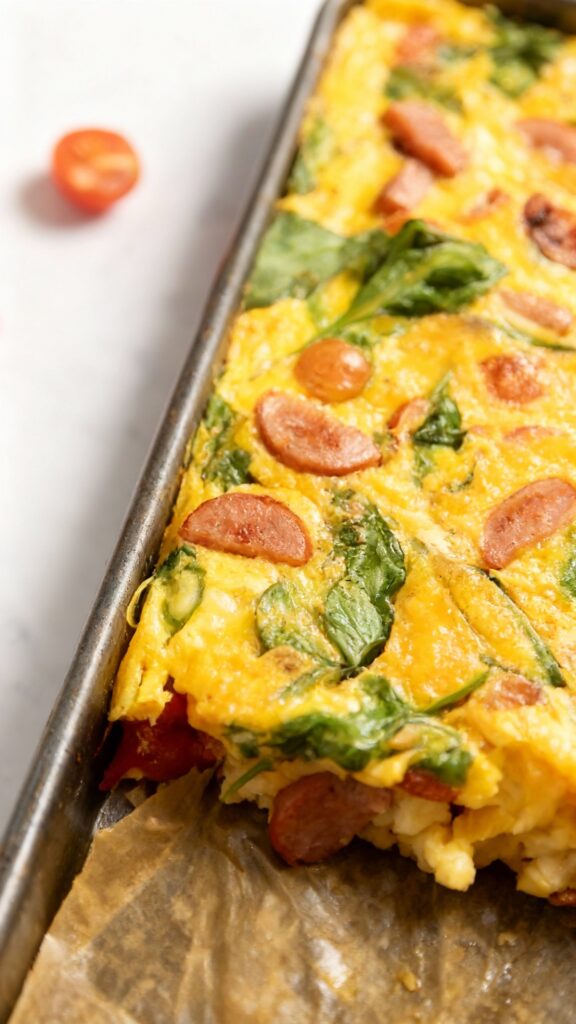
Protein: 21g per serving
Total time: 35 minutes
Best for: Maximum protein without protein powder, hearty breakfasts that keep you full until lunch
This version bakes a full pound of breakfast sausage directly into the eggs using a one-pan method — no extra skillet to wash.
The sausage gets par-baked on the sheet pan first, you drain the fat, then pour the eggs over the top. The sausage floats and distributes throughout as the eggs set.
Key Details
- Par-bake crumbled sausage at 400°F for 10-12 minutes first
- Drain the rendered fat thoroughly — this step is critical
- Reduce oven to 350°F, add eggs, bake 15-18 minutes
- Use pork sausage for best flavor or turkey sausage for less fat
Why This One Has the Highest Protein
A pound of breakfast sausage adds 80 grams of protein to the whole batch. Combined with eggs and egg whites, you get 21 grams per serving before adding cheese or bread.
Add a slice of cheddar (+5g) and an English muffin (+5g) for a 31g protein sandwich — more than most fast food breakfast options.
Watch Out For
The biggest mistake is not draining enough fat after par-baking the sausage. Pork sausage renders a lot of grease. If you skip this step, your eggs will have greasy pockets and may not set properly.
Get the full High Protein Sausage Sheet Pan Eggs recipe
3. High Protein Cottage Cheese Sheet Pan Scrambled Eggs
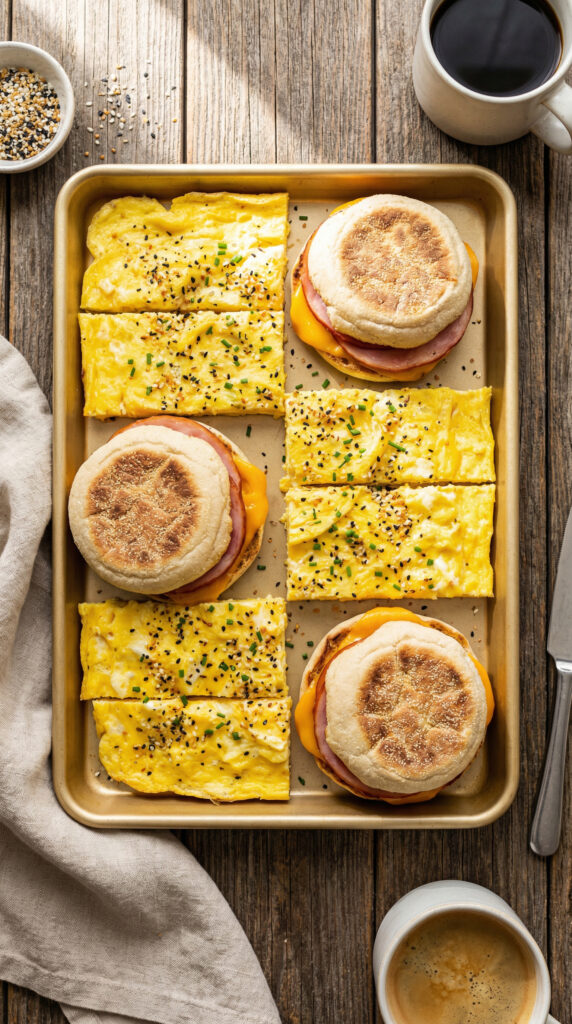
Protein: 14g per serving
Total time: 30 minutes
Best for: Best reheating texture, meal preppers who want eggs that do not dry out
This is the viral cottage cheese egg hack adapted for sheet pan cooking. You blend cottage cheese until smooth and use it in place of milk — it adds protein while making the eggs noticeably creamier.
The real benefit is not just protein. Cottage cheese eggs hold moisture better during cooking and reheating, which makes them ideal for meal prep.
Key Details
- Blend 1 cup cottage cheese until completely smooth — no visible curds
- Use cottage cheese instead of milk, not in addition to it
- Bake 18-22 minutes (longer than regular sheet pan eggs)
- Eggs will puff up then deflate — this is normal
Why the Texture Is Better for Meal Prep
Cottage cheese is about 80% water and 11% protein. The casein proteins create a more stable structure than eggs alone, which means:
- The eggs hold moisture better during baking
- They reheat without becoming rubbery or dry
- The texture is creamier and more custard-like
If your meal-prepped eggs usually turn rubbery by day 3, try this version.
Watch Out For
You must blend the cottage cheese until completely smooth. Any remaining curds will show up as chewy lumps in the finished eggs. An immersion blender works if you do not have a regular blender.
Get the full High Protein Cottage Cheese Sheet Pan Eggs recipe
4. High Protein Feta Sheet Pan Scrambled Eggs
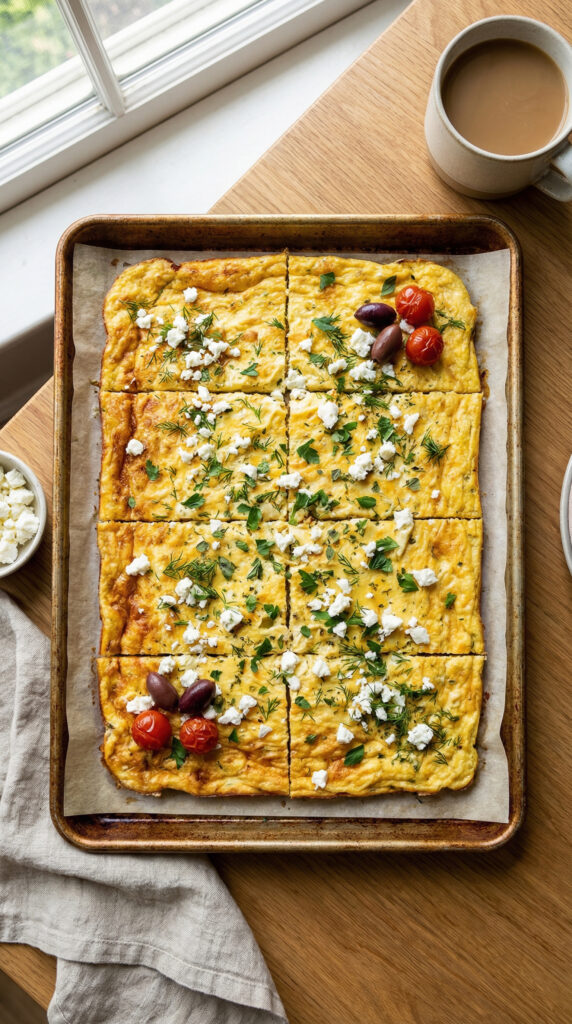
Protein: 14g per serving
Total time: 30 minutes
Best for: When you want bold flavor, Mediterranean-style breakfasts, something different from standard eggs
Crumbled feta baked into the eggs creates pockets of salty, tangy cheese throughout. Unlike cheddar or American cheese that melts and disappears, feta softens but holds its shape — you get distinct bursts of flavor in every bite.
Key Details
- Use 6 oz feta total, divided — 1 cup mixed into eggs, 1/2 cup added on top halfway through baking
- Reduce salt to 1/4 teaspoon (feta is already salty)
- Bake 12 minutes, add reserved feta, bake 5-7 more minutes
- Block feta crumbled yourself is better than pre-crumbled
Why Add Feta in Two Stages
Feta mixed into raw eggs sinks to the bottom. Feta added at the start of baking dries out and browns before the eggs are done.
The two-stage method solves both problems:
- Feta in the batter creates creamy pockets throughout
- Feta added at 12 minutes stays on top and softens without browning
Watch Out For
Oversalting is the most common mistake. Taste your feta before cooking — Greek feta is much saltier than French feta. Some brands need zero additional salt in the eggs.
Get the full High Protein Feta Sheet Pan Eggs recipe
Meal Prep Tips That Apply to All Four Recipes
Storage
Bake the egg sheet the night before and refrigerate whole, tightly covered with plastic wrap pressed directly onto the surface. Cut portions as needed throughout the week.
Whole egg sheets keep better than pre-cut portions because less surface area is exposed.
Reheating
Microwave individual portions for 30-45 seconds. For better texture, use a toaster oven at 350°F for 3-4 minutes.
The cottage cheese version reheats the best. The classic and feta versions are tied for second. The sausage version is still good but the sausage can dry out slightly.
Freezing
All four recipes freeze well for up to 1 month:
- Cut the egg sheet into portions
- Assemble sandwiches with cheese and meat
- Wrap each sandwich tightly in plastic wrap, then foil
- Store in a freezer bag with the air pressed out
From frozen: microwave 90 seconds, flip, microwave 60 more seconds. Finish in a toaster oven for 2-3 minutes if you want a crispier exterior.
Scaling Down
All four recipes can be halved using a quarter sheet pan (13×9 inches) and 6 eggs. Reduce bake time by 3-4 minutes.
Which Recipe Should You Try First?
If you have never made sheet pan eggs: Start with the classic version. Learn the technique before adding variables.
If you want maximum protein: The sausage version delivers 21g per serving and tastes like a diner breakfast.
If meal prep texture matters most: The cottage cheese version reheats better than any other egg recipe I have tested.
If you are bored with regular eggs: The feta version brings Mediterranean flavor that makes breakfast interesting again.
All four use the same basic technique, so once you make one, switching between them takes no extra learning.
WANT TO SAVE THIS FOR LATER?
We'll email it to you!
We won't send you spam. Unsubscribe at any time.