Surf and Turf: Filet Mignon and Broiled Lobster Tail
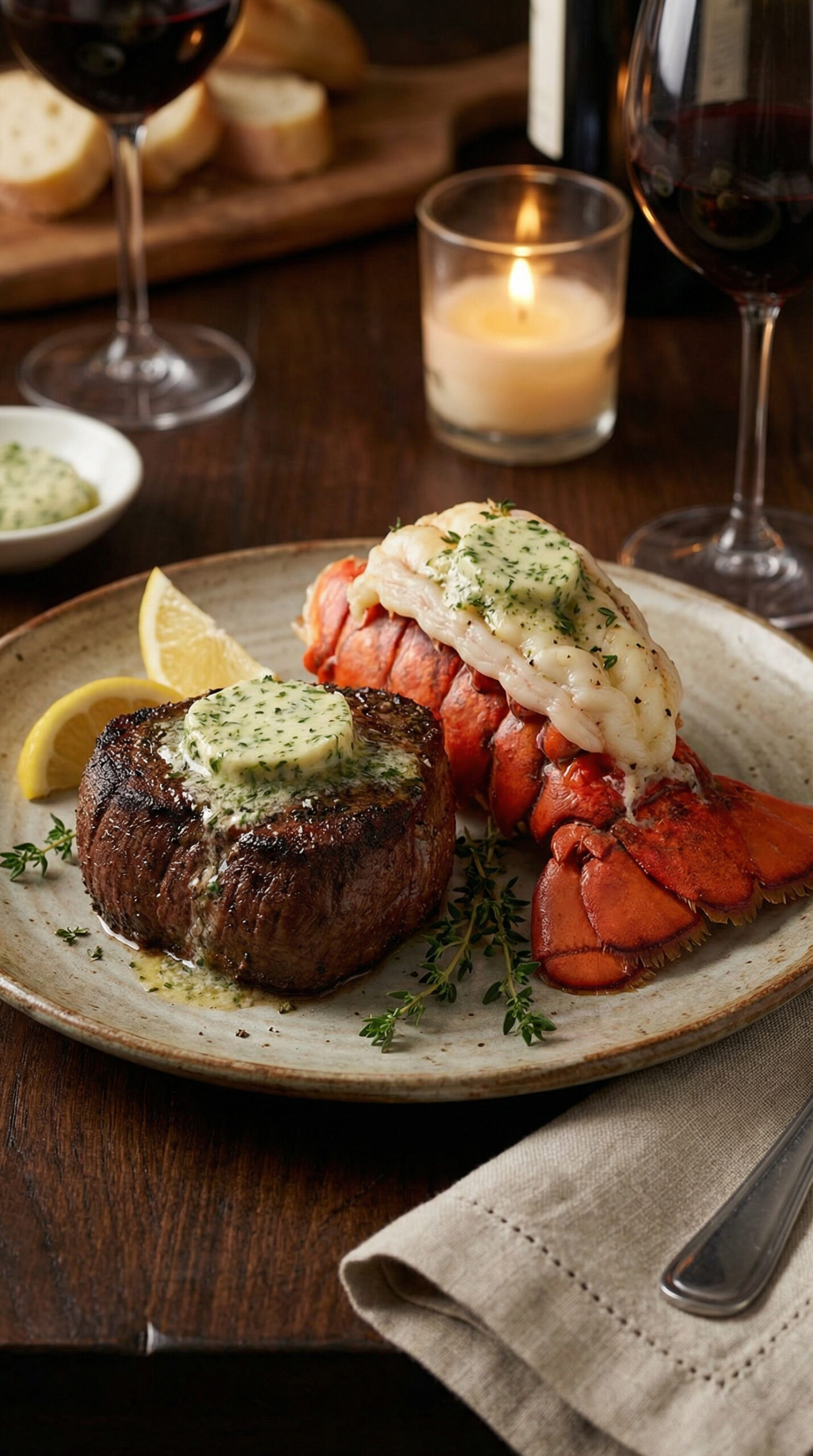
Surf and turf at home is simpler than it sounds when you nail the timing. A perfectly seared filet mignon paired with a buttery broiled lobster tail creates the ultimate steakhouse experience without the steakhouse bill. This classic combination is an unforgettable Valentine’s Day recipe for a romantic dinner or Galentine’s celebration that impresses every time.
WANT TO SAVE THIS FOR LATER?
We'll email it to you!
We won't send you spam. Unsubscribe at any time.
Why You’ll Love It
- Total cook time under 30 minutes
- Steakhouse results at a fraction of the price
- Both proteins finish around the same time with proper planning
- A single compound butter flavors both dishes
- Impressive presentation without culinary school skills
Ingredients
For the Filet Mignon:
- 2 filet mignon steaks (6-8 ounces each, about 1.5 inches thick)
- 1 tablespoon vegetable oil or other high smoke-point oil
- Kosher salt
- Freshly cracked black pepper
- 2 tablespoons unsalted butter
- 2 cloves garlic, smashed
- 2 sprigs fresh thyme
- 1 sprig fresh rosemary
For the Lobster Tails:
- 2 lobster tails (6-8 ounces each), thawed if frozen
- 2 tablespoons melted butter
- 1/4 teaspoon kosher salt
For the Herb Compound Butter (serves both):
- 6 tablespoons unsalted butter, softened
- 2 cloves garlic, minced
- 1 tablespoon fresh parsley, finely chopped
- 1 teaspoon fresh thyme leaves
- 1/2 teaspoon lemon zest
- 1/4 teaspoon kosher salt
For Serving:
- Lemon wedges
- Flaky sea salt
Steps
- Temper the steaks. Remove the filets from the refrigerator 45-60 minutes before cooking. This allows them to cook more evenly. Pat completely dry with paper towels and season generously on all sides with kosher salt and pepper.
- Make the compound butter. Combine softened butter, garlic, parsley, thyme, lemon zest, and salt in a small bowl. Mix until uniform. This butter will top both the steak and lobster.
- Prepare the lobster tails. Using kitchen shears, cut through the top shell lengthwise from the wide end to the tail fin without cutting through the bottom shell. Spread the shell apart and lift the meat, keeping it attached at the tail. Rest the meat on top of the shell. Place on a foil-lined baking sheet, brush with melted butter, and sprinkle with salt. Set aside.
- Position the oven rack and preheat the broiler. Place the rack 6 inches below the broiler element. Turn the broiler to high and let it preheat for at least 5 minutes while you start the steaks.
- Sear the steaks. Heat a cast iron skillet over high heat until smoking hot, about 3 minutes. Add the oil, then immediately place the steaks in the pan. Sear without moving for 3 minutes until a dark brown crust forms.
- Flip and baste. Flip the steaks. Reduce heat to medium. Add butter, garlic, thyme, and rosemary to the pan. Once butter foams, tilt the pan and use a spoon to continuously baste the steaks with the butter for 2-3 minutes.
- Start the lobster tails. As soon as you flip the steaks, place the lobster tails under the broiler. They will need 8-10 minutes total. The timing works out so both finish together.
- Check steak temperature. Use an instant-read thermometer inserted into the center of the steak. Pull steaks at the following temperatures, as they will rise 5 degrees while resting:
- Rare: 115°F
- Medium-rare: 120°F
- Medium: 130°F
- Medium-well: 140°F
Transfer steaks to a cutting board.
- Check lobster doneness. The lobster is done when the internal temperature reaches 140°F, the meat is opaque white throughout, and the shell is bright red. Remove from broiler.
- Rest the steaks. Let steaks rest for 5 minutes. This allows the juices to redistribute throughout the meat. Cutting too soon causes those juices to run out onto the plate.
- Plate and serve. Place one steak and one lobster tail on each warm plate. Top the steak with a generous tablespoon of compound butter. Add another tablespoon on the lobster. The butter will melt into pools of flavor. Finish with lemon wedges and a pinch of flaky sea salt.
Helpful Tips and Substitutions
Timing is everything: The steak takes about 8-10 minutes total (sear, flip, baste, rest). The lobster takes 8-10 minutes under the broiler. Start the lobster when you flip the steak, and they will finish within a minute of each other.
Why cast iron matters: Cast iron retains heat far better than stainless steel, creating a superior crust on the steak. It also goes from stovetop to oven seamlessly if your steaks are particularly thick.
Filet thickness variations: For steaks thicker than 1.5 inches, sear on both sides, then transfer the entire skillet to a 400°F oven until the internal temperature reaches your target.
Meat thermometer is non-negotiable: Filet mignon is expensive. Do not guess. An instant-read thermometer costs less than one ruined steak.
Substituting other cuts: Ribeye or New York strip work with this method, though cooking times vary. Ribeye needs more time to render its fat properly.
Can I use frozen lobster tails? Thaw overnight in the refrigerator or submerge in cold water for 30 minutes. Never cook from frozen.
Serving Ideas
Classic steakhouse sides work best: creamed spinach, baked potatoes, or roasted asparagus.
Garlic mashed potatoes are ideal for catching the melted compound butter.
A Caesar salad served before or alongside adds freshness without competing.
Pour a bold red wine like Cabernet Sauvignon or Malbec. The tannins complement the rich steak while the lobster holds its own with the herb butter.
Make-Ahead and Storage
Compound butter: Make up to 1 week ahead. Roll into a log using plastic wrap and refrigerate. Or freeze for up to 3 months. Slice off coins as needed.
Butterfly lobster early: Prepare the tails up to 4 hours ahead and refrigerate on the baking sheet, covered.
Temper steaks safely: Leave steaks at room temperature for no more than 2 hours per food safety guidelines. For most home kitchens, 45-60 minutes is sufficient.
Leftovers: Refrigerate steak and lobster separately for up to 2 days. Steak is excellent sliced cold over salad. Lobster can be chopped for lobster rolls. Reheating either protein is not recommended, as both will overcook.
The Ultimate Date Night Plate
Surf and turf is a celebration on a plate. By using one compound butter across both proteins and timing everything to finish together, you eliminate the stress that usually comes with multi-component meals. Your thermometer does the thinking for you. All that is left is enjoying the moment.
WANT TO SAVE THIS FOR LATER?
We'll email it to you!
We won't send you spam. Unsubscribe at any time.