Pan-Seared Filet Mignon with Red Wine Reduction
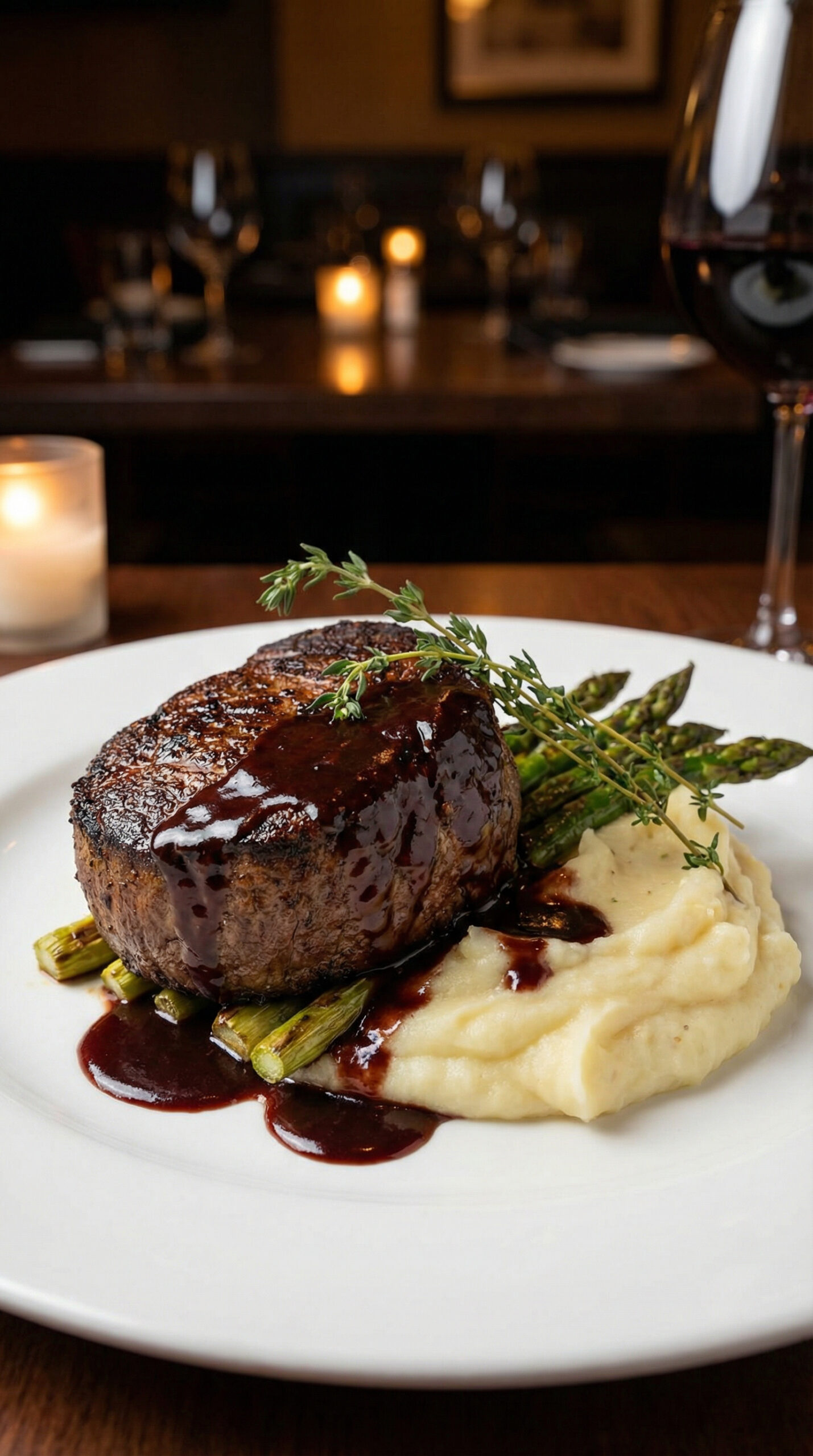
This pan-seared filet mignon delivers steakhouse-quality results using a cast iron skillet and an oven finish. The red wine reduction transforms a few pantry staples into a glossy, restaurant-worthy sauce that tastes like it took hours. This elegant recipe is a perfect Valentine’s Day dinner for a romantic evening or Galentine’s celebration that proves fine dining happens at home.
WANT TO SAVE THIS FOR LATER?
We'll email it to you!
We won't send you spam. Unsubscribe at any time.
Why You’ll Love It
- Thick, buttery crust from cast iron searing
- Reverse-sear oven technique ensures edge-to-edge pink
- Red wine reduction uses ingredients you already have
- The sauce comes together while the steak rests
- Thermometer-guided precision takes the guesswork out
Ingredients
For the Filet Mignon:
- 2 filet mignon steaks (8 ounces each, 1.5-2 inches thick)
- 1 tablespoon vegetable oil or avocado oil
- Kosher salt (about 1 teaspoon per steak)
- Freshly cracked black pepper
- 2 tablespoons unsalted butter
- 3 cloves garlic, smashed
- 3 sprigs fresh thyme
For the Red Wine Reduction:
- 1 tablespoon unsalted butter
- 1 medium shallot, minced (about 3 tablespoons)
- 1 cup dry red wine (Cabernet Sauvignon, Merlot, or Pinot Noir)
- 1 cup beef stock (low-sodium preferred)
- 1 teaspoon Dijon mustard
- 1 teaspoon fresh thyme leaves
- 2 tablespoons cold unsalted butter, cut into cubes
- Salt and pepper to taste
Steps
- Temper and dry the steaks. Remove steaks from the refrigerator 45-60 minutes before cooking. Pat completely dry with paper towels. Moisture is the enemy of a good sear. Season generously with salt and pepper on all sides, including the edges.
- Preheat the oven. Set the oven to 275°F. Place a wire rack inside a rimmed baking sheet.
- Start in the oven (reverse sear method). Place seasoned steaks on the wire rack. Cook in the oven until the internal temperature reaches 105°F for medium-rare or 115°F for medium. This takes approximately 20-30 minutes depending on thickness. Use an instant-read thermometer to check. This low-and-slow start ensures even cooking from edge to edge.
- Heat the skillet. About 5 minutes before the steaks reach target temp, heat a cast iron skillet over high heat until smoking. The pan must be screaming hot for a proper crust.
- Sear the steaks. Add oil to the skillet. Immediately place the steaks in the pan. Sear for 60-90 seconds per side until a deep brown crust forms. Do not move the steaks during searing.
- Baste with aromatics. Reduce heat to medium. Add butter, garlic, and thyme to the pan. Tilt the pan and spoon the foaming butter over the steaks continuously for 30-45 seconds. The target final temperature is 125°F for medium-rare or 135°F for medium.
- Rest the steaks. Transfer steaks to a cutting board and tent loosely with foil. Rest for 5 minutes. The temperature will rise another 5 degrees during this time.
- Start the sauce. Pour off excess fat from the skillet, leaving about 1 tablespoon and all the browned bits. Return to medium heat. Add 1 tablespoon butter and the shallot. Cook for 2 minutes until softened.
- Deglaze with wine. Add the red wine to the skillet. Use a wooden spoon to scrape up all the fond (browned bits) from the bottom. These flavor particles are gold. Simmer until the wine reduces by half, about 3-4 minutes.
- Add stock and reduce. Pour in the beef stock. Continue simmering until the liquid reduces to about 1/2 cup and coats the back of a spoon, about 5-7 minutes. Stir in the Dijon mustard and thyme leaves.
- Finish the sauce. Remove the skillet from heat. Whisk in the cold butter cubes one at a time. The cold butter emulsifies into the sauce, creating a glossy, velvety texture. This step is called mounting with butter. Taste and season with salt and pepper.
- Plate and serve. Place each steak on a warm plate. Spoon the red wine reduction over and around the steak. Serve immediately.
Helpful Tips and Substitutions
Why reverse sear? Starting the steak in a low oven brings it to temperature slowly, ensuring even doneness from edge to edge. The final sear creates the crust. Traditional searing first can leave a gray band of overcooked meat beneath the crust.
Thermometer temperatures explained:
- Pull from oven at 105°F, sear, final temp 125°F = medium-rare (warm red center)
- Pull from oven at 115°F, sear, final temp 135°F = medium (warm pink center)
- Pull from oven at 125°F, sear, final temp 145°F = medium-well
Wine selection matters: Use a wine you would drink. Cooking concentrates flavors, so cheap, harsh wine makes a harsh sauce. Cabernet Sauvignon produces a robust sauce. Pinot Noir yields something lighter and more elegant.
No beef stock? Chicken stock works in a pinch, though the flavor will be milder. Avoid vegetable stock, which tastes too sweet.
Cold butter is crucial: Room temperature butter will not emulsify properly. It must be cold and added off heat while whisking constantly.
Cast iron alternatives: A heavy-bottomed stainless steel pan works, but carbon steel is an excellent cast iron substitute that heats evenly and holds temperature well.
Serving Ideas
The red wine reduction pairs beautifully with starchy sides that absorb sauce: creamy mashed potatoes, polenta, or crusty bread.
Roasted mushrooms complement the earthy notes in the sauce.
Keep vegetables simple: roasted asparagus, sautéed green beans, or a light arugula salad.
Serve with the same wine you used in the sauce to create a cohesive meal.
Make-Ahead and Storage
Season steaks early: Salt the steaks up to 24 hours ahead and refrigerate uncovered on a wire rack. This dry-brines the meat, improving flavor and helping form a better crust. Bring to room temperature before cooking.
Prep sauce ingredients: Mince the shallot and measure out the wine and stock up to a day ahead.
Sauce storage: The red wine reduction can be made up to 2 days ahead. Refrigerate and reheat gently over low heat, whisking in fresh butter just before serving.
Leftover steak: Refrigerate for up to 3 days. Slice cold for steak salad or sandwiches. Reheating is not recommended, as the steak will overcook.
Restaurant Quality, Home Kitchen
The reverse sear method and a proper pan sauce are the two techniques that separate good home cooks from great ones. Neither is difficult, but both require attention to temperature and timing. Follow the thermometer, trust the process, and you will produce a steak that rivals any chophouse—plus a silky sauce that makes it unforgettable.
WANT TO SAVE THIS FOR LATER?
We'll email it to you!
We won't send you spam. Unsubscribe at any time.