High Protein Banana Pancakes
These high protein banana pancakes are blended from rolled oats, two eggs, cottage cheese and one spotted banana, with a scoop of whey only if you want it.
The eggs and cottage cheese do the protein work, so the powder is optional rather than the whole point.
What keeps them from turning gummy is a 5-minute rest after blending, which gives the ground oats time to absorb the liquid before the batter hits the pan.
They are moister and denser than buttermilk pancakes, closer to a thin slice of banana bread than a diner stack, and they are meant to be.
Batter to plate takes about 20 minutes for two servings of four small pancakes each.
WANT TO SAVE THIS FOR LATER?
We'll email it to you!
We won't send you spam. Unsubscribe at any time.
Why You’ll Love It
- Eggs, cottage cheese and oats supply the protein, powder is optional
- Everything goes in one blender, no bowls
- No flour and no added sugar
- Gluten-free with certified gluten-free oats
- Freeze for 3 months and reheat in the toaster
- Good cold, so they work as a packed breakfast
Ingredients
1 cup old-fashioned rolled oats (about 90 grams), or 1 cup oat flour
1 large ripe banana with brown spots (about 1/2 cup mashed)
2 large eggs
1/2 cup full-fat or 2% cottage cheese, or plain Greek yogurt
1 scoop vanilla whey protein powder, about 30 grams (optional)
1 teaspoon baking powder
1 teaspoon vanilla extract
1/2 teaspoon ground cinnamon
1/4 teaspoon salt
2 to 4 tablespoons milk, only if the batter needs thinning
Butter or neutral oil for the pan, about 1 teaspoon total
Steps
1. Put the oats in a high-speed blender and blend for 30 seconds, stopping once to shake the jar, until they look like coarse flour (skip this if you are using oat flour).
2. Add the banana broken into chunks, the eggs, cottage cheese, protein powder if using, baking powder, vanilla, cinnamon and salt, and blend for 20 to 30 seconds until smooth, scraping down the sides once.
3. Let the batter rest in the blender jar for 5 minutes, after which it should be the thickness of cake batter and pour slowly off a spoon. Skipping the rest is what gives these pancakes gummy centers, because the oat flour has not had time to hydrate.
4. If the batter is too thick to pour at all, stir in milk 1 tablespoon at a time, which you will almost always need when protein powder is in the mix.
5. Heat a 12-inch nonstick skillet over medium-low for 2 minutes, then brush it with about 1/2 teaspoon of the butter or oil. Medium-low is not a typo, because the banana sugar and the protein both brown fast, and a pancake that is dark at 2 minutes with a raw middle means the pan is too hot.
6. Pour a scant 1/4 cup of batter per pancake to make 3-inch rounds, fitting 4 in the skillet with space between them.
7. Cook for 3 to 4 minutes, until the edges look dry and matte and the bubbles on top pop and stay open, then slide a thin silicone turner all the way under and flip in one motion. Flip too early and the center spills out, since an egg and cheese batter sets slower than a flour batter.
8. Cook the second side for 2 minutes, until the middle springs back when pressed lightly with a fingertip, then move the pancakes to a plate.
9. Re-grease the pan with another 1/2 teaspoon of butter and repeat with the remaining batter, stirring it first because it thickens as it sits.
Helpful Tips & Substitutions
Per serving of four pancakes these land around 17 grams of protein without powder and around 29 grams with a scoop of whey (rough math: a cup of oats has about 10 grams, two large eggs about 12, half a cup of cottage cheese about 12 and the banana about 1, which is roughly 35 grams for the batch and 17 per serving, and a 30-gram scoop of whey adds about 24 grams to the batch, or 12 per serving).
Keep the pancakes at 3 inches, because this batter has no gluten to hold it together and a 5-inch pancake tears when you try to flip it.
Cottage cheese blends completely smooth, so nobody will find curds, and it gives a slightly richer result than Greek yogurt, which makes a tangier and thicker batter that usually needs the full 4 tablespoons of milk.
Whey protein blends thinnest, while plant-based powders soak up more liquid, so plan on 2 to 3 extra tablespoons of milk with a pea or soy powder.
Vanilla whey protein isolate also sweetens the batter, so if you use unflavored powder and want a sweeter pancake, blend in 1 tablespoon maple syrup.
The banana has to be ripe, with brown spots on the skin, because a yellow-green banana tastes starchy, blends into stringy bits and adds almost no sweetness.
Weigh the oats on a digital kitchen scale if you have one, since a packed cup of rolled oats can run 20 grams heavier than a loose one, and that is the difference between a pourable batter and a paste.
Half a cup of liquid egg whites replaces the two whole eggs with a little more protein and a slightly less rich pancake.
Blueberries or chocolate chips go on top of each pancake right after pouring rather than into the blender, which would turn the batter gray or streaky.
To hold a batch warm while the rest cook, set the finished pancakes on a sheet pan in a 200°F (95°C) oven.
Serving Ideas
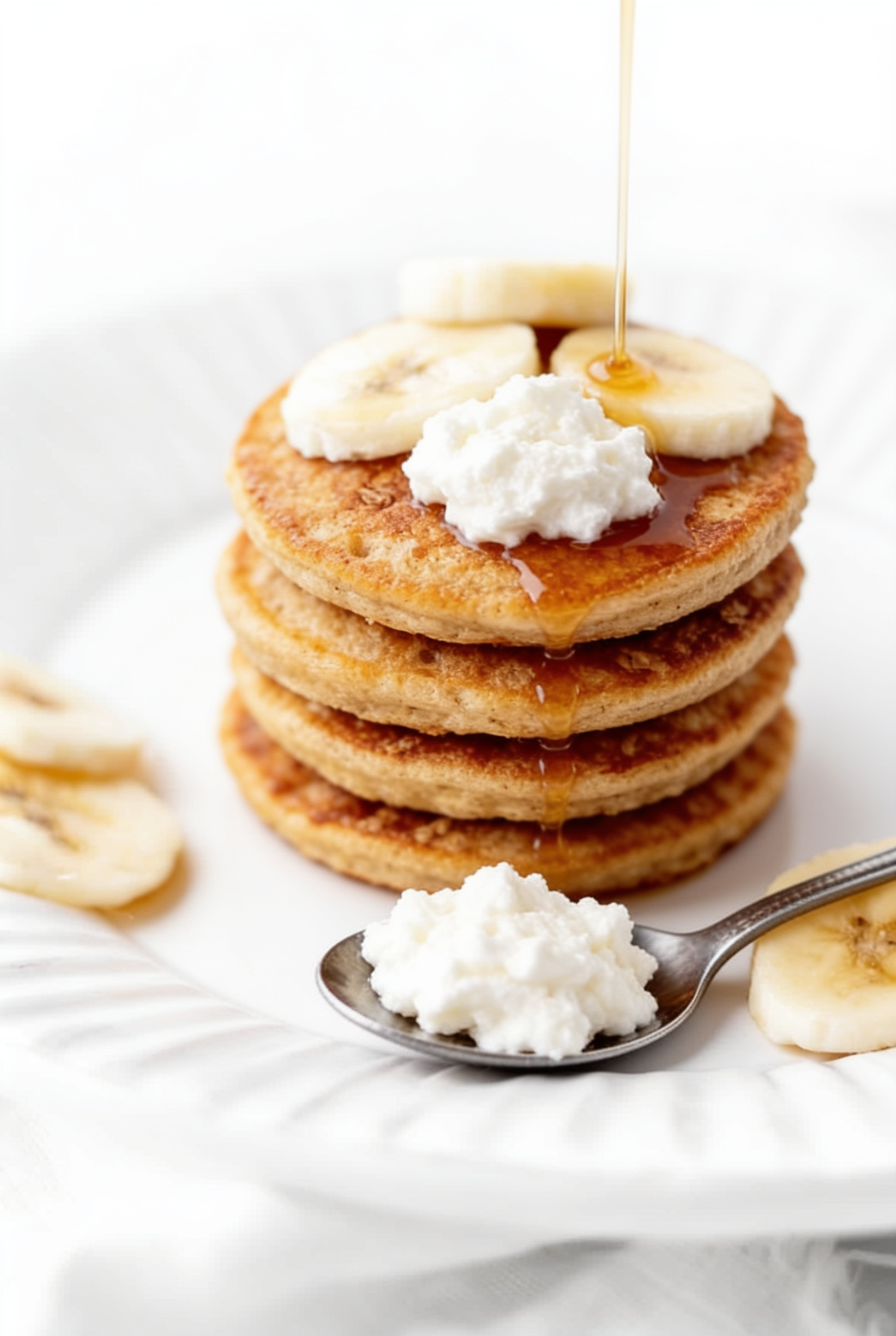
Sliced banana, a spoon of the leftover cottage cheese and a thin drizzle of maple syrup is the standard plate, and the cottage cheese on top adds another few grams of protein.
For a peanut butter drizzle, stir 1 tablespoon peanut butter with 1 teaspoon hot water until it pours.
They go well next to scrambled eggs, and the high protein make-ahead egg breakfasts on the site are the natural pairing if you are building a bigger plate.
If you opened a tub of cottage cheese for this, high protein cottage cheese baked oats use up another half cup the next morning.
Cold, they eat like a dense banana bread, so two stacked with a smear of peanut butter make a packable breakfast or a post-workout snack without reheating.
Make-Ahead & Storage
Cooked pancakes keep 4 days in the fridge in an airtight container with a square of parchment between each one so they do not stick together.
To freeze, lay them flat on a parchment-lined sheet pan for 1 hour until solid, then transfer to a freezer bag for up to 3 months.
Reheat straight from frozen in the toaster on a medium setting, since they are sturdy enough not to fall apart, or microwave two pancakes for 30 to 45 seconds, or warm them in a dry skillet over medium for 1 minute per side.
The batter does not keep well, because the baking powder loses its lift and the oats keep thickening, so cook it within 30 minutes of blending.
If you do refrigerate leftover batter overnight, thin it with 2 tablespoons milk and expect flatter pancakes.
A double batch frozen in bags of four is a week of breakfasts, and the freezer pancakes make-ahead breakfast ideas roundup has more recipes that hold up the same way.
The batter keeps thickening the longer it sits, so the last pancakes of a batch usually need a tablespoon of milk stirred in to pour like the first ones did.
WANT TO SAVE THIS FOR LATER?
We'll email it to you!
We won't send you spam. Unsubscribe at any time.