Ground Beef Hashweh: Spiced Beef with Pine Nuts Over Rice
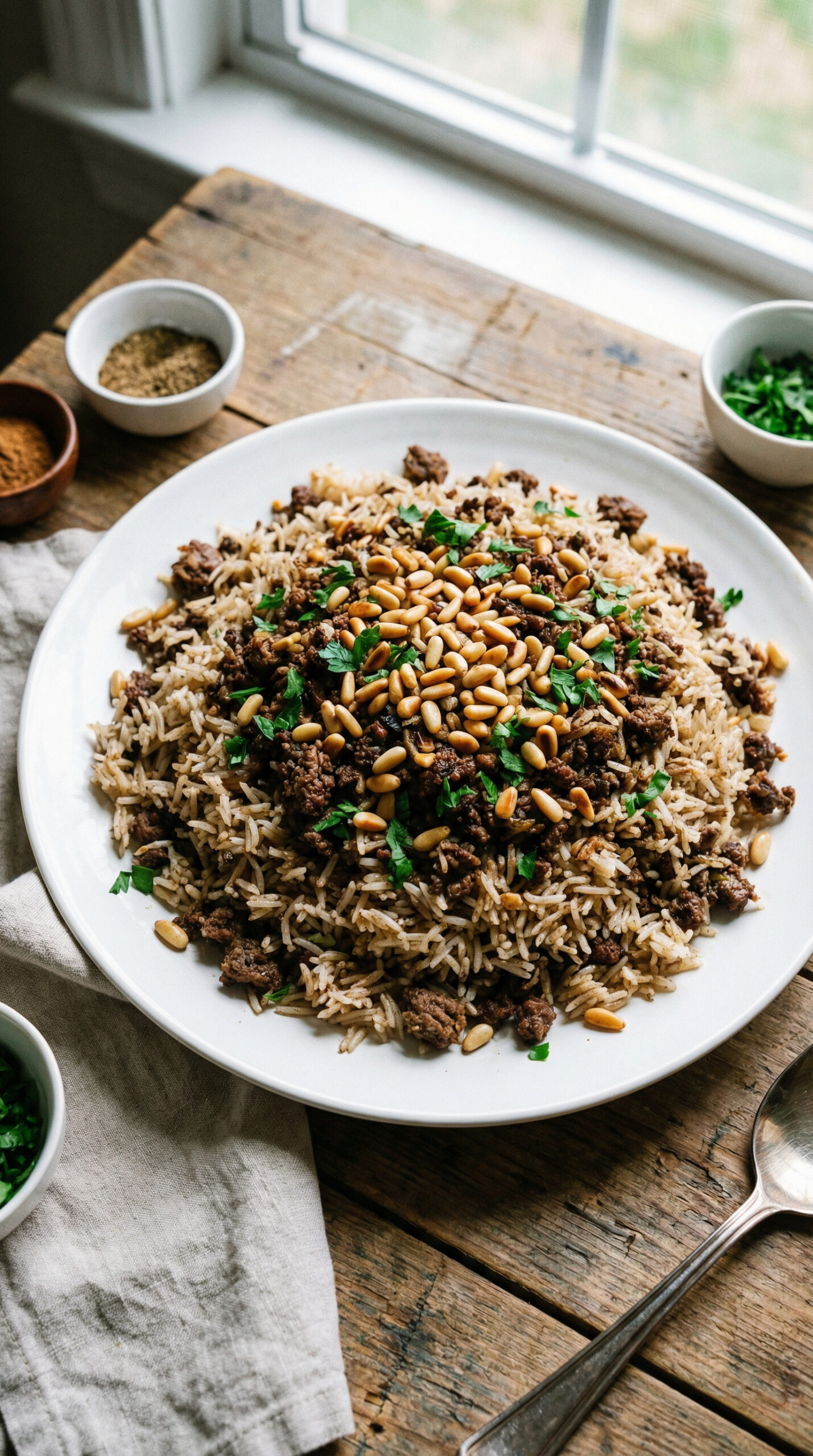
Hashweh is a Lebanese one-pot rice dish built on layers of warm spices, caramelized ground beef, and toasted pine nuts.
The name literally translates to “stuffing,” but it stands alone as a complete meal with minimal sides.
Cinnamon and allspice warm the dish while pine nuts add a subtle richness that elevates it beyond typical rice and beef.
WANT TO SAVE THIS FOR LATER?
We'll email it to you!
We won't send you spam. Unsubscribe at any time.
Why You’ll Love It
- One-pot cooking with minimal cleanup; everything finishes in 35 minutes.
- 32g protein per serving from beef and the high ratio of meat to rice.
- Toasted pine nuts provide textural contrast and a signature nutty depth.
- Warm spices (cinnamon, allspice) create complexity without heat.
- Freezes beautifully for meal prep; reheat without degradation.
Ingredients
For the Hashweh Base
1.5 pounds ground beef (85/15 lean-to-fat ratio).
1 medium yellow onion, diced small.
4 cloves garlic, minced.
2 tablespoons ghee or unsalted butter (ghee preferred for authentic flavor).
1 teaspoon ground cumin.
3/4 teaspoon ground allspice (this is the signature spice; do not skip or reduce).
3/4 teaspoon ground cinnamon (Ceylon or cassia both work).
1/4 teaspoon ground nutmeg.
1/4 teaspoon black pepper.
1/4 teaspoon cayenne pepper (optional but recommended).
Salt to taste (start with 1 teaspoon; adjust after rice cooks).
For the Rice
2 cups basmati rice.
3.25 cups beef broth or unsalted chicken broth (not water; broth carries flavor into the rice).
1 tablespoon ghee or unsalted butter.
For the Pine Nuts
1/2 cup raw pine nuts.
1 tablespoon ghee or unsalted butter.
Salt to taste.
Steps
1. Toast the pine nuts (do this first): In a small dry skillet over medium heat, add raw pine nuts and toast for 3-4 minutes, stirring frequently, until light golden and fragrant. Do not walk away; pine nuts burn easily. Transfer to a small plate to cool. They’ll crisp further as they cool. Set aside. This can be done up to 4 hours ahead.
2. Wash the rice: Place basmati rice in a fine-mesh strainer and rinse under cold running water for 90 seconds, stirring gently with your fingers, until the water runs clear. This removes surface starch that would otherwise make the rice gummy. Drain thoroughly.
3. Brown the beef and onion: In a large heavy-bottomed pot (Dutch oven or lidded skillet at least 10-12 inches in diameter), melt 2 tablespoons ghee over medium-high heat. Once foaming, add diced onion and cook for 4 minutes, stirring occasionally, until softened and beginning to color. Add ground beef and break apart with a wooden spoon, stirring often, for 7-9 minutes until no pink remains and the beef is beginning to brown. Do not drain the fat; it carries flavor.
4. Bloom the spices: Reduce heat to medium. Add minced garlic and cook for 1 minute until fragrant. Add cumin, allspice, cinnamon, nutmeg, black pepper, and cayenne. Stir constantly for 30 seconds to toast the spices directly in the fat, which releases their aromatics. Taste a small spoonful of the beef and adjust salt and spices now; it’s harder to balance later once rice is added.
5. Add and toast the rice: Add the washed basmati rice to the pot and stir for 1-2 minutes, coating each grain with the spiced fat. The rice will look glossy and smell fragrant. This step prevents the rice from clumping and infuses each grain with flavor.
6. Add broth and bring to a boil: Pour 3.25 cups broth into the pot and stir once to distribute. Increase heat to medium-high and bring to a rolling boil, stirring occasionally. Once boiling, taste a small spoonful of the liquid and adjust salt if needed. The liquid should taste slightly salty (it will season the rice as it absorbs).
7. Cover and simmer: Reduce heat to low, place the lid on the pot, and cook undisturbed for 18-20 minutes. Do not lift the lid or stir. The rice will absorb all the liquid and cook through. After 18 minutes, carefully lift the lid and test a grain of rice by biting it; it should be tender with no crunch at the center. If still firm, cover and cook another 2 minutes.
8. Finish and fluff: Remove from heat and let sit covered for 5 minutes. Remove the lid and stir in 1 tablespoon ghee with a fork, fluffing the rice and distributing the beef throughout. Taste and adjust salt or spices one final time.
9. Serve: Transfer to a serving platter or individual bowls, top with toasted pine nuts, and serve immediately while hot.
Helpful Tips & Substitutions
Allspice is non-negotiable: This single spice defines hashweh and distinguishes it from generic spiced rice. Ground allspice has warm, slightly sweet, clove-like notes that create the dish’s signature flavor. Do not omit or reduce it.
Use ghee, not just butter: Ghee is clarified butter with the water and milk solids removed, giving it a higher smoke point and a deeper, nuttier flavor than regular butter. It’s available in most grocery stores now or can be made at home. Regular butter works in a pinch but will give slightly less flavor and may brown unevenly.
Basmati rice is worth the slight extra cost: Basmati grains are longer and cook up separate and fluffy. Short-grain white rice will become mushy and starchy. If substituting, use jasmine rice at minimum, which also cooks up fluffy.
Use broth, not water: Broth carries beef or chicken flavor into the rice as it absorbs, creating a deeply savory base. Water results in bland rice no matter how well the beef is seasoned. Use unsalted broth if available, as salted broths vary in sodium content.
Toast pine nuts yourself; don’t buy them pre-toasted: Pre-toasted pine nuts oxidize over time and can taste slightly rancid. Raw pine nuts toasted at home stay fresh and have a superior flavor. They’re also less expensive.
Use 85/15 beef for depth: The fat renders out and carries spices throughout the rice. Lean ground sirloin (93/7) produces dry, flavorless hashweh. If only lean beef is available, add an extra tablespoon of ghee to compensate.
Substitute lamb for beef: Ground lamb (85/15) is traditional in some versions of hashweh and pairs beautifully with the warm spices. Use the same proportion and cooking time. Increase cinnamon to 1 teaspoon for a sweeter profile.
Add dried fruit: Stir in 1/4 cup raisins or chopped dried apricots along with the rice for sweetness and chewiness. Traditional hashweh often includes these, though they’re optional.
Skip the pine nuts or substitute: Pine nuts are expensive and can cause allergic reactions. Swap with an equal volume of sliced almonds (toasted the same way) or raw unsalted pistachios. Almonds provide crunch and slight bitterness; pistachios add color and earthiness.
Serving Ideas
Serve alongside plain yogurt seasoned with salt and lemon juice for cooling contrast.
Add a simple tomato and cucumber salad dressed with olive oil and a squeeze of lemon.
Serve with warm pita bread or flatbread for scooping.
Top individual portions with fresh mint, cilantro, or parsley for brightness and herbaceousness.
Make-Ahead & Storage
Refrigerate: Store hashweh in an airtight container for up to 4 days. Reheat covered at 325°F for 8-10 minutes, or microwave a single portion on 70% power for 2-3 minutes, stirring halfway. The rice may be slightly drier after refrigeration; drizzle with a splash of broth or water before reheating to restore moisture.
Freeze: Cool hashweh completely, transfer to a freezer-safe container or freezer bag, and freeze for up to 3 months. Thaw overnight in the refrigerator, then reheat as above. Alternatively, reheat from frozen at 325°F covered for 20-25 minutes, stirring occasionally.
Make ahead: Hashweh is best eaten the same day but holds well for 4 days. Do not prepare the rice more than 1 day ahead, as it continues to absorb moisture and becomes mushy.
What degrades: The rice softens over time as it absorbs moisture from the beef. The pine nuts soften slightly if stored mixed into the hot rice; add them fresh right before serving for maximum crunch.
Hashweh delivers restaurant-quality flavor with a straightforward technique and minimal hands-on time.
It’s the kind of dish that tastes better the next day as flavors settle and deepen—keep that in mind when meal prepping and planning your week.
WANT TO SAVE THIS FOR LATER?
We'll email it to you!
We won't send you spam. Unsubscribe at any time.