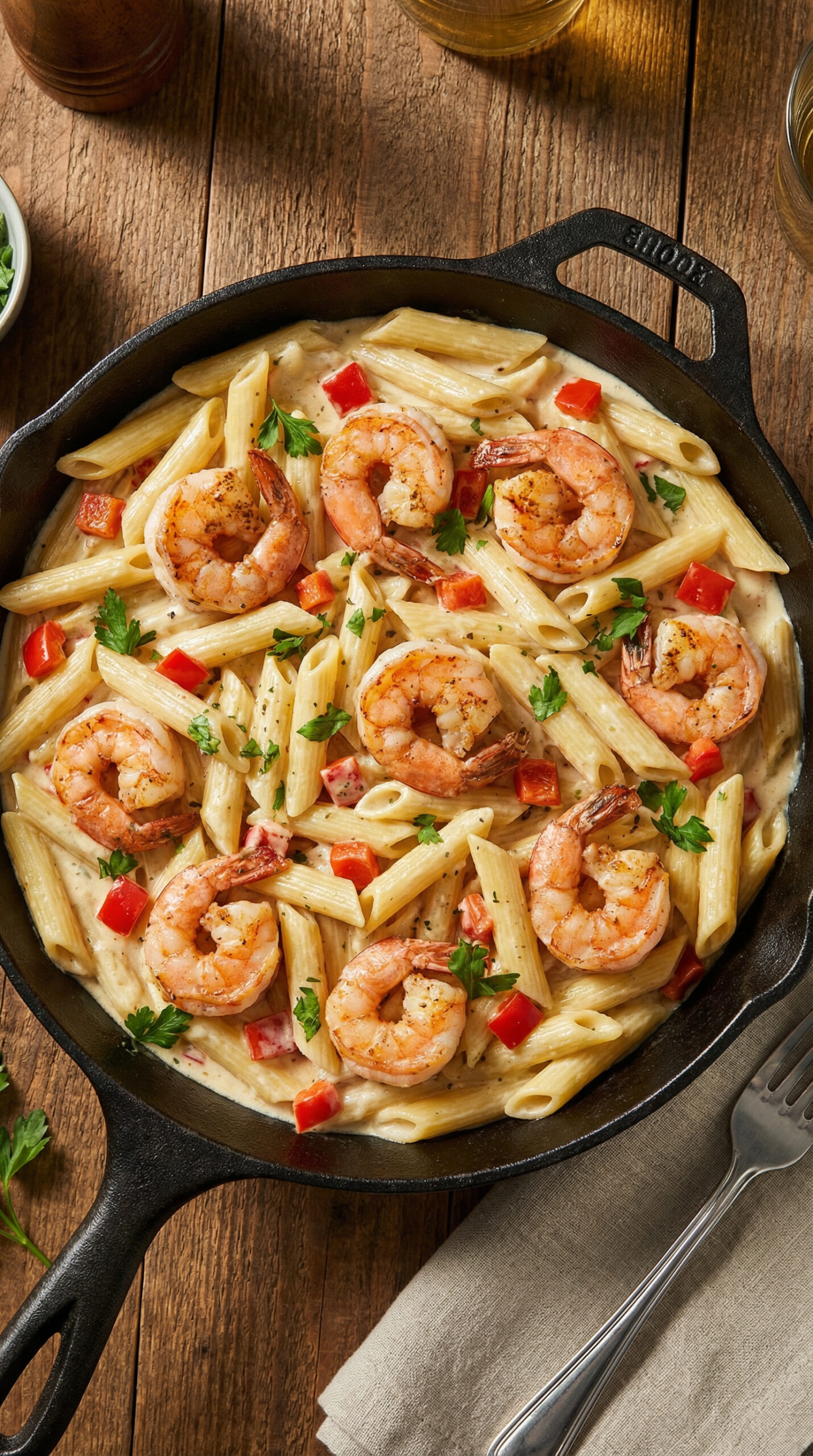
Creamy Cajun Shrimp Pasta
This 25-minute pasta hits the sweet spot between weeknight simplicity and date-night elegance.
Large shrimp get a quick sear in cajun seasoning, then you build a silky cream sauce that does all the heavy lifting with a single spice blend.
The technique is straightforward: brown the shrimp, then use the same pan to bloom the cajun seasoning in butter before adding cream and Parmesan—everything comes together fast without sacrificing flavor.
WANT TO SAVE THIS FOR LATER?
We'll email it to you!
We won't send you spam. Unsubscribe at any time.
Why You’ll Love It
- Ready in 25 minutes, start to finish
- One spice blend creates a complex, layered heat
- Heavy cream makes the sauce restaurant-quality but requires zero special technique
- Naturally scalable—double it for company without extra work
- Shrimp stays tender because it cooks quickly and doesn’t go back in the pan
Ingredients
Protein and Pasta
1 lb large shrimp, peeled and deveined
12 oz penne or linguine
Seasonings and Fats
2 tbsp cajun seasoning
2 tbsp butter
1 tbsp olive oil
Sauce and Vegetables
4 cloves garlic, minced
1 bell pepper, diced (red or yellow preferred for sweetness)
1 cup heavy cream
1/2 cup grated Parmesan
Garnish
Fresh parsley, chopped
Salt and pepper to taste
Steps
- Start water for pasta in a large pot and bring to a boil while you prep ingredients.
- Pat shrimp dry with paper towels and toss with 2 tbsp cajun seasoning until evenly coated.
- Heat 1 tbsp olive oil in a large skillet over medium-high heat until it shimmers.
- Working in batches if needed, sear shrimp 2 minutes per side until pink and just cooked through—do not overcrowd the pan.
- Transfer shrimp to a plate and set aside.
- In the same skillet, melt 2 tbsp butter over medium heat.
- Add minced garlic and cook for 30 seconds until fragrant.
- Stir in diced bell pepper and cook for 3 minutes until slightly softened.
- Pour in 1 cup heavy cream and bring to a gentle simmer.
- Stir in 1/2 cup Parmesan cheese until fully melted and smooth.
- Cook pasta according to package directions, then drain and reserve 1/2 cup pasta water.
- Add cooked pasta to the sauce and toss gently, adding pasta water a few tablespoons at a time if the sauce is too thick.
- Return shrimp to the skillet and toss everything together for 1 minute to warm the shrimp through.
- Taste and adjust salt and pepper as needed.
- Serve immediately, garnished with fresh parsley.
Helpful Tips and Substitutions
The heat level depends entirely on your cajun seasoning and how much you use: 1 tbsp gives you mild warmth, 2 tbsp is medium-spicy, and 3 tbsp will deliver a noticeable kick.
If you don’t have heavy cream on hand, half-and-half works but will be less rich—add an extra tablespoon of butter to compensate.
Shrimp cooks fast, so keep an eye on it; the moment it turns pink and opaque is when you pull it from heat.
Fresh cajun seasoning makes a noticeable difference in flavor depth compared to older jars, so consider replacing yours if it has been sitting for over a year.
Any short pasta shape works here, but penne and linguine are ideal for catching sauce in every bite.
Serving Ideas
A crusty baguette is essential for soaking up the leftover sauce.
Pair with a crisp white wine—Sauvignon Blanc or Pinot Grigio cuts through the richness perfectly.
A simple arugula salad tossed with olive oil and lemon juice balances the cream.
If you love this dish, try our Spicy Ground Beef Arrabbiata Pasta for another quick, heat-forward pasta night.
Make-Ahead and Storage
Cook the pasta and shrimp, prepare the sauce base separately, then combine just before serving—this keeps the pasta from absorbing too much sauce while sitting.
Leftovers will keep in an airtight container for 2 days, though the pasta will continue absorbing sauce and become slightly softer.
Reheat gently in a skillet over low heat with a splash of cream or pasta water to restore the sauce’s consistency.
This dish does not freeze well because shrimp and cream sauces deteriorate in texture during the freeze-thaw cycle.
Get this one on the table while it’s fresh and enjoy every bite.
WANT TO SAVE THIS FOR LATER?
We'll email it to you!
We won't send you spam. Unsubscribe at any time.