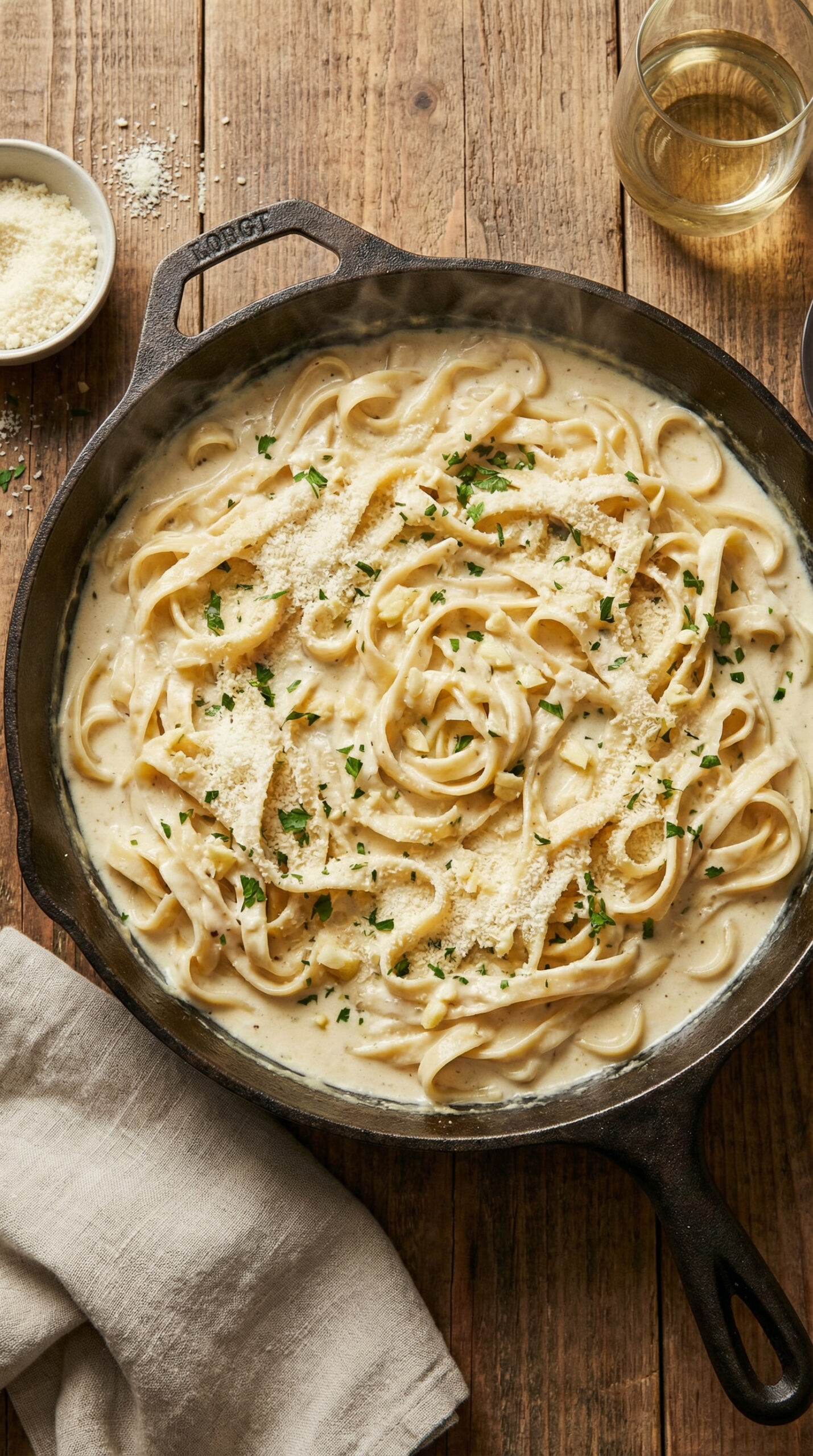
Creamy Garlic Parmesan Pasta
This is a weeknight dinner that comes together in 20 minutes and tastes like you spent an hour on it.
The secret isn’t any fancy ingredient—it’s the pasta water.
Most creamy sauces break when you add cheese because the fat and protein are fighting each other. This version uses starchy pasta water to create an emulsion that stays silky, no matter what.
WANT TO SAVE THIS FOR LATER?
We'll email it to you!
We won't send you spam. Unsubscribe at any time.
Why You’ll Love It
- Ready in 20 minutes from start to finish.
- The sauce never breaks or separates when done correctly.
- You only need butter, garlic, cream, and Parmesan—no jarred sauce or shortcuts needed.
- Works with whatever pasta shape you have on hand.
- Scales up easily if you’re feeding more people.
- The technique here works for any cream sauce, not just pasta.
Ingredients
1 pound linguine or fettuccine.
6 cloves garlic, minced.
6 tablespoons unsalted butter.
1 cup heavy cream.
1 cup freshly grated Parmesan cheese (from the block, not pre-shredded).
Salt and black pepper to taste.
Red pepper flakes (optional, for heat).
Steps
1. Fill a large pot with salted water and bring to a boil (the water should taste like the sea).
2. Add pasta and cook according to package directions until just shy of fully tender—you want it to still have a slight bite.
3. Reserve 1 cup of pasta water before draining the pasta.
4. While the pasta cooks, melt butter in a large skillet over medium heat.
5. Add minced garlic and cook for 1 to 2 minutes, stirring constantly, until fragrant but not browned (burned garlic tastes bitter).
6. Pour in the heavy cream and stir to combine.
7. Add a pinch of salt and pepper, then simmer for 2 to 3 minutes—you should see small bubbles breaking the surface.
8. Turn off the heat.
9. Add the cooked pasta to the skillet and toss to coat.
10. Slowly sprinkle in the grated Parmesan while tossing constantly—this is important because the cheese will clump if you dump it all in at once.
11. If the sauce looks too thick, add a splash of reserved pasta water at a time until you reach the consistency you want (it should coat the noodles but still move around the pan).
12. Taste and adjust salt and pepper.
13. Serve immediately in warm bowls with extra Parmesan on the side.
Helpful Tips and Substitutions
Use real Parmesan from the block and grate it yourself—pre-shredded cheese has anti-caking agents that make the sauce grainy and weird.
The pasta water is your safety net; keep adding it in small amounts if the sauce seems too thick or if the pasta continues cooking after you move it to the skillet.
Don’t skip removing the pan from heat before adding the cheese—if it’s too hot, the cheese proteins seize up and you get a broken, grainy sauce instead of something smooth.
Any long pasta works here: try spaghetti, bucatini, or angel hair if linguine isn’t in the pantry.
Add color and flavor by stirring in fresh lemon zest at the end, or toss in some fresh parsley or thyme.
For a version with more texture, brown the butter for a nutty flavor, but watch it carefully so it doesn’t burn.
Serving Ideas
This works on its own, but it’s also a blank canvas for whatever protein you have—leftover grilled chicken, pan-seared shrimp, or a fried egg on top all make sense here.
If you want to build a meal around it, try pairing this with one of our lemon garlic ground beef pasta or spicy ground beef arrabbiata recipes for ideas on how to combine proteins and sauces.
A crisp green salad with lemon vinaigrette cuts through the richness and balances the plate.
Make-Ahead and Storage
Make the sauce up to 2 hours ahead and keep it in a covered container at room temperature; reheat gently over low heat before tossing with freshly cooked pasta.
Cooked pasta with sauce keeps in an airtight container in the fridge for up to 3 days, but the texture will soften—it’s still edible, but not ideal.
To reheat, warm it gently in a skillet over medium-low heat with a splash of milk or cream to loosen the sauce back up.
Don’t freeze this dish because the cream will separate during thawing.
Equipment Notes
A microplane cheese grater makes quick work of fresh Parmesan and produces finer shreds than a box grater.
A heavy-bottomed 12-inch skillet distributes heat evenly so the garlic won’t burn.
You’ll want a large pasta pot with at least 6-quart capacity so the water doesn’t boil over when the pasta goes in.
A wooden spoon is gentler on the noodles than metal and won’t scratch your skillet.
Keep a glass measuring cup handy for measuring that reserved pasta water.
A kitchen thermometer helps you dial in the right temperature for the cream to simmer without boiling over.
This recipe works because it respects the fundamentals: good ingredients, proper heat control, and one simple technique that prevents the sauce from breaking.
Make it once and you’ll reach for it when you need dinner on the table and no drama in the kitchen.
WANT TO SAVE THIS FOR LATER?
We'll email it to you!
We won't send you spam. Unsubscribe at any time.