Best Blackstone Hibachi Recipes at Home
The Blackstone is the closest thing to a teppanyaki grill that most people have access to. Big flat surface, high heat, room to cook rice, protein, and vegetables all at once — which is how hibachi restaurants do it.
This covers the full spread: three proteins, the fried rice, the vegetables, the noodles, and both sauces. You don’t have to make everything in one session, but you can — that’s the point of the griddle.
WANT TO SAVE THIS FOR LATER?
We'll email it to you!
We won't send you spam. Unsubscribe at any time.
1. Hibachi Fried Rice
This is the base of the whole meal and probably the thing people are most trying to recreate from the restaurant.
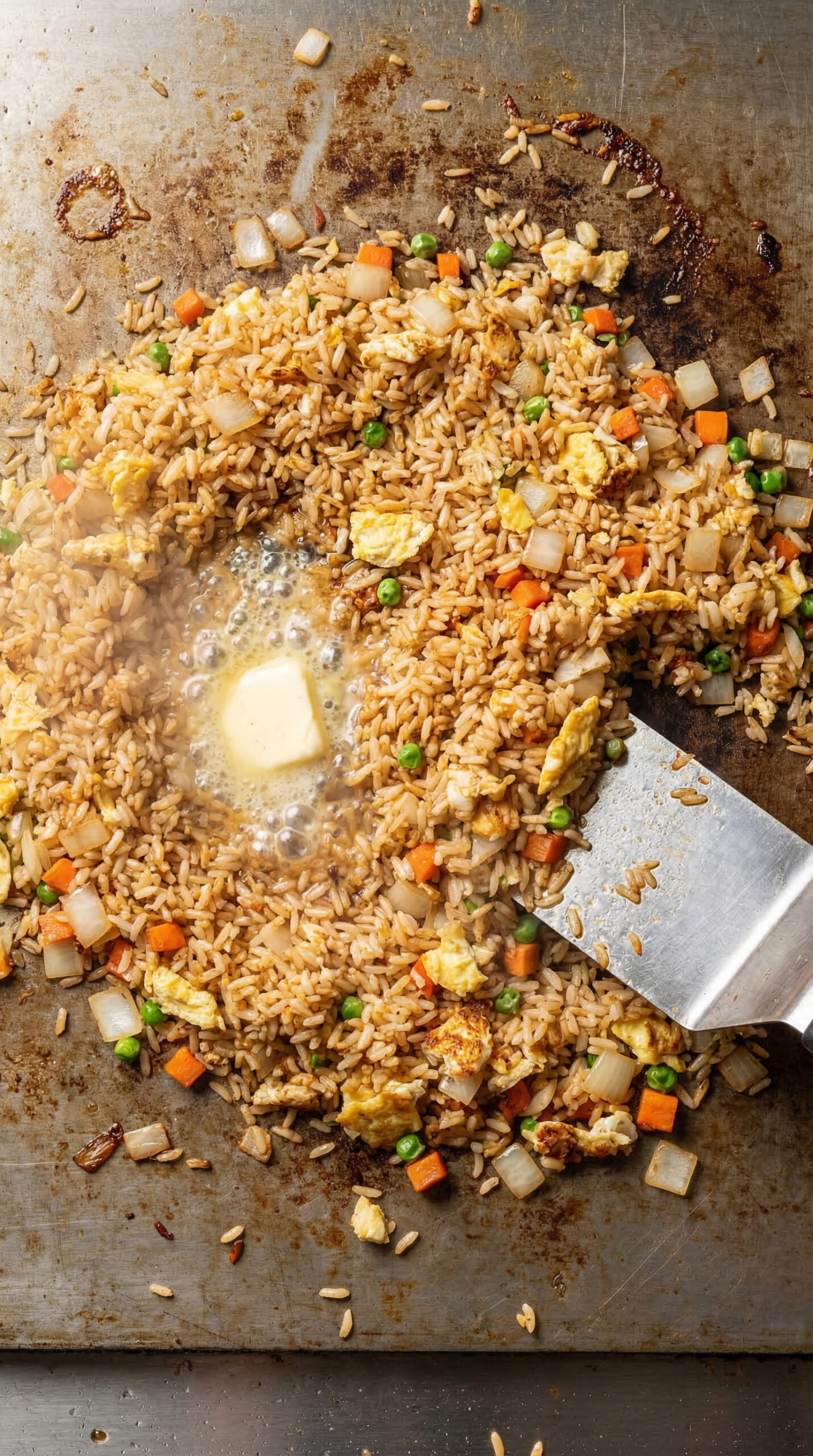
Day-old rice. This matters more here than almost any other fried rice recipe because hibachi fried rice is supposed to be dry and slightly chewy with individual grains, not clumpy. Cook it the day before and refrigerate it uncovered or spread on a sheet pan.
Oil the griddle on high heat. Scramble 2-3 eggs, chop them up on the surface, push to the side. Add diced onion, cook for a minute. Spread the cold rice across the griddle in a thin layer — the thinner you spread it, the more contact with the heat, the better the char. Let it sit without touching it for a minute or two so the bottom layer gets toasty.
Soy sauce, butter, garlic powder, sesame oil. Add them and toss everything together. The butter is what gives hibachi fried rice that specific richness that regular fried rice doesn’t have. Restaurants use a lot of it.
2. Hibachi Chicken
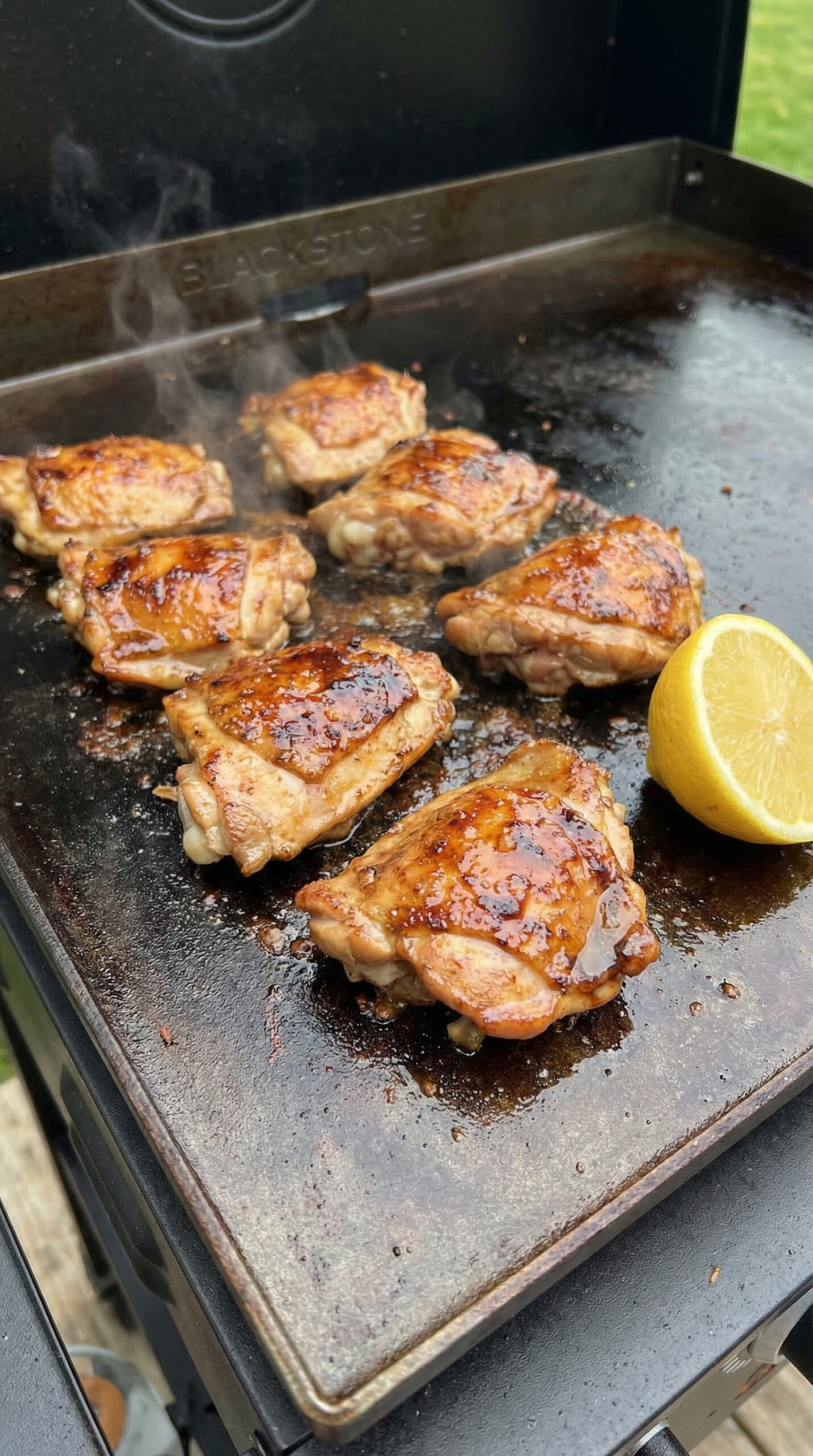
Boneless skinless chicken thighs cut into bite-sized cubes. Thighs, not breasts — hibachi chicken is supposed to be juicy and a little fatty, not lean and dry.
Season with salt, pepper, garlic powder. Oil on the griddle, high heat, spread the chicken out in a single layer. Don’t move it for 2-3 minutes so it gets a sear on the bottom. Flip, cook another 2-3 minutes.
The sauce goes on at the end: soy sauce, butter, a squeeze of lemon. Toss it on the griddle with the chicken and let the butter melt and coat everything. That soy-butter-lemon combination is the core flavor of hibachi chicken. Some restaurants add a splash of sake too — if you have it, a tablespoon doesn’t hurt.
3. Hibachi Steak Bites
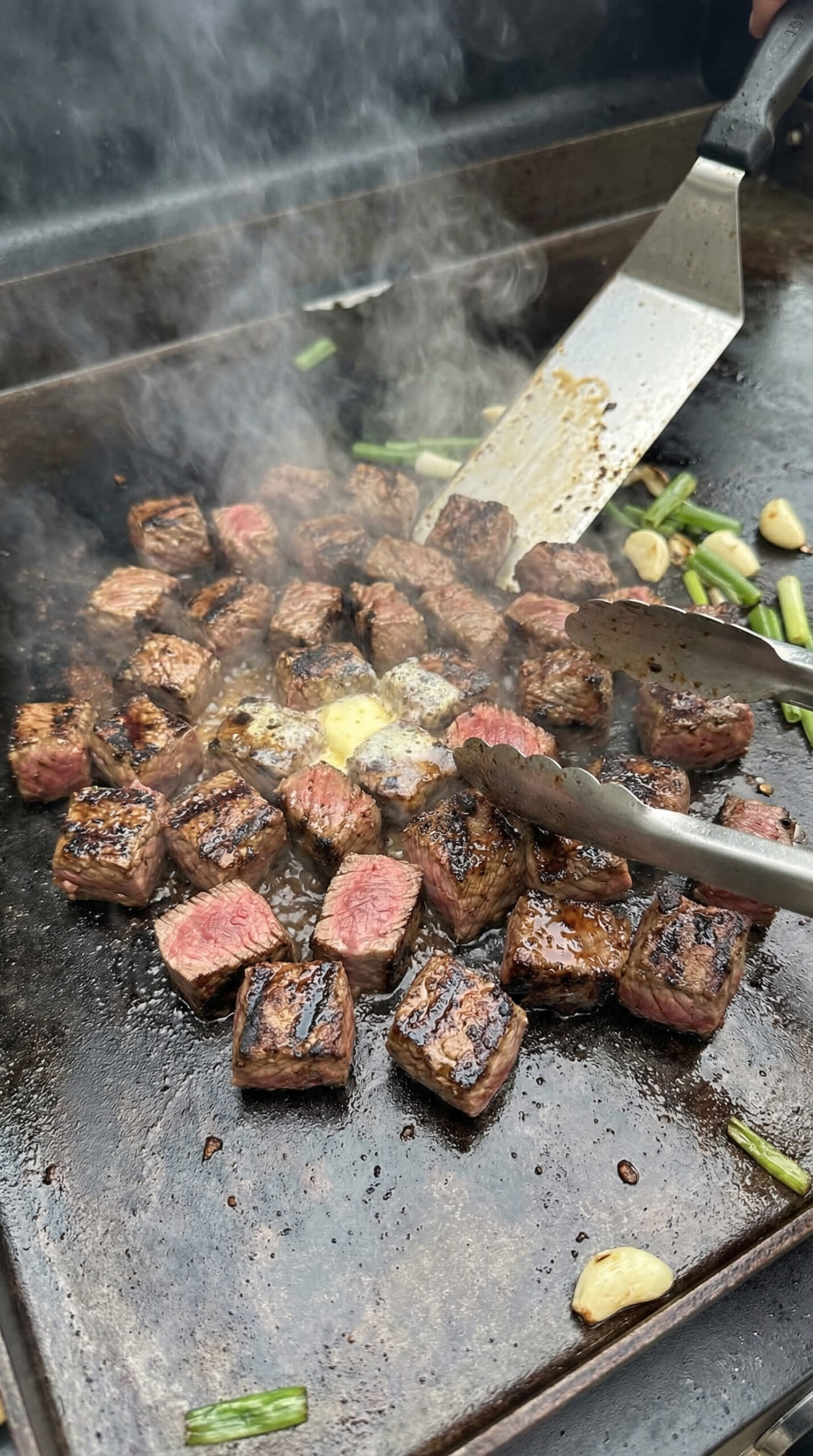
Sirloin cut into 1-inch cubes. Season with salt, pepper, garlic powder — same as the chicken. The difference is the heat and the timing.
Get the griddle as hot as it goes. These need a hard sear on the outside while staying pink in the middle. Spread the cubes out so none of them are touching — crowding steams them instead of searing. About 1-2 minutes per side for medium-rare. They’re small so they cook fast.
Finish with soy sauce and butter on the griddle, toss to coat. Some people add a little teriyaki at this stage. Keep it light — the steak flavor should lead.
If you’re cooking this alongside the chicken and rice, give the steak its own zone on the hottest part of the griddle. It needs more heat than everything else.
4. Hibachi Shrimp
Large or jumbo shrimp, peeled and deveined, tails off since you’re eating these with chopsticks or a fork. Season with salt and pepper.
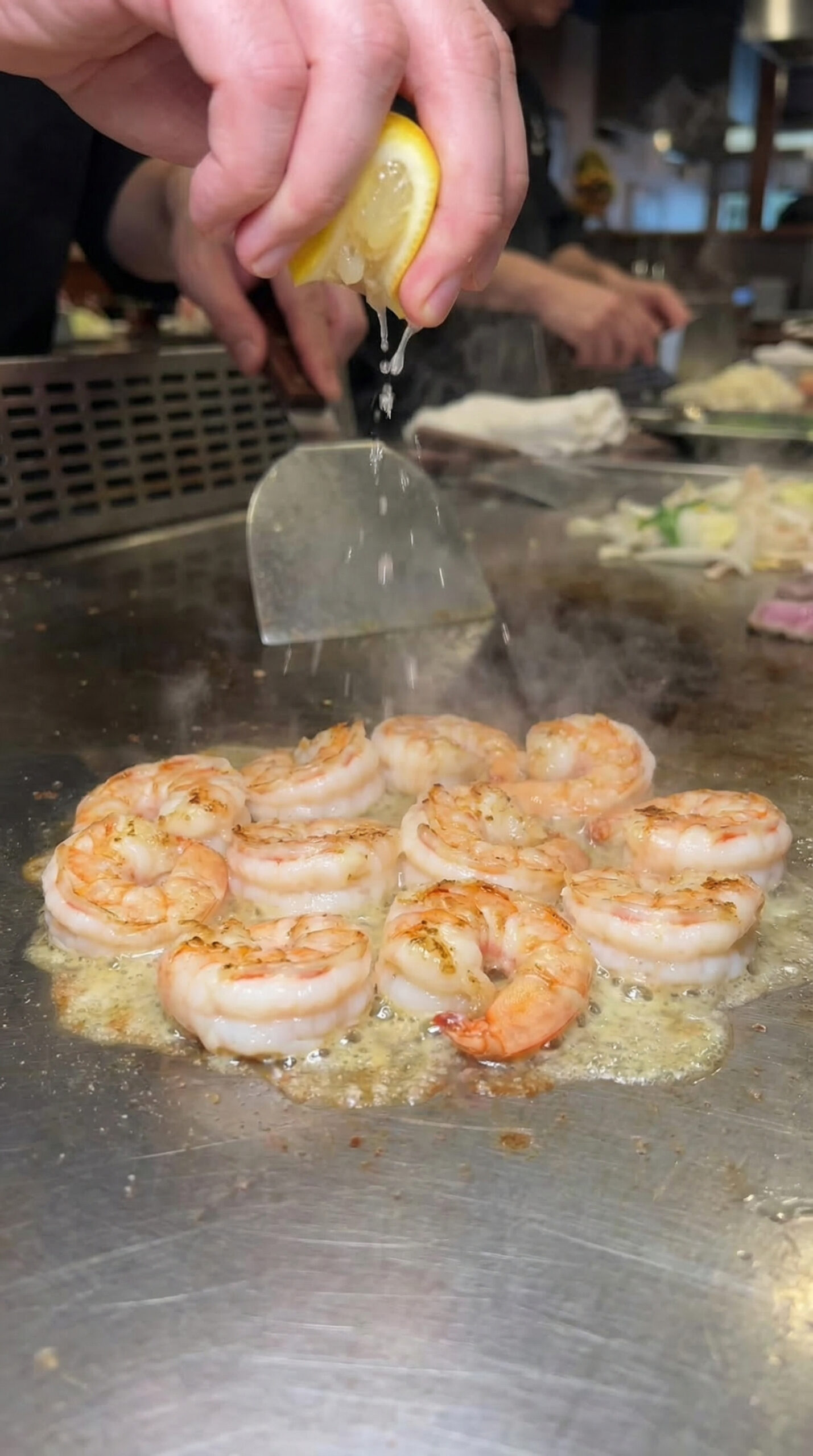
Butter on the griddle — not oil, butter from the start. Lay the shrimp down in a single layer. About 2 minutes per side. They cook the fastest of any of the proteins so add them to the griddle last if you’re doing the full spread.
Squeeze lemon over them right when they come off. That’s it. Hibachi shrimp at restaurants isn’t complicated and the home version shouldn’t be either. Butter, heat, lemon.
5. Hibachi Vegetables
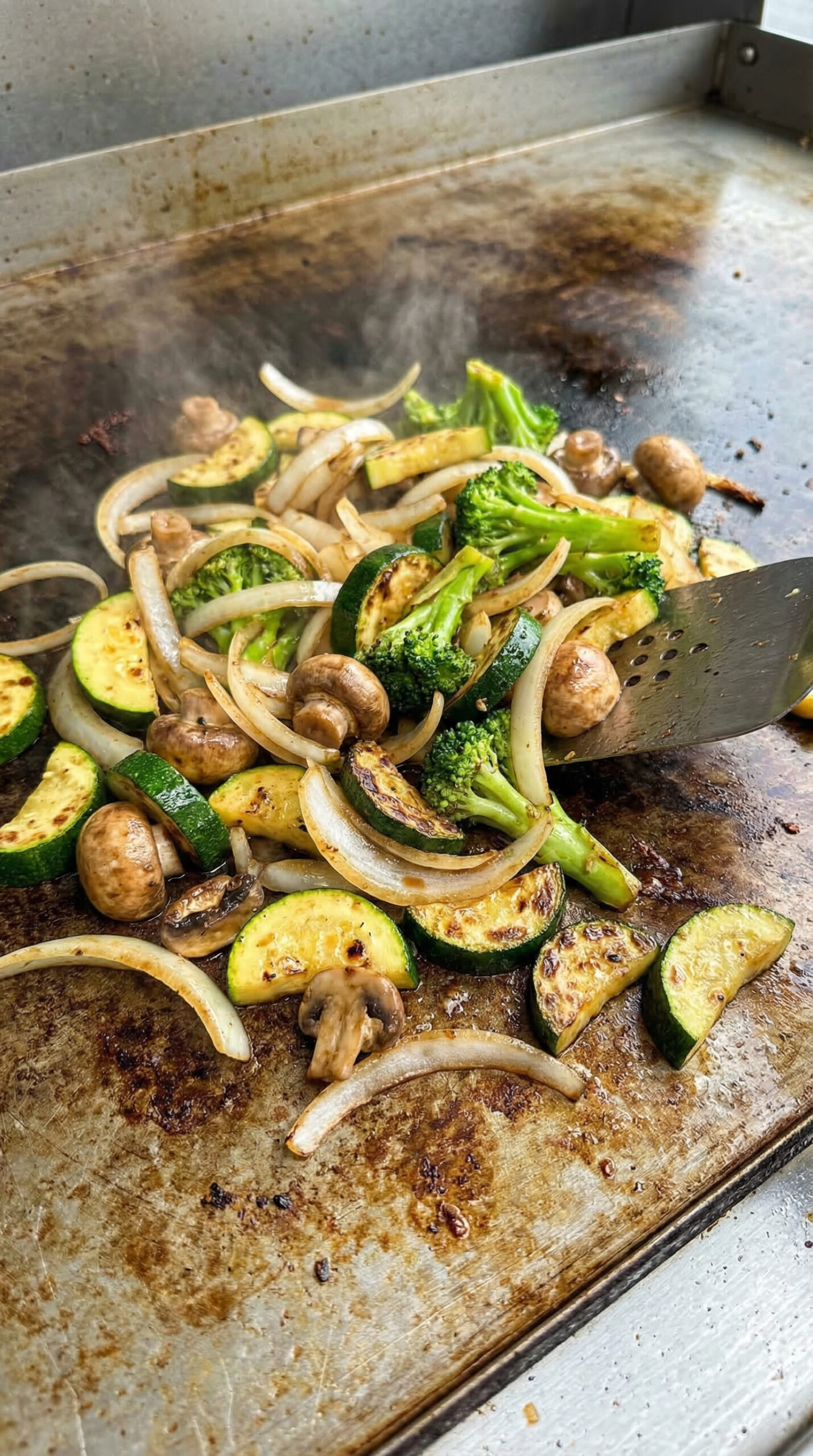
Zucchini in half-moons, sliced onion, mushrooms, broccoli florets. These are the standard four at most hibachi restaurants. Cut everything about the same size so it cooks evenly.
Oil on the griddle, medium-high heat. Onions go on first — they take the longest. Then mushrooms and broccoli. Zucchini last since it cooks fastest and gets mushy if it sits too long. Spread everything out. The goal is some char on the edges while still having bite in the middle.
Season with soy sauce, butter, garlic powder, a pinch of salt. Same flavor profile as everything else on the plate, which is the point — the whole hibachi meal is supposed to taste cohesive.
If the broccoli isn’t getting tender enough on the flat surface, squirt a little water around it and cover with a dome to steam it for a minute.
6. Yum Yum Sauce
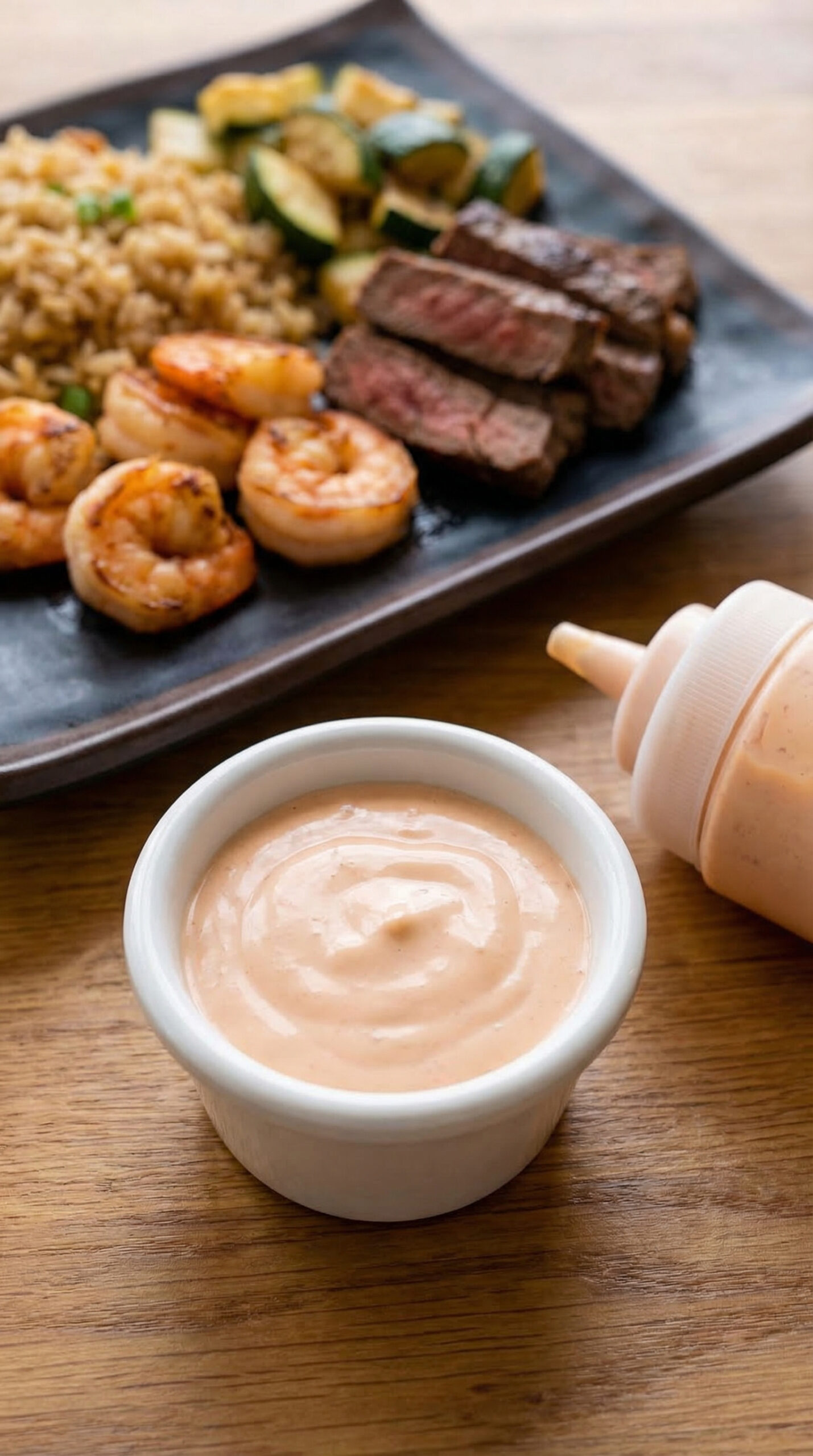
The pink/orange sauce that comes in the squeeze bottle at every hibachi place. People go through a lot of this.
Mayonnaise, tomato paste (just a teaspoon — that’s where the color comes from), rice vinegar, sugar, garlic powder, onion powder, paprika, a splash of water to thin it. Whisk until smooth.
That’s it. The restaurant version might have butter or other things in it, but this gets you 90% of the way there. Make it ahead and refrigerate — it thickens as it sits, so thin it with a little water before serving if needed.
It keeps for about a week in the fridge. Make a bigger batch than you think you need.
7. Ginger Sauce
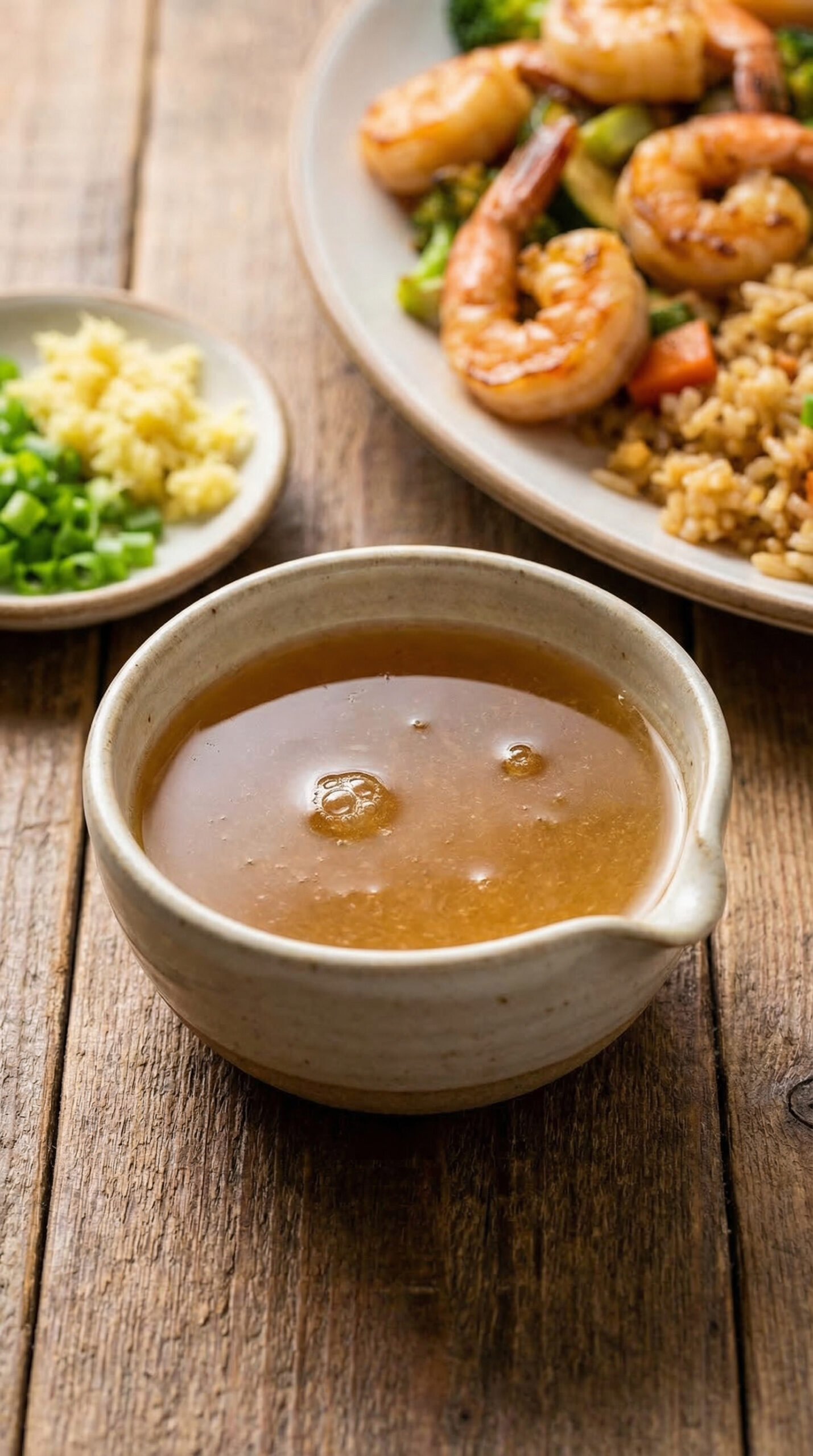
The other sauce — thinner, tangier, and sharper than the yum yum. Some places call it ginger dressing.
Grate fresh ginger (about a 2-inch knob), half an onion, a clove of garlic. Blend with soy sauce, rice vinegar, lemon juice, and a little oil. You can add a bit of celery if you want — some restaurant versions include it for a slightly vegetal flavor.
Blend until smooth. It should be pourable, not thick. Strain it through a fine mesh strainer if it’s chunky. This goes on the rice and vegetables, or on salad if you’re serving one alongside.
Fresh ginger is non-negotiable here — dried ginger powder tastes completely different and won’t get the right result.
8. Hibachi Noodles
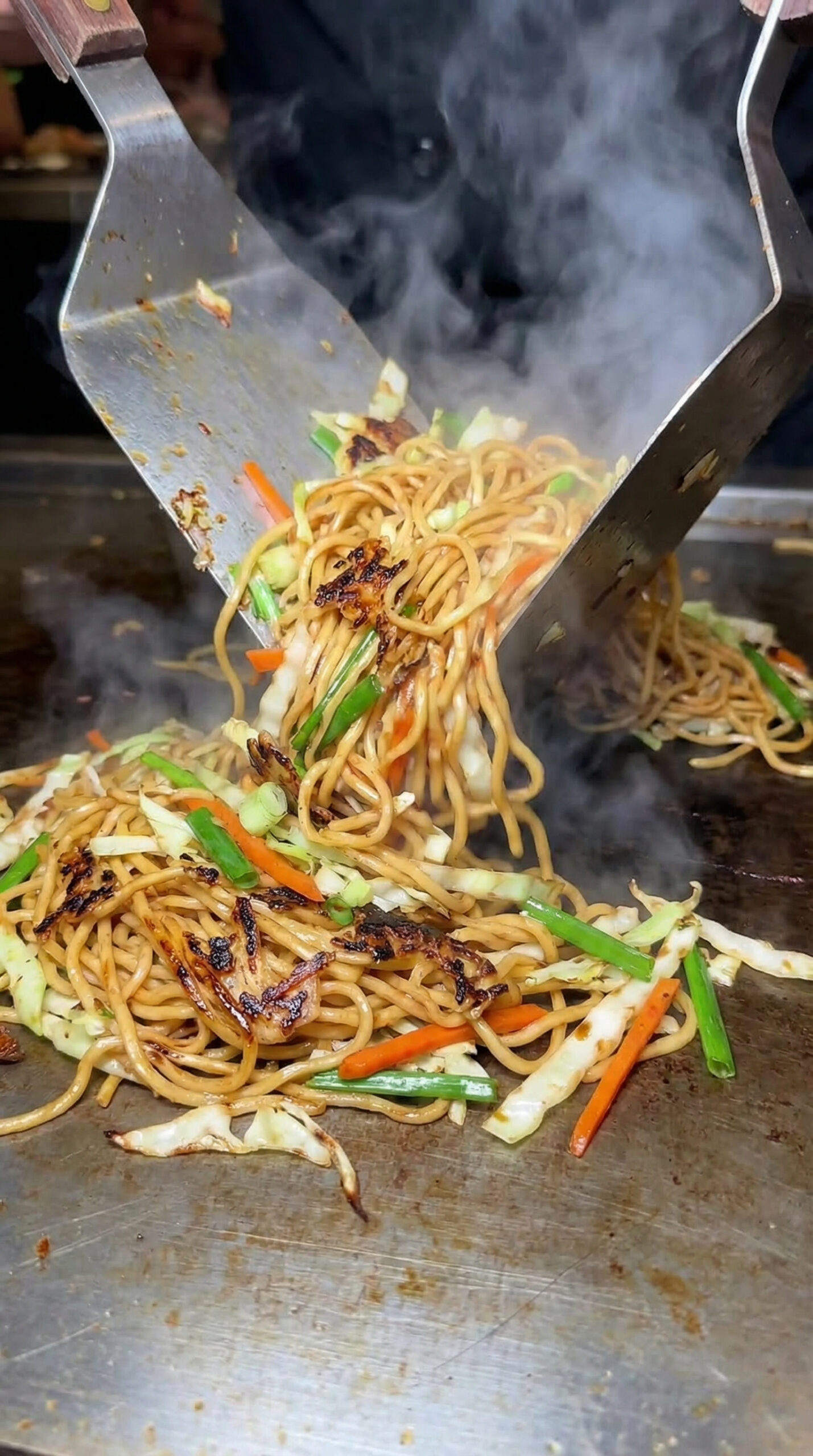
Yakisoba-style noodles cooked on the griddle. You can find yakisoba noodles in the refrigerated section of most grocery stores, usually near the tofu and wonton wrappers. They come pre-cooked so they just need to be heated and sauced.
Oil on the griddle, medium-high heat. Spread the noodles out, let them get a little crispy on the bottom before tossing. Add sliced cabbage, shredded carrots, and green onion. Season with soy sauce, Worcestershire sauce (sounds weird but it’s a standard yakisoba ingredient), sesame oil, a pinch of sugar.
Toss everything together. The noodles should have some charred spots. Serve alongside or instead of the fried rice.
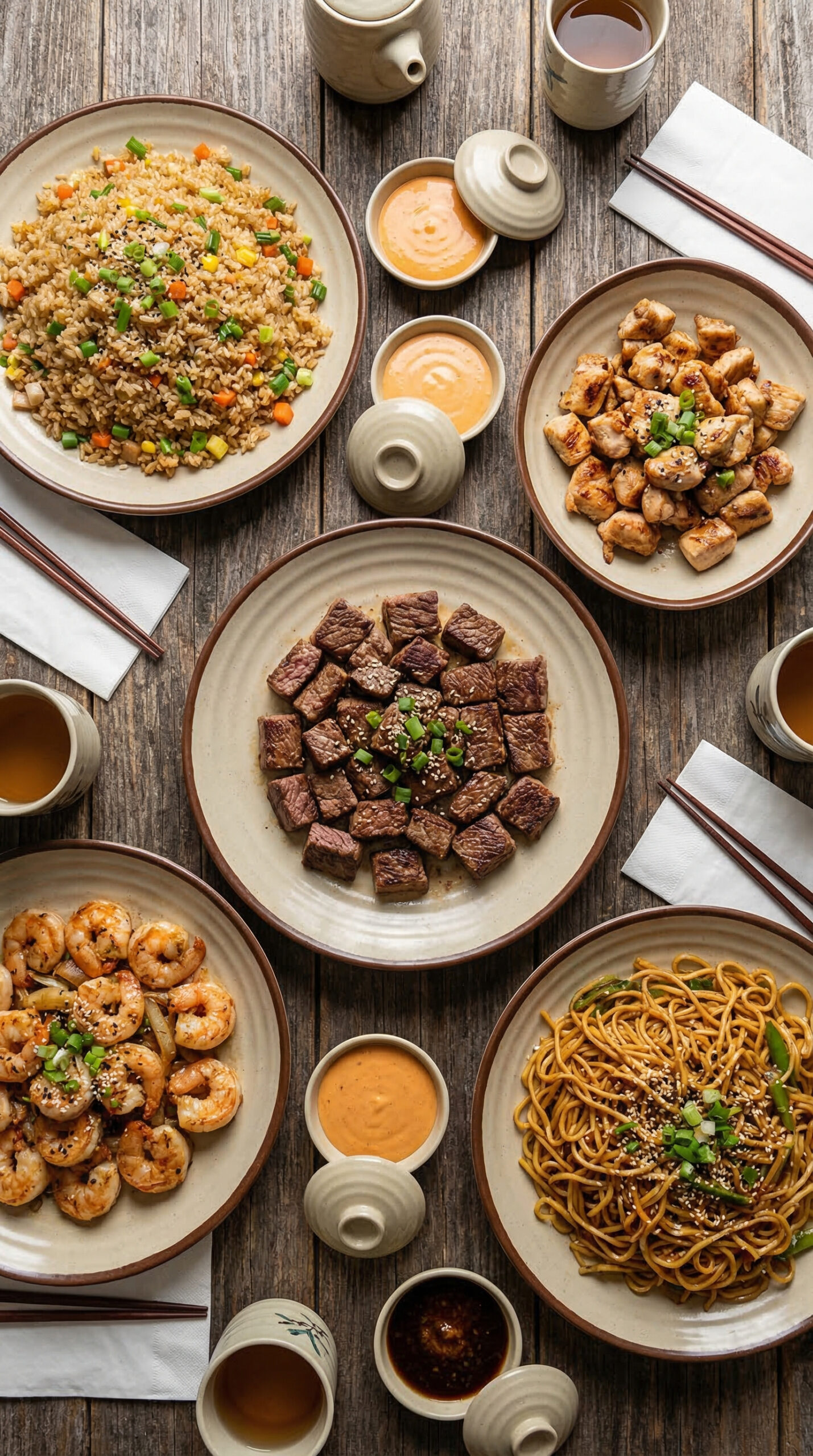
Running the Full Hibachi Spread
If you’re doing the whole thing — rice, proteins, vegetables, sauces — the order matters. Make the sauces ahead and refrigerate. Start the fried rice first, move it to a sheet pan in a warm oven. Vegetables next, same treatment. Then cook the proteins, starting with steak (hottest and fastest), then chicken, then shrimp last since it only takes a few minutes.
Everything stays warm in a 200°F oven while you work through the griddle lineup. Bring it all to the table at once with both sauces and let people build their plates.
WANT TO SAVE THIS FOR LATER?
We'll email it to you!
We won't send you spam. Unsubscribe at any time.