Night Safety in the Backcountry: Why Early Awareness Matters for Campers
The feel of a night in the wild is something unforgettable. It is one of the most enjoyable experiences regarding hiking. When the trail we are following has exhausted us most of the day, we all enjoy getting into camp, preparing a hot meal, and sitting by a creek or in the shade of big trees. It is these silent times, which perform the duty of drawing us out of doors in the first place.
But nature too has its rule. Wildlife moves after dark. Fog sets in. The sounds are lowered. Even seasoned hikers fail to notice what is going on several steps off their tents.
This post is sponsored by LETWESAF.
A Common Story in the Outdoors
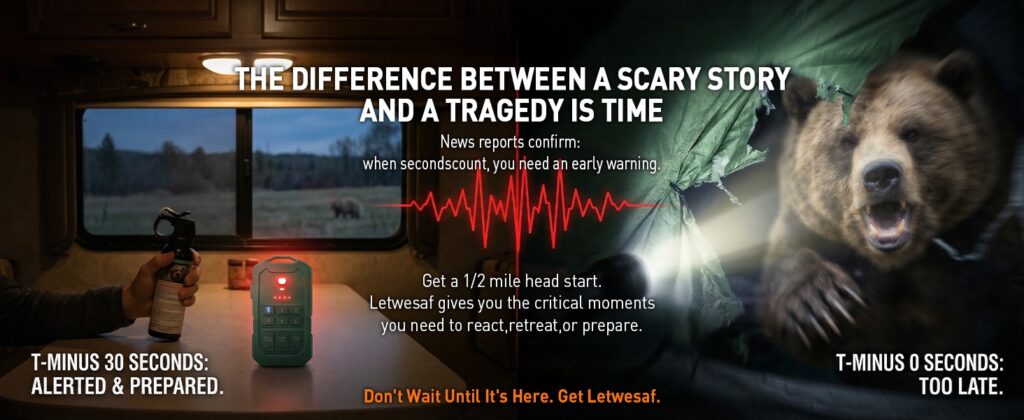
Last year I was on a coastal visit with a hiking family and they went through an experience that most campers can relate to. It was not till before dusk they arrived at their camp, had supper and slept. A fog enclosed their tents, and the little noises were drowned in the creek which was near-at-hand. Everything felt peaceful.
Something, though, was going on in the woods. A mountain lion with cubs were passing through the bush. The family did not see them. Their lanterns glared more than they gave light and their tiny camera was not able to cut the fog.
What helped them notice the movement was a small radar-based device they had placed earlier that evening. It gave a quick alert. It sounded a warning, sufficient to make the family move its camp nearer to other hikers. The lion and her cubs went on without coming to the site.
This situation ended well. But it raises a useful question for many hikers:
How much do we actually see at night?
The reason why sight and cameras are not always enough
Headlamps, mini trail cameras or lanterns are the most common headgears among hikers. These are handy tools but still there are some limit:
· Fog can hide animals
· Trees and bushes obstruct the sight
· Night causes a decreasing depth and distance
· Cameras fail owing to incorrect angle or due to excessive darkness
Several hikers have also gotten up to the tracks outside their tents or to the marks that animals have left behind. These scenes help us remember that it is not necessarily enough of our senses in the backcountry.
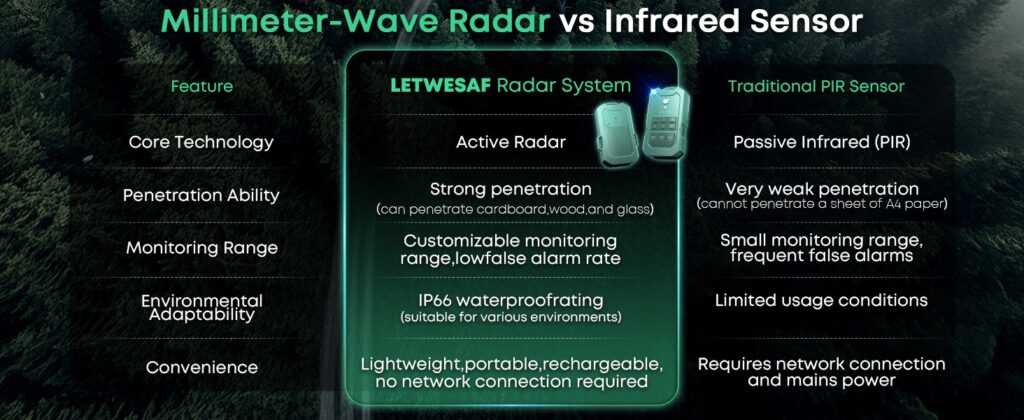
Due to this fact, motion-detection devices are currently being used by some outdoor travelers and do not require the use of light. An example is the radar-based detection which detects movement even during fog, darkness or rain. It never substitutes awareness, but it provides an added level of information at the time of low visibility.
The Radar-Based Motion Detection in Camping
Radar technology is not new. It is the measure of the bouncing waves of the moving objects. Other newer kinds of camping alarms have a small radar sensor that is used to scan the surroundings of a campsite. It does not require Wi-Fi. It does not need cell service. It is nothing more than the identification of movement over a short distance.
LETWESAF has made one of the most popular systems that hikers and RV travelers use today. It is a brand that can be enjoyed by campers that travel to far-off places, yet the main concept is the one that counts:
A silent perimeter, which notifies you of motion which you cannot observe.
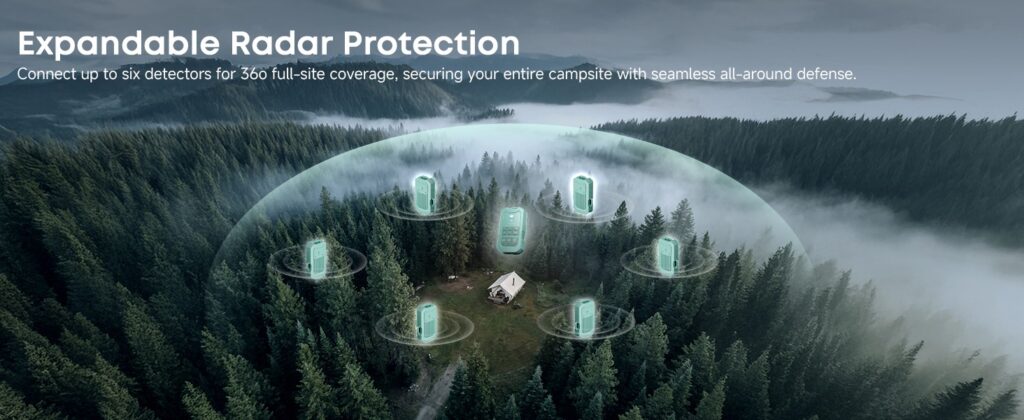
These kinds of tools are able to reach as far as several meters around a tent or RV and penetrate dense vegetation. They are short, light and made to be used outdoors such as on rainy days or on cold nights. Hikers may carry more than a single detector in order to monitor the sides around a camp site.
Real-Life Uses for Wilderness Travelers
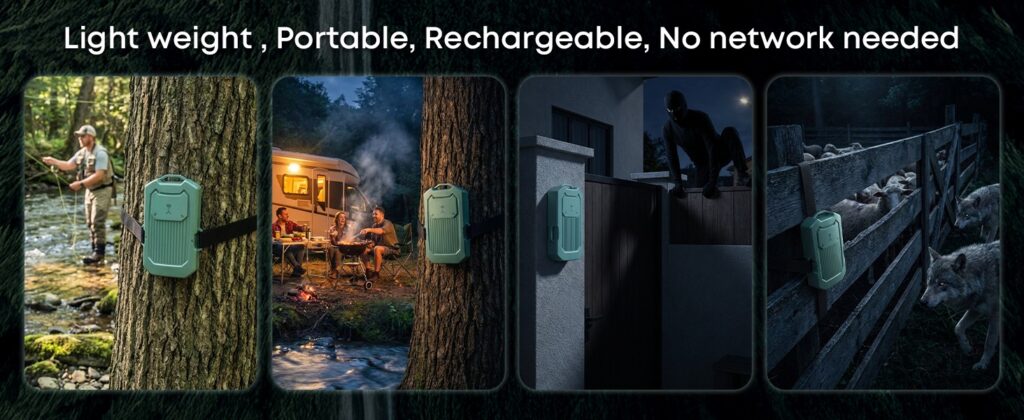
The outdoor movement at night is normal. There are numerous stories about hikers who described:
- Raccoons pawing into garbage bags.
- Deer walking close to tents.
- Bears searching for smells.
- Unknown footsteps breaking twigs in the dark.
- trangers accidentally walking through campsites while navigating at night.
In the majority of instances, these meetings are not serious. However, the awareness that something is coming is likely to enable hikers to respond in a calm manner. The slight precaution will enable the campers to secure food, adjust camp setup, or even just be on the watch.
Radar tools are also useful to people, who are fond of such activities as:
- Boondocking in remote areas
- Remaining close to coastal low visibility cliffs.
- Camping in canyons where there is no great passage of light.
- Either on off-grid land or on farmland.
- Sleeping in vans and SUVs outside of towns.
- Early awareness does not remove the adventure. It simply makes it safer.
Blending In With Nature
Some hikers prefer gear that is not bright or shiny. Because of this, recently LETWESAF added radar units whose color and pattern are natural. They have camouflage patterns. These merge in forests, brush or desert stretches. The role remains the same; they only become less conspicuous in the world.
Although these are not required, lots of outdoor adventure travelers like equipments that do not interrupt the natural appearance of a campsite.
Safety as a Part of The Hiking Experience
The High Sierra and Big Sur or anywhere of the remoteness invite charm as well as insecurity when spending the night. The wild is never empty. Animals move quietly. Weather shifts fast. After the sun goes down trails are different.
These are things that need not be feared by the hikers. However, the thing is to be equipped against them as a responsible traveller.
Such devices as radar detectors, bear-safe food storage, effective lighting, and clever location of campsites are all used to make the nights spent outside safer.
The family that perceived the presence of the mountain lion in time did not evade the mountain lion. They just employed one additional instrument to learn what was going on around them. Their account is an admonition that awareness is among the most useful tools that we bring to the backcountry.
To learn more about motion detection systems utilizing radar or to watch how these systems are applied by hikers, you can visit the information presented on the official site of LETWESAF.


