Garlic Herb Prime Rib Roast
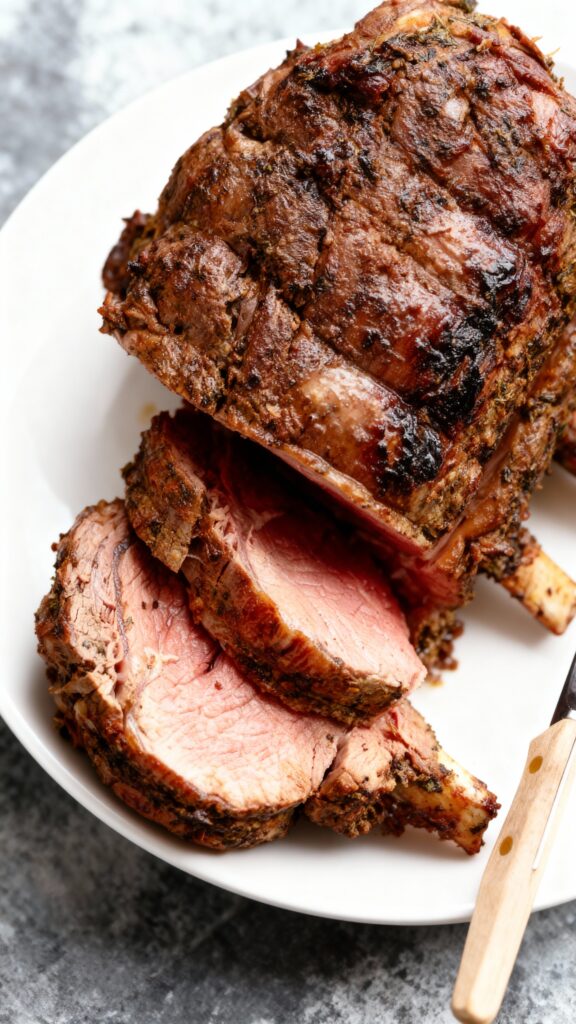
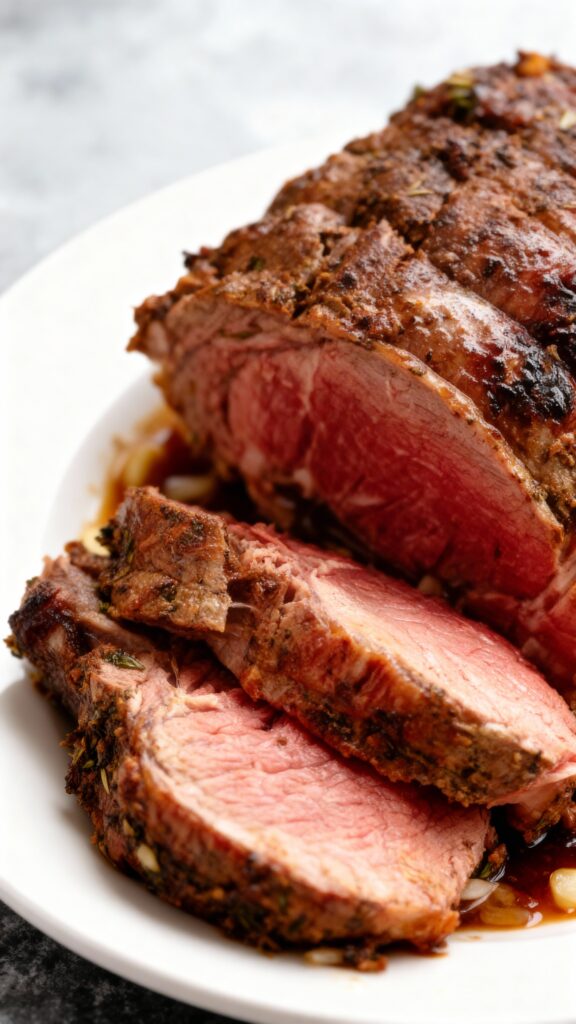
This prime rib features a deeply seasoned garlic-herb crust and a perfectly pink, juicy interior achieved through a reverse-sear method that’s nearly foolproof.
The low-and-slow approach followed by a high-heat sear delivers restaurant-quality results at home.
WANT TO SAVE THIS FOR LATER?
We'll email it to you!
We won't send you spam. Unsubscribe at any time.
Why You’ll Love It
The reverse-sear method produces edge-to-edge even doneness with no gray, overcooked outer ring.
A flavorful garlic-herb butter crust adds incredible depth.
Resting time is built into the method, so carving is stress-free.
Works for roasts of any size – just adjust cooking time.
Impressive centerpiece for holiday dinners that’s actually easier than it looks.
Leftovers make exceptional sandwiches and steak and eggs.
Ingredients
1 bone-in prime rib roast, 4-5 ribs (about 8-10 lbs) – also called standing rib roast
8 cloves garlic, minced
4 tablespoons fresh rosemary, finely chopped
2 tablespoons fresh thyme leaves
1/4 cup olive oil
4 tablespoons butter, softened
2 tablespoons kosher salt
1 tablespoon coarse black pepper
1 teaspoon onion powder
Steps
1. Remove the roast from the refrigerator 2-3 hours before cooking to bring it to room temperature – this is essential for even cooking.
2. In a small bowl, combine the minced garlic, rosemary, thyme, olive oil, and softened butter to form a paste.
3. In another small bowl, mix together the kosher salt, black pepper, and onion powder.
4. Pat the roast completely dry with paper towels.
5. Season the entire roast generously with the salt mixture, pressing it into all surfaces.
6. Spread the garlic-herb butter paste evenly over the top and sides of the roast, avoiding the bone side.
7. Place the roast bone-side down in a roasting pan with a rack – the bones act as a natural rack.
8. Insert a meat thermometer into the thickest part of the roast, avoiding the bone.
9. Roast at 250°F (120°C) until the internal temperature reaches 115°F for rare, 120°F for medium-rare, or 125°F for medium – this takes approximately 3-4 hours for an 8-10 lb roast.
10. Remove the roast from the oven and tent loosely with foil.
11. Let rest for 30-45 minutes – the internal temperature will rise another 5-10 degrees during this time.
12. Just before serving, crank your oven to 500°F (260°C).
13. Remove the foil and return the roast to the hot oven for 8-10 minutes until the crust is deeply browned and sizzling.
14. Transfer to a carving board and slice between the bones to serve.
Helpful Tips & Substitutions
Ask your butcher to french the bones for a more elegant presentation – this removes the meat and fat between the rib bones.
A boneless rib roast works with this method but will cook slightly faster – check temperature 30 minutes earlier.
The 2-3 hour room temperature rest is not optional – a cold roast will cook unevenly.
Dried herbs can substitute for fresh – use half the amount.
If you don’t have a roasting rack, set the roast on a bed of roughly chopped onions, carrots, and celery.
Use a reliable instant-read thermometer to verify doneness – don’t rely on time alone.
For a horseradish crust variation, add 2 tablespoons prepared horseradish to the butter mixture.
Serving Ideas
Serve with classic sides: Yorkshire pudding, creamy horseradish sauce, and au jus made from the pan drippings.
Roasted vegetables like carrots, potatoes, and Brussels sprouts complement the rich meat.
Pair with a bold red wine such as Cabernet Sauvignon or Bordeaux.
Slice thick for a dramatic presentation or thin for more servings.
Set out coarse sea salt, prepared horseradish, and Dijon mustard as condiments.
Save the bones for making beef stock or serve them to guests who enjoy gnawing on ribs.
Make-Ahead & Storage
Season the roast with the salt rub up to 24 hours ahead and refrigerate uncovered – this dry-brines the meat and improves flavor.
Apply the herb butter 2-3 hours before cooking when you take the roast out to come to room temperature.
Leftover prime rib keeps in an airtight container in the refrigerator for up to 5 days.
Reheat slices gently in a 250°F oven until just warmed through – avoid microwaving which toughens the meat.
Slice cold leftovers thin for prime rib sandwiches with horseradish mayo on crusty rolls.
Cooked prime rib can be frozen for up to 3 months, though the texture will be slightly different after thawing.
Worth the Investment
Prime rib is an expensive cut, which makes getting it right even more important.
The reverse-sear method takes the guesswork out of roasting and delivers consistent results every time.
Follow the temperatures, trust your thermometer, and you’ll have a holiday centerpiece that earns its place at the table.
WANT TO SAVE THIS FOR LATER?
We'll email it to you!
We won't send you spam. Unsubscribe at any time.