California Trail Safety Guide: Managing Wildlife and Dog Encounters
California’s coastal bluffs, foothill ridges, and forested canyons offer world-class hiking, but sharing these trails means being aware of the animals that inhabit or visit them. Whether navigating native habitats or high-traffic multi-use paths, knowing how to handle unexpected animal interactions keeps trails safe for hikers, pets, and wildlife alike.
Assessing Trail Hazards: Native Wildlife vs. Domestic Pets
While sightings of rattlesnakes or mountain lions often dominate public concern, state trail data show that interactions with domestic pets are a frequent source of trailside conflict. Understanding the behavioral differences between wild species and domestic pets helps hikers respond appropriately under pressure.
Wild animals typically avoid human interaction unless they are startled, cornered, guarding young, or habituated to human food. Their actions are driven by self-preservation. Domestic pets, by contrast, often approach hikers out of excitement, poor impulse control, territoriality, or prey drive. While wild hazards require distance and calm de-escalation, loose dogs require assertive boundary setting. If you or a companion are bitten by a dog on a walk, immediate priorities include securing the animal, thoroughly washing the wound with clean water, obtaining the owner’s contact and vaccination information, and seeking medical evaluation.
Quick-Reference Encounter Matrix
| Encounter Type | Typical Setting | Primary Risk Factor | Recommended Action |
| Off-Leash Dog | Trailheads, multi-use paths | Bites, knockdowns, pet fights | Freeze, avoid eye contact, create a physical barrier with gear, speak firmly. |
| Rattlesnake | Sun-baked rocks, brushy edges | Defensive bite | Stop immediately, locate the snake, back away slowly, and give wide berth. |
| Coyote | Open corridors, dusk/dawn | Threat to small off-leash pets | Stand tall, make loud noises (haze), leash pets, do not run. |
| Mountain Lion | Remote canyons, dense cover | Predatory reflex (rare) | Stand tall, hold children, maintain eye contact, back away slowly. |
| Black Bear | Forested backcountry, campsites | Food-seeking behavior | Maintain distance, talk calmly, secure scents, do not crowd or run. |
Pre-Hike Planning and Regulations
Preventing high-risk encounters begins before stepping onto the dirt. Land management agencies enforce specific regulations based on local ecosystem sensitivity:
- Verify Local Rules: State Parks often restrict dogs on dirt single-tracks to protect sensitive fauna, whereas National Forest lands frequently permit pets on designated trails under leash control.
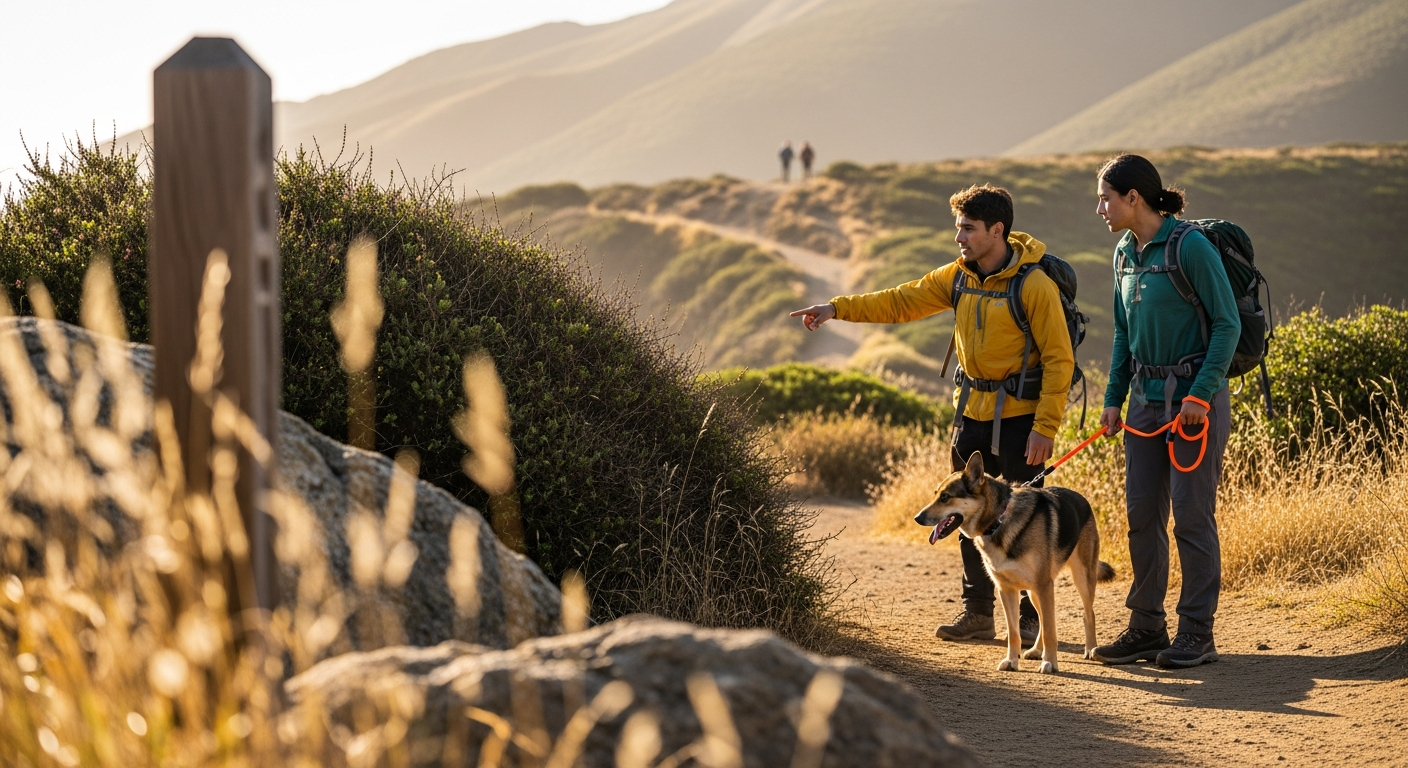
- Use Fixed Leashes: Keep dogs on a standard 6-foot fixed leash. Retractable leashes offer poor control on narrow trails, wrap easily around legs or brush, and can inadvertently startle resting wildlife.
- Timing and Group Size: Hiking in groups naturally deters wildlife through noise and presence. Plan excursions around animal activity patterns; coyotes and mountain lions are at their most active at dawn and dusk, while rattlesnakes emerge on sunny paths during midday warm spells.
How to Handle Encounters with Native Wildlife
When you encounter native species, your goal is simple: de-escalate, give space, and keep the animal from feeling cornered.
Rattlesnakes
Rattlesnakes emerge to sun themselves on rocks and open dirt paths, particularly during warmer months.
- Give Space: If you spot or hear a rattlesnake, stop immediately. Locate the snake and back away slowly. Never attempt to poke, move, or step over a snake.
- Watch Your Step: Stick to clear paths and avoid reaching into rock crevices or dense brush where visibility is limited.
- First Aid for Snakebites: Keep the victim calm and immobilize the affected limb at or below heart level. Transport them to medical care immediately. Do not use tourniquets, ice, or cut-and-suck incision kits—these outdated methods increase tissue damage.
Coyotes
Coyotes are highly adaptable and routinely live alongside human recreation areas.
- Practice “Hazing”: If a coyote approaches or appears habituated to humans, stand tall, wave your arms, shout in a firm voice, or bang trekking poles together to reinforce their natural fear of humans.
- Protect Pets: Keep small dogs leashed and close. Never let a dog chase or play with a coyote.
Mountain Lions
Mountain lion encounters remain extremely rare, but knowing the protocol is vital when hiking in coastal canyons and foothills.
- Never Run: Running can trigger a predatory chase reflex.
- Appear Large: Raise your arms, open your jacket, and stand close to hiking companions. Pick up small children immediately without crouching down.
- Maintain Eye Contact: Speak in a firm, loud voice while backing away slowly.
- Fight Back: If attacked, do not play dead. Fight back aggressively using rocks, sticks, packs, or bare hands.
De-Escalating Loose Dog Encounters
Unrestrained dogs present an unpredictable variable on multi-use trails. If an unfamiliar dog approaches you:
- Stop and Freeze: Sudden movements or running can trigger a dog’s chase instinct.
- Avoid Direct Eye Contact: Staring directly into an unfamiliar dog’s eyes can be interpreted as an aggressive challenge. Position your body slightly sideways.
- Establish a Barrier: Place a backpack, trekking pole, or bicycle between yourself and the dog to maintain personal space.
- Issue Low, Firm Commands: Use simple, authoritative commands such as “NO,” “STAY,” or “GO HOME” in a deep voice.
- Allow Retrieval: Stand still until the owner retrieves the pet. If the dog acts aggressively, back away slowly once you’ve established a physical barrier, keeping the animal in your peripheral vision.
Incident Reporting Guidelines
Not every animal sighting warrants official intervention. Observing a rattlesnake off the trail edge or spotting a coyote across a valley represents normal wildlife behavior.
Official reports should be filed with park rangers, local animal control, or county law enforcement when a domestic dog roams aggressively off-leash in protected habitat, when any animal displays signs of disease or unnatural lack of fear, or immediately following any bite incident involving humans or pets. Providing precise GPS coordinates, landmark descriptions, and accurate behavior details helps trail managers keep the entire hiking community safe.