Skillet Country Breakfast Potatoes
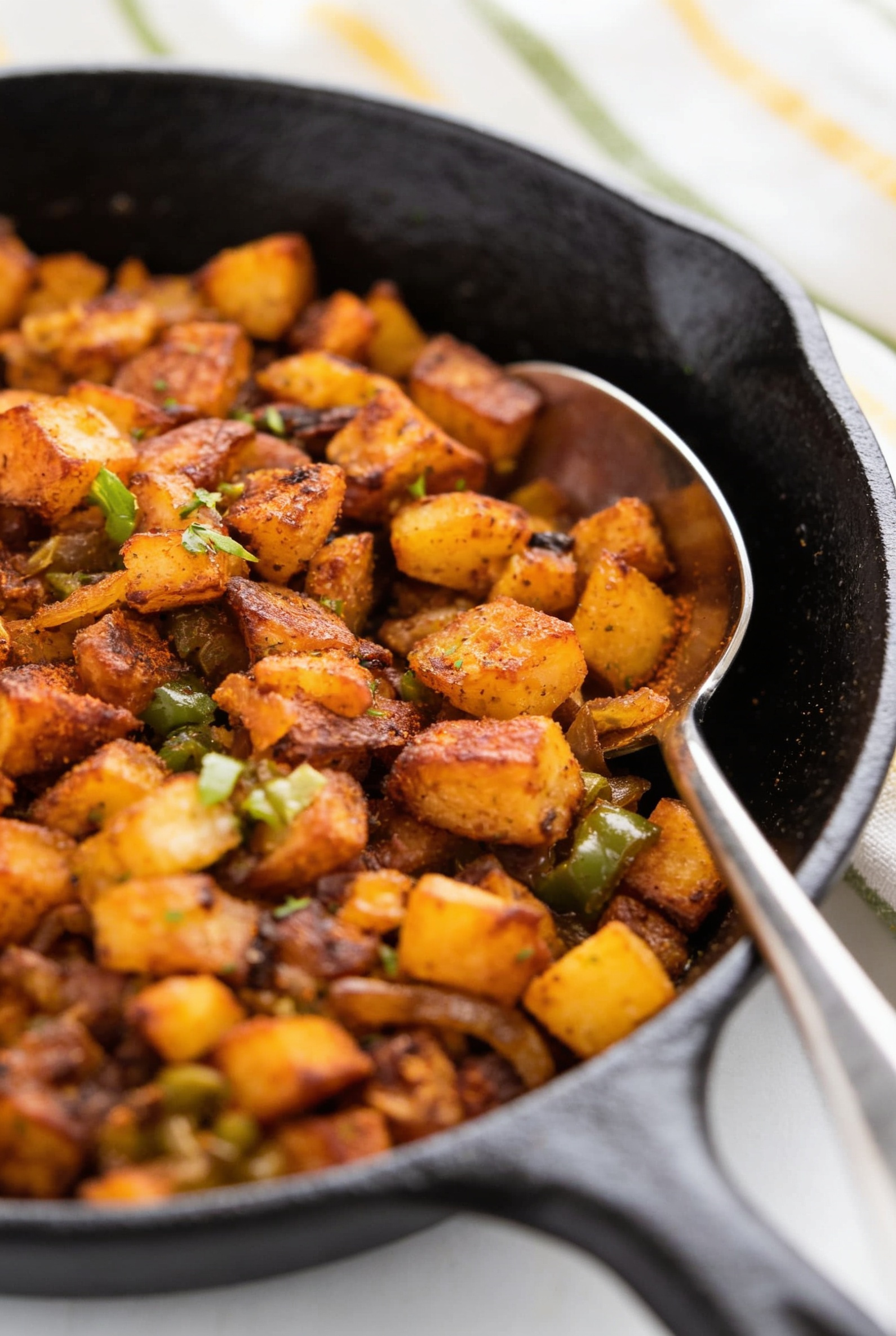
These skillet country breakfast potatoes are diced russets with onion and bell pepper, and the thing that makes them crisp is a short par-boil before they ever touch the pan.
Raw diced potatoes take so long to cook through in a skillet that the outsides burn or go soggy from stirring before the centers soften.
Par-cooked potatoes go into hot oil already tender, so all the skillet has to do is brown them, and they get a crunchy crust with almost no stirring.
The onion and pepper cook separately and go back in at the end with the paprika and garlic powder, so nothing steams and nothing scorches.
Start to finish they take about 35 minutes and serve four as a side.
WANT TO SAVE THIS FOR LATER?
We'll email it to you!
We won't send you spam. Unsubscribe at any time.
Why You’ll Love It
- One 12-inch skillet and one saucepan
- Par-boil on the stove or in the microwave, your choice
- Crisp edges from 3 tablespoons of oil, no deep frying
- A side dish, not a hash, so it goes next to any eggs
- Potatoes can be par-cooked up to 2 days ahead
- Vegan if you skip the tablespoon of butter at the end
Ingredients
2 pounds russet potatoes (about 3 medium), scrubbed and cut into 3/4-inch dice
1 tablespoon kosher salt, for the boiling water
3 tablespoons neutral oil (avocado or canola) or bacon fat, divided
1 small yellow onion, diced (about 1 cup)
1 medium green bell pepper, diced (about 1 cup)
1 tablespoon unsalted butter
1 teaspoon paprika, smoked or sweet
1 teaspoon garlic powder
3/4 teaspoon kosher salt
1/2 teaspoon black pepper
1/4 teaspoon cayenne (optional)
2 tablespoons chopped fresh parsley or chives (optional)
Steps
1. Put the diced potatoes in a 4-quart saucepan, cover with cold water by an inch, add the 1 tablespoon salt, and bring to a boil over high heat.
2. Once the water is boiling, cook for 5 minutes, until a knife slides into a cube with a little resistance left in the center, then drain in a 5-quart colander. Do not cook them until fully soft, because fully soft cubes fall apart the first time you flip them.
3. Shake the colander a few times to rough up the edges, then spread the potatoes on a half sheet pan in a single layer and let them steam dry for 5 minutes while you dice the onion and pepper. To microwave instead, put the diced potatoes in a covered 2-quart microwave-safe bowl with 2 tablespoons water, cook on high for 5 to 6 minutes, stirring once halfway, then drain and dry them the same way.
4. Heat 1 tablespoon of the oil in a 12-inch cast iron skillet over medium-high, add the onion and bell pepper, and cook for 4 to 5 minutes, stirring now and then, until the onion is soft and the pepper has a few browned spots, then scrape them into a bowl.
5. Add the remaining 2 tablespoons oil to the same skillet, let it heat for 30 seconds until it shimmers, then add the potatoes in a single layer and leave them alone for 5 minutes. Stirring early is the most common mistake here, because the potatoes need uninterrupted contact with the hot iron to form a crust, and they release from the pan on their own once they have one.
6. Flip the potatoes with a thin metal fish spatula, working in sections so each cube actually turns over instead of getting pushed around, and cook another 5 minutes untouched.
7. Flip once more and cook 3 to 5 minutes, until most cubes are deep golden brown on at least two sides and the edges are crunchy.
8. Lower the heat to medium, add the butter, the onion and pepper, the paprika, garlic powder, salt, pepper and cayenne, and toss for 1 to 2 minutes until the butter melts and the spices coat everything. Paprika and garlic powder burn within a minute or two in a hot dry pan, which is why they go in at the end rather than with the raw potatoes.
9. Taste for salt, scatter the parsley on top and serve straight from the skillet while the edges are still crisp.
Helpful Tips & Substitutions
Cold par-cooked potatoes crisp even better than warm ones, so if you have time, par-boil them the night before and fry them straight from the fridge with an extra 2 minutes on the first side.
Russets give the crunchiest crust because they are high in starch, while Yukon Golds hold their shape better but come out more golden than shattering, so pick based on which you care about more.
Red potatoes work too, and their skins are thin enough that peeling is pointless.
Leaving the russet skins on adds crunch and saves 5 minutes of peeling, and it is how most diners do it.
Two pounds is the maximum a 12-inch skillet can brown in one layer, so for a crowd use two skillets or cook in two batches and hold the first batch in a 200°F (95°C) oven on the sheet pan.
Water is the enemy of a crust, so if the potatoes still look wet after 5 minutes on the sheet pan, pat them with a paper towel before they go in the oil.
Bacon fat in place of the oil adds a smoky, salty edge, and it has a lower smoke point, so keep the heat at medium-high and no higher.
A stainless steel or nonstick skillet works, but cast iron holds its heat when 2 pounds of cool potatoes land in it, which is why it browns them faster.
Smoked paprika makes these taste like they came off a griddle next to bacon, while sweet paprika gives the plain diner flavor, and both use the same 1 teaspoon.
Half a red bell pepper and half a green one give you the classic two-color look for the same total amount.
Serving Ideas
The standard plate is two fried eggs with runny yolks, these potatoes, and toast, with bacon or sausage on the side if you want meat.
For a crowd, make sheet pan scrambled eggs in the oven while the potatoes finish in the skillet, since both come out at the same time without you juggling two pans.
Leftover potatoes are the right size to roll into make-ahead breakfast burritos with scrambled eggs and cheese.
If someone at the table wants something sweet, small batch buttermilk pancakes for two cook in the time it takes the potatoes to get their last flip.
Hot sauce, ketchup or a spoon of salsa all work on top, and a fried egg broken over the potatoes is the simplest version of all.
They also work as a dinner side next to a steak or roast chicken, since there is nothing breakfast-specific about them beyond the name.
Make-Ahead & Storage
Par-cooked, dried potatoes keep covered in the fridge for up to 2 days, and they go straight into the hot oil from cold.
Cooked leftovers keep 4 days in an airtight container in the fridge.
Reheat them in a skillet with 1 teaspoon oil over medium-high for about 5 minutes, or in an air fryer at 400°F (200°C) for 4 to 5 minutes, since the microwave heats them through but turns the crust soft.
Freezing the cooked potatoes is not worth it, because they come back mealy and never re-crisp properly.
If you want a freezer stash, freeze the par-cooked cubes flat on a sheet pan, bag them once solid, and fry them straight from frozen with 3 to 4 extra minutes on the first side, keeping the lid nearby because the ice spatters in the oil.
The onion and pepper can be cooked a day ahead too and kept in their own container, since they only go into the pan at step 8 after the potatoes have browned.
The first flip tells you whether the pan was hot enough: cubes that lift cleanly with a brown face are on track, and cubes that stick or come up pale need another 2 minutes before you try again.
WANT TO SAVE THIS FOR LATER?
We'll email it to you!
We won't send you spam. Unsubscribe at any time.