Japanese Egg Salad Sandwich
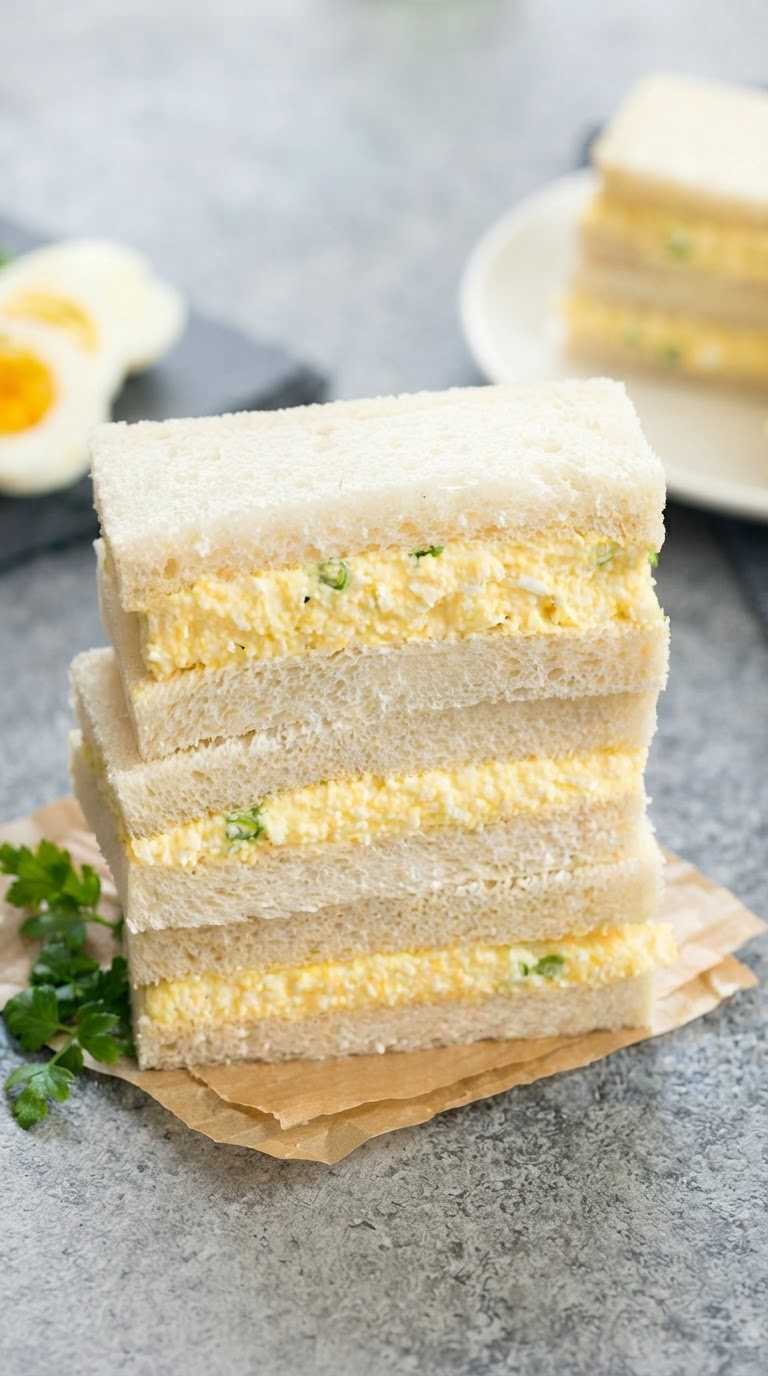
A Japanese egg salad sandwich, the tamago sando sold in every convenience store in Japan, is hard-boiled eggs mixed with Kewpie mayo and pressed between two thick slices of soft milk bread with the crusts cut off.
What makes this version taste like the real thing is separating the yolks first and mashing them into the Kewpie before the chopped whites go in, which turns the filling into a smooth, custardy paste instead of the chunky egg salad you get from mashing whole eggs.
Kewpie itself does the rest, since it is made with egg yolks only and rice vinegar, so it is richer and slightly sweeter than American mayo.
Start to finish is about 35 minutes, and most of that is the eggs boiling and the filling chilling.
WANT TO SAVE THIS FOR LATER?
We'll email it to you!
We won't send you spam. Unsubscribe at any time.
Why You’ll Love It
- Six eggs, four slices of bread, two sandwiches
- About 35 minutes including boiling and chilling
- Yolk-and-Kewpie base gives a smooth filling, not a chunky one
- No cooking beyond boiling eggs
- Filling keeps 3 days in the fridge for packed lunches
- Holds up wrapped for a few hours, so it travels
Ingredients
For the Filling
6 large eggs
4 tablespoons Kewpie Japanese mayonnaise
1 tablespoon whole milk
1 teaspoon granulated sugar
1/4 teaspoon kosher salt
1/8 teaspoon ground white pepper (black pepper works)
For the Sandwiches
4 slices shokupan (Japanese milk bread), about 3/4 inch thick
1 tablespoon unsalted butter, softened
Steps
1. Bring about 2 inches of water to a boil in a 3-quart saucepan, then lower the eggs in with a slotted spoon so they do not crack on the bottom.
2. Cover, drop the heat to a steady simmer, and cook for exactly 10 minutes, which sets the yolks fully while keeping them tender and bright yellow rather than chalky with a gray ring.
3. Move the eggs straight into a bowl of ice water for 5 minutes, since the fast chill stops the cooking and shrinks the egg away from the shell so it peels clean.
4. Tap each egg on the counter, roll it under your palm to crackle the shell all over, and peel under a thin stream of running water.
5. Halve the eggs, pop the yolks into a medium bowl, and set the whites on a cutting board.
6. Mash the yolks with a fork until they look like fine crumbs with no lumps, or press them through an 8-inch fine mesh strainer for the smoothest result.
7. Stir the Kewpie, milk, sugar, salt, and white pepper into the yolks until it forms a thick, glossy paste.
8. Chop the whites into roughly 1/4-inch pieces, which goes fastest with a stainless steel egg slicer run once lengthwise and once crosswise, then fold them into the yolk paste.
9. Cover and chill the filling for 10 minutes, since it firms up noticeably as the mayo cools and spreads without sliding.
10. Spread the softened butter edge to edge on one side of each bread slice, because the butter is the barrier that keeps the bread from soaking up moisture from the filling.
11. Pile half the filling onto one buttered slice and spread it to the edges about 3/4 inch thick with an small offset spatula, then set a second slice on top and press gently with your palm.
12. Repeat with the remaining filling and bread, wrap each sandwich tightly in plastic wrap, and refrigerate for 10 to 15 minutes so the layers compress and the cuts come out clean.
13. Unwrap, trim the crusts with a 10-inch serrated bread knife, wipe the blade, and cut each sandwich in half or into thirds with one long slicing stroke rather than a press.
Helpful Tips & Substitutions
Kewpie is sold in most Asian grocery stores and larger supermarkets in a soft squeeze bottle with a red cap, and it is worth seeking out because it carries the flavor of this sandwich.
If you have to use American mayo, cut it to 3 tablespoons, add another 1/4 teaspoon of sugar, and skip the milk, since Hellmann’s-style mayo is thinner and tangier than Kewpie.
Shokupan comes from Japanese bakeries and some Asian groceries, and the closest supermarket stand-in is thick-cut soft white sandwich bread like Texas toast or a brioche sandwich loaf, not anything with seeds or a chewy crust.
Eggs that are a week old peel far more easily than fresh ones, because the white pulls away from the membrane as the egg ages.
Do not boil longer than 10 minutes, since overcooked yolks turn dry and sulfurous and the filling comes out grainy no matter how much mayo you add.
For the convenience-store look with a soft yolk in the middle, boil one extra egg for 7 minutes, halve it, and set the halves cut side down in the center of the bread before the filling goes on.
Taste before adding more salt, because Kewpie is already seasoned and the comment on these sandwiches is more often that they are too salty than not salty enough.
Half a teaspoon of Dijon or Japanese karashi mustard stirred into the yolk paste is a common addition if you want a sharper edge, though the convenience-store version leaves it out.
Serving Ideas
Cut the sandwiches into thirds and stand them on their sides on the plate so the pale yellow filling faces up, which is how they are packaged in Japan.
For breakfast, a bowl of fruit and a cup of green tea alongside is enough, since the sandwich is already rich.
For lunch, pair it with sliced cucumber tossed in rice vinegar and a pinch of sugar, or a handful of salted edamame.
If you want a hot egg sandwich option for the same week, Sheet Pan Scrambled Egg Breakfast Sandwiches batch eight at once in the oven.
Egg Muffin Cups use the same dozen eggs for the other half of the week and reheat in a minute.
More portable ideas are in On-the-Go Egg Breakfasts for Busy Work Mornings.
Make-Ahead & Storage
The filling keeps in an airtight container in the fridge for 3 days, and it may want a teaspoon more Kewpie stirred in on day three as it tightens up.
Assembled sandwiches, wrapped tightly in plastic, keep for 24 hours in the fridge, and the butter layer is what stops the bread from going soggy in that time.
Cold bread firms up, so let a refrigerated sandwich sit at room temperature for 10 minutes before eating.
Peeled hard-boiled eggs keep 5 days in a covered container in the fridge, so the boiling can happen days ahead.
Do not freeze the filling or the sandwiches, since frozen egg whites turn rubbery and the mayo separates when it thaws.
Egg and mayo filling should not sit out longer than 2 hours total, or 1 hour if the room is above 90°F (32°C), so pack it with an ice pack for anything longer than a morning commute.
The filling tastes noticeably better after it has chilled for the 10 minutes called for, because the sugar dissolves fully and the mayo firms, so that step is doing real work.
Crusts trimmed off the bread can be torn and toasted into croutons rather than thrown away, and they take 8 minutes at 350°F (175°C).
WANT TO SAVE THIS FOR LATER?
We'll email it to you!
We won't send you spam. Unsubscribe at any time.