Recipe card
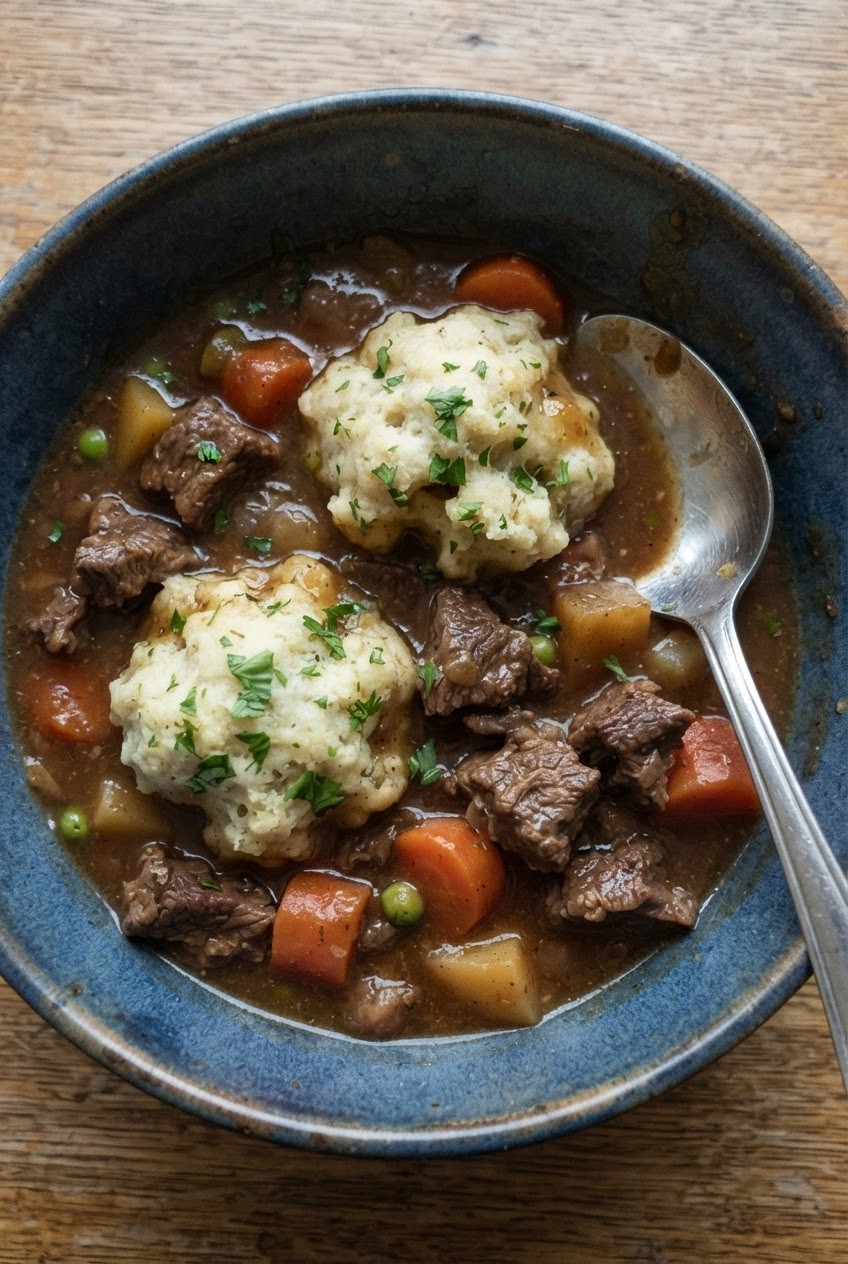
Crockpot Beef Stew and Dumplings
Browned beef chuck, carrots and potatoes in a thick beef gravy, topped with fluffy drop dumplings that steam in the last hour.
Email me this recipe
Sent! Check your inbox for the recipe.
Something went wrong. Please try again.
We'll send you the link. No spam, unsubscribe any time.
Ingredients
For the Stew
- 2 1/2 pounds boneless beef chuck roast, large pieces of fat trimmed, cut into 1 1/2-inch cubes
- 1/3 cup all-purpose flour
- 2 teaspoons kosher salt
- 1 teaspoon black pepper
- 2 tablespoons vegetable or canola oil, divided
- 1 large yellow onion, chopped
- 4 cloves garlic, minced
- 2 tablespoons tomato paste
- 1/2 cup dry red wine, or more beef broth
- 2 cups low-sodium beef broth
- 1 tablespoon Worcestershire sauce
- 1 tablespoon soy sauce
- 4 medium carrots, peeled and cut into 1-inch chunks
- 2 celery ribs, cut into 1-inch pieces
- 1 pound Yukon Gold potatoes, cut into 1 1/2-inch chunks
- 1 teaspoon dried thyme
- 2 bay leaves
- 1 cup frozen peas, optional
- 2 tablespoons cornstarch mixed with 2 tablespoons cold water, only if needed
For the Herb Dumplings
- 2 cups 250 g all-purpose flour
- 1 tablespoon baking powder
- 3/4 teaspoon fine salt
- 1/2 teaspoon dried thyme
- 4 tablespoons 1/2 stick cold unsalted butter, frozen for 15 minutes
- 3 tablespoons chopped fresh flat-leaf parsley
- 3/4 to 1 cup cold whole milk
Instructions
- Use fully thawed beef; frozen raw meat never goes in a slow cooker, because it sits in the 40–140°F danger zone too long. Pat it dry and toss it in a large bowl with the flour, salt, and pepper, saving the leftover flour.
- Heat 1 tablespoon oil in a 12-inch cast iron skillet over medium-high until it shimmers. Brown half the beef in a single layer, untouched for 3 minutes until deep brown, then turn once and move it to the slow cooker. Repeat with the remaining oil and beef; a crowded pan steams the beef gray.
- Lower the heat to medium and cook the onion in the drippings for 4–5 minutes, until soft. Stir in the garlic, tomato paste, and leftover flour and cook 1 minute, until the paste darkens to brick red.
- Add the wine and scrape up the browned bits with a flat-edged wooden spatula, then whisk in the broth, Worcestershire, and soy sauce and bring to a simmer. Don't leave those bits behind; they're most of the gravy's flavor.
- Add the carrots, celery, potatoes, thyme, and bay leaves to a 7-quart oval slow cooker (6-quart minimum) and pour the skillet liquid over everything. The liquid should come about three-quarters of the way up the solids, not cover them; the beef and vegetables release juice, and a stew that starts out swimming ends too thin to hold dumplings.
- Cover and cook on LOW for 7–8 hours or HIGH for 4–5 hours, until a cube of beef breaks apart with a fork. Chuck turns tender at about 195–205°F on an instant-read thermometer; if it's still chewy, it needs more time.
- About an hour before serving, remove the bay leaves and switch to HIGH. The gravy should coat the back of a spoon, with chunks of beef and potato sitting at or just above the surface; if it runs off like broth, stir in the cornstarch slurry. Taste for salt, stir in the peas, cover, and heat about 15 minutes, until the edges bubble.
- Meanwhile, whisk the flour, baking powder, salt, and thyme in a medium bowl. Grate the frozen butter on the large holes of a box grater straight into the flour, toss to coat the shreds, and stir in the parsley.
- Add 3/4 cup milk and stir with a fork just until no dry flour remains, adding more milk a tablespoon at a time only if needed. The dough should be thick, sticky, and shaggy, like drop biscuit dough; overmixing makes dense, chewy dumplings.
- Use a 3-tablespoon cookie scoop to drop 10 to 12 mounds onto the bubbling stew, about 1 inch apart. Set them on top of beef and vegetable pieces, not in pools of gravy, and don't stir or push them under.
- Lay a clean kitchen towel or two layers of paper towels over the insert, set the lid on, and fold the corners up onto the lid, away from the hot base. The towel catches condensation that would make the tops gummy.
- Cook on HIGH with the lid closed for 40 minutes. Don't peek before then; every lift lets out the steam that cooks the tops.
- The dumplings are done when they've about doubled, the tops look dry and matte instead of shiny, and a toothpick pushed into the center of the largest one comes out clean. Break one open if you're unsure: the middle should be fluffy all the way through, with no dense, wet streak of raw dough. If not, cover and cook 10 more minutes. Soft, gravy-soaked bottoms are normal.